
OHMDs in Healthcare: Beyond Hands-Free to Cognition-Supporting Design
Optical Head-Mounted Displays for Medical Professionals: Cognition-supporting Human-Computer Interaction Design
The paper explores the design and evaluation of Optical Head-Mounted Displays (OHMDs), such as Google Glass, for medical professionals across pre-hospital and clinical settings. It introduces "Transmodal Consistency" as a foundational design principle to ensure seamless switching between touch, gesture, and voice modalities in high-stress environments.
TL;DR
While "hands-free" is the marketing promise of Optical Head-Mounted Displays (OHMDs) like Google Glass, technical success in medicine depends on Cognitive Ergonomics. This paper investigates how OHMDs can support paramedics, nurses, and surgeons through specialized software wizards and introduces the principle of Transmodal Consistency—ensuring that functionality remains accessible regardless of whether a user is using their voice, hands, or head movements.
Background: The Healthcare Paradox
Medical professionals operate in a "mobile-priority" environment where they rarely have a desk, yet their hands are frequently occupied by patients, tools, or sterile requirements. While tablet PCs were a step forward, they still require physical handling. OHMDs offer a tantalizing solution: put the data in the line of sight. However, as this study reveals, simply moving the screen to the eye doesn't solve the mental effort required to process that data.
Methodology: Four Real-World Use Cases
The researchers didn't just test the hardware; they built specific interventions across the medical spectrum:
- MCI Triage: Implementing the "START" algorithm via a stepwise wizard to help paramedics categorize patients during mass casualty incidents.
- Hazardous Materials: Using the OHMD camera to scan warning signs (QR/Barcodes) on trucks to provide instant safety protocols.
- Nursing Infusions: A timer management system to replace stationary paper logs and sticky notes.
- Surgical Documentation: Allowing surgeons to take POV photos during procedures without breaking the sterile field.
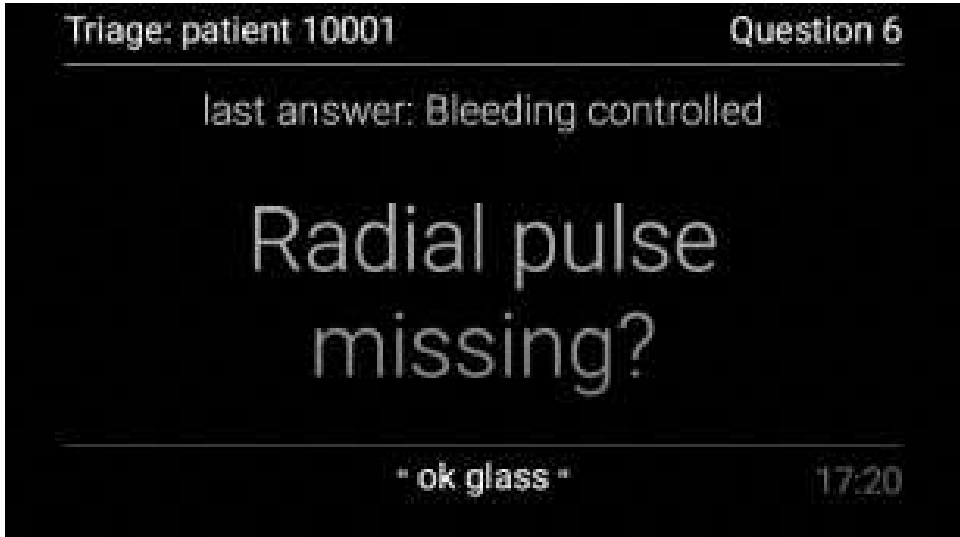 Figure: The Triage wizard guides users through logic-based decision-making.
Key Insight: The SRK Model & Mental Workload
The study highlights that OHMD usage follows a distinct pattern when cognitive load increases. Instead of multitasking, users often stop their primary physical task to interact with the device. To bridge this gap, the authors reference Rasmussen’s Levels of Performance:
- Signals: Raw sensory data.
- Signs: Rules and symptoms.
- Symbols: High-level diagnosis and knowledge.
OHMDs are most effective when they help the professional map "Signs" to "Symbols" (e.g., turning a heart rate reading into a triage category) via software wizards.
Experimental Results: A Mixed Reality
The results were polarized by user group:
- Paramedics: Highly receptive. 12 out of 13 found the triage application useful, though experienced workers noted it was better suited for training or less experienced staff.
- Nurses: Struggled significantly. Only 16% could operate the infusion timer system without help, largely due to confusing UI elements and speech recognition failures in busy wards.
- Surgeons: Appreciated the form factor (one surgeon "forgot" he was wearing it), but were let down by poor camera quality and overexposure in the OR light.
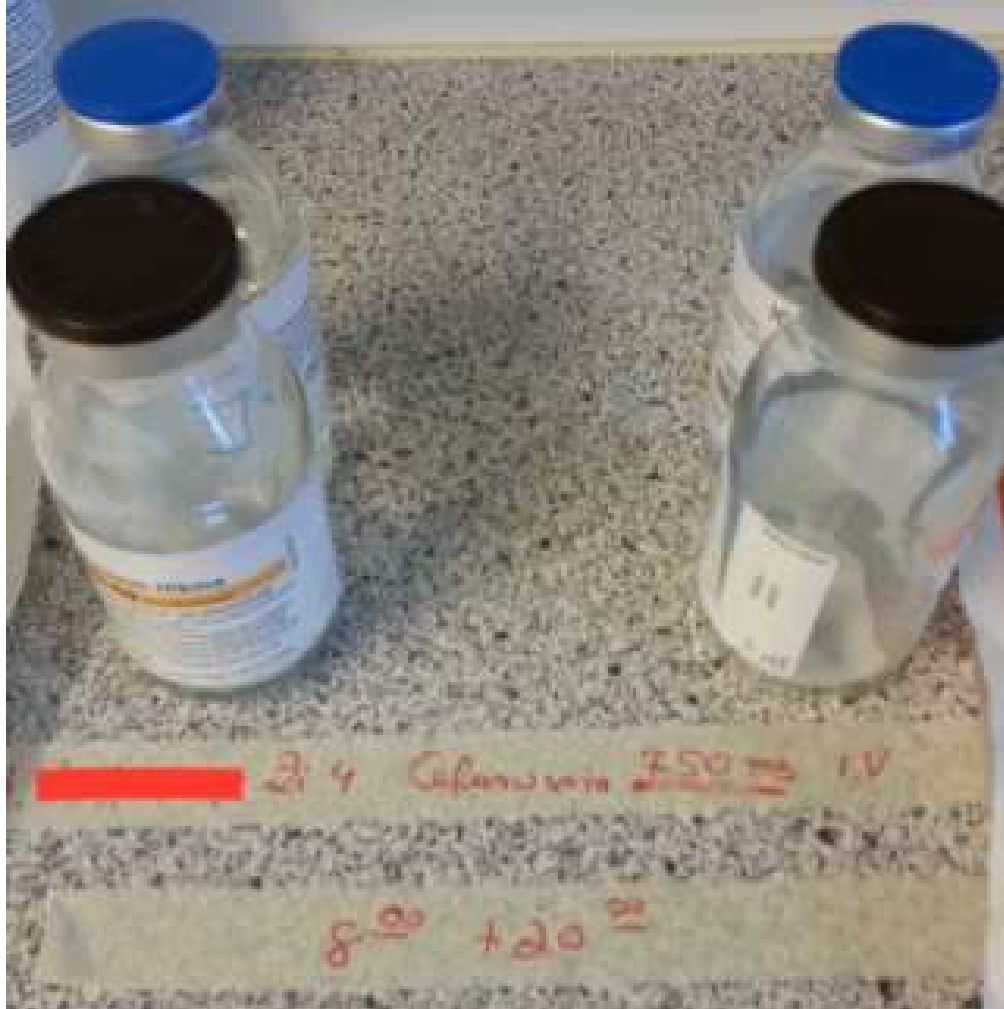 Figure: Physical cognitive artifacts (sticky notes) that OHMDs aim to replace.
The Core Principle: Transmodal Consistency
The most significant theoretical contribution of the paper is the definition of Transmodal Consistency.
Definition: A system is transmodal consistent if it grants access to the same functionality and feedback via different modalities (touch, gesture, speech) with comparable interaction efforts.
- Why it matters: In a surgery, a surgeon cannot touch a touchpad (hygiene). In a noisy ambulance, speech recognition may fail. If a function is only available via one modality, the system fails in a crisis.
Critical Analysis & Conclusion
While the paper is a vital early look at wearables in medicine, it acknowledges significant hurdles:
- Hardware Limitations: Battery life, camera quality (overexposure in ORs), and comfort for users already wearing corrective lenses.
- Environmental Factors: Voice commands are unreliable in chaotic emergency scenes.
- Social Acceptance: Nurses expressed concerns about looking "distracted" from their patients.
Future Outlook: The next generation of medical HCI won't just be about "one device" but about Cross-Device Interaction (XDI)—where OHMDs, tablets, and stationary monitors work in a unified, consistent ecosystem.
Main Takeaway: Designing for healthcare requires a shift from "mobile-first" to "cognition-first" design, where the interface adapts to the professional's physical constraints, not the other way around.