
Optil.io: Transforming Optimization Research through Cloud-Based Crowdsourcing
Optil.io: Cloud Based Platform For Solving Optimization Problems Using Crowdsourcing Approach
Optil.io is a cloud-based Platform as a Service (PaaS) designed for the continuous evaluation and collaborative solving of optimization problems through crowdsourcing. It features an automated "on-line judge" system that compiles and executes source code in a homogeneous environment to provide objective performance rankings.
TL;DR
Optil.io is an innovative cloud platform that brings the "Kaggle model" to the world of optimization algorithms. By providing an automated, homogeneous environment for compiling and testing code, it eliminates the bias of self-reported results in academic papers and creates a competitive, transparent ecosystem for solving complex computational problems like scheduling and logistics.
Background: The Crisis of Reproducibility in Algorithms
In the field of Operational Research and Optimization, a common frustration exists: an author claims their new algorithm is "10% faster," but they tested it on proprietary data, used a custom metric, or ran it on a supercomputer that others cannot access. This lack of a homogeneous run-time environment leads to:
- Incommensurable Results: It is impossible to build a reliable ranking of algorithms if every researcher picks their own "subset" of a benchmark.
- The "Black Box" Problem: Scientific publications often omit source code, preventing industry experts from actually using the proposed solutions.
Optil.io was born to fix this by shifting the evaluation focus from the description of the algorithm to the execution of the code.
Methodology: How the Cloud Judge Works
The core of Optil.io is its Cloud-Based On-line Judge. Unlike standard data mining platforms that only ask for CSV predictions, Optil.io asks for the implementation.
The Workflow
- Problem Submission: Organizations (Academic or Industrial) define a problem and upload a private set of test cases.
- Crowdsourced Solving: Programmers and researchers worldwide submit source code (supporting C, C++, Python, Java, and even CMake scripts).
- Secure Execution: The platform compiles the code and executes it in a sandboxed environment.
- Multi-Dimensional Evaluation: The solution is scored based on solving quality, CPU time, and memory usage.
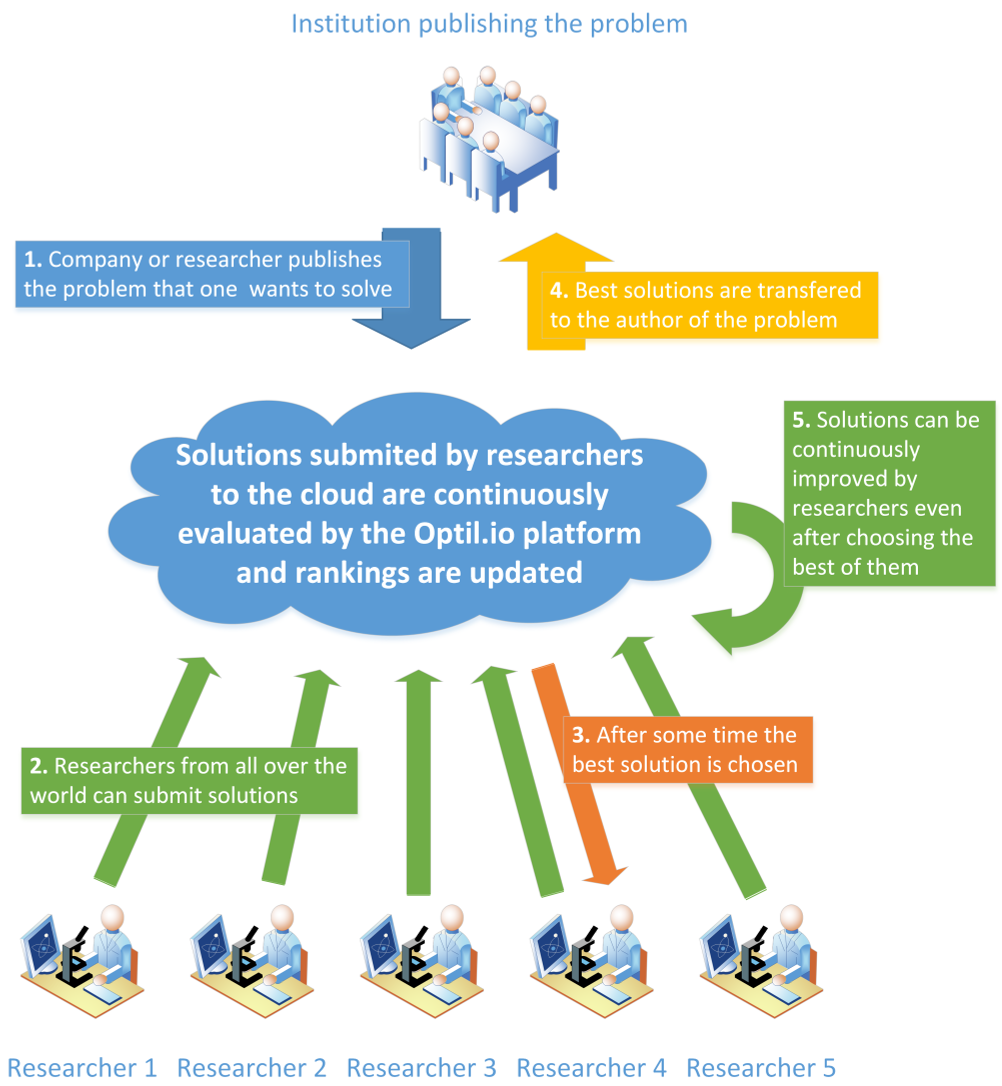 Figure 1: The standardized workflow from submission to objective ranking.
Competitive Landscape
The authors highlight that while platforms like Kaggle and InnoCentive have successfully utilized crowdsourcing, they largely focus on data prediction. Optil.io targets the more complex domain of functional software development for optimization.
| Website | Competitions | Awards (USD) | Primary Focus |
|---|---|---|---|
| Kaggle | 47 | $1.3M | Data Mining / ML |
| TopCoder MM | 15 | $40k | Algorithmic Code |
| Optil.io | Continuous | N/A | Optimization / OR |
Based on 2013 data presented in the paper.
Deep Insight: Why This Matters
The genius of Optil.io lies in its Objective Evaluation. By stripping away the "researcher's freedom" to choose benchmarks or hardware, it forces a fair fight.
From a technical perspective, solving the "safe execution of external code in the cloud" is the platform's greatest hurdle. By formalizing constraints—virtual memory, disk space, and CPU time—as part of the objective function, Optil.io creates a mathematical framework for efficiency that goes beyond simple accuracy.
Experiments and Internal Validation
The platform was initially tested with 90 students at the Poznan University of Technology. This pilot proved that:
- The ranking system effectively distinguishes between high-performance heuristics and inefficient code.
- The PaaS model can scale to multiple concurrent submissions without compromising evaluation integrity.
Critical Analysis & Future Outlook
While Optil.io provides a robust framework for optimization, it faces challenges regarding the diversity of programming environments. As software stacks become more complex (e.g., specific GPU libraries for AI-driven optimization), maintaining a "homogeneous environment" becomes a moving target.
Conclusion: Optil.io is more than just a competition site; it is a piece of scientific infrastructure. By standardizing how we measure algorithmic success, it moves the field of optimization toward a more transparent, reproducible, and industry-ready future.