
Strategizing Exclusivity: Optimal Advertising and Pricing for Luxury Brands under Social Influence
Optimal Advertising and Pricing Strategies for Luxury Fashion Brands With Social Influences
This paper presents a rigorous optimization framework to determine the optimal advertising allocation and pricing strategies for luxury fashion brands. By modeling the social interplay between a "leader group" (seeking exclusivity) and a "follower group" (seeking conformity), the authors identify three distinct strategic archetypes: selling to both groups, targeting only followers, or targeting only leaders.
TL;DR
How does a luxury brand like Dior or Lacoste balance the elite's desire for uniqueness with the masses' desire to copy them? This paper provides a mathematical blueprint for this "exclusivity-accessibility" tradeoff. It reveals that the optimal move isn't always to sell to everyone; sometimes, "advertising to one but selling to all" or "abandoning the elite for the masses" is the path to maximum profit.
The "Lacoste Paradox": Why More Sales Can Hurt
In the luxury world, a product's value is derived from its conspicuousness. However, there are two opposing forces at play:
- The Leader Group (LG): Fashion-conscious consumers who buy to stand out. If too many people own the product, it's no longer "cool."
- The Follower Group (FG): Consumptive conformists who buy what the Leaders buy.
This creates a feedback loop: As more Followers buy the product, its value to the Leaders drops. If the brand isn't careful, the Leaders leave, the brand image collapses, and eventually, even the Followers lose interest. This paper asks: Where is the scientific line for pricing and advertising in this volatile system?
Methodology: Decoding the Social Engine
The researchers built an optimization model based on two interdependent demand functions:
- Leader Demand (): Decreases with Follower demand ().
- Follower Demand (): Increases with Leader demand ().
Both groups respond to advertising () and price (). The brand must decide how to split its advertising effort () between these segments.
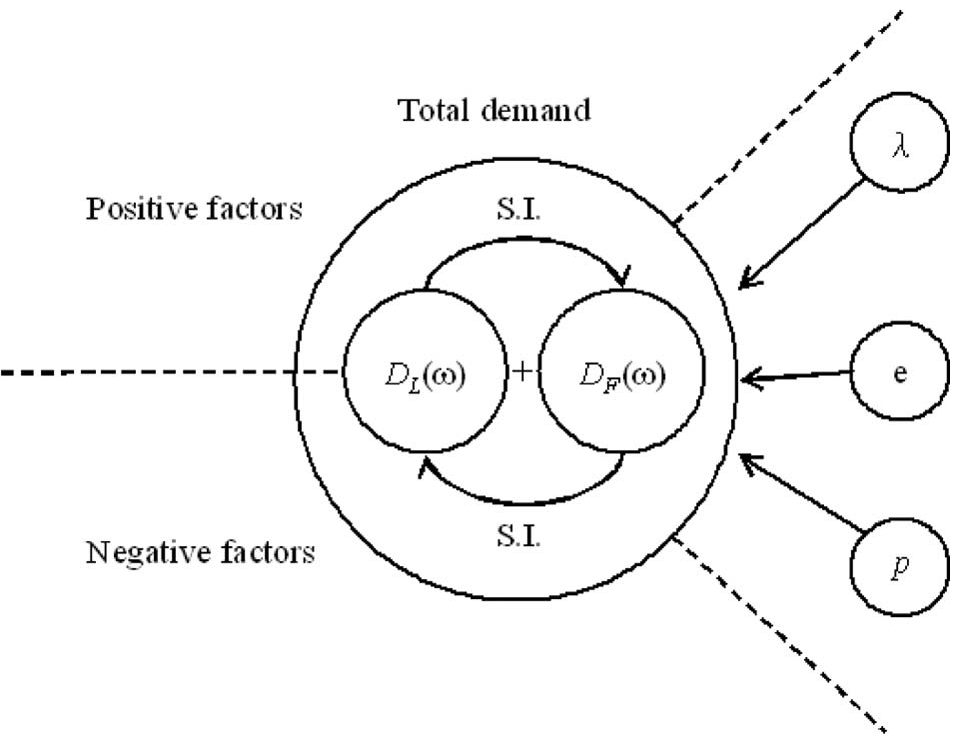
The challenge? The demand functions are "non-differentiable" because they are capped at zero—you can't have negative demand. This requires a "Tactic-Based" solution scheme:
- Tactic I: Sell to both.
- Tactic II: Target FG only (Volume-driven).
- Tactic III: Target LG only (Exclusivity-driven).
Key Insights: Which Tactic Wins?
The study finds that the "ideal" strategy shifts dramatically based on market parameters:
1. The Advertising Bias
Even if you sell to everyone (Tactic I), you should almost always put 100% of your advertising budget into the group that is most responsive. If Leaders drive the trend, advertise to them; the Followers will follow even without being targeted directly.
2. The Asymmetry of Influence
The "snob effect" (Leaders disliking Followers) is often more destructive than the "bandwagon effect" (Followers liking Leaders) is constructive. As the snob effect () increases, brands are forced to narrow their target and often earn less.
3. Cost Sensitivity
When production costs () are low, it's often better to focus on the Follower group for volume. When costs are high, the brand must pivot to the Leaders, who are willing to pay a premium for the high price tag (which itself acts as a barrier to the masses).
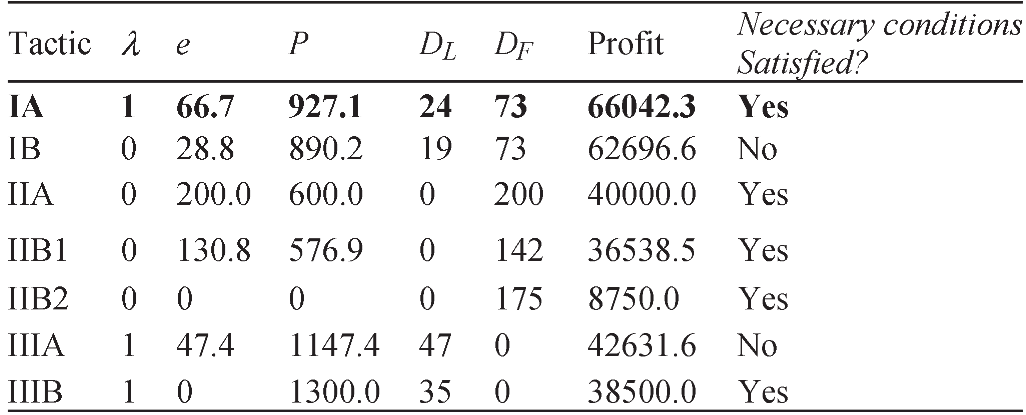 In the example above, Tactic IA (Selling to both, advertising to Leaders) yields the highest profit.
Critical Analysis & Conclusion
Takeaway
Luxury is a game of social signaling. This paper moves beyond marketing intuition to show that over-advertising to the wrong group can actively destroy profits by triggering the snob effect too quickly.
Limitations & Future Work
The model assumes a monopoly. In reality, a "Leader" might dump Dior for Chanel the moment Dior becomes too popular. Future research needs to account for multi-brand competition and the speed of "fashion cycles," where the social influence parameters change over time rather than remaining static constants.
For managers, the message is clear: Understand your "Advertising Allocation Sensitivity" (). If your brand's growth depends on the Follower group, yet your soul (and premium pricing) lives with the Leaders, scientific balancing—not just "more advertising"—is the only way to avoid the value-erosion trap.