
Balancing Defense and Overhead: A Differential Game Approach to Patch Dissemination
Optimal Dissemination Strategy of Security Patch Based on Differential Game in Social Network
This paper proposes an optimal dissemination strategy for security patches in social networks using a non-cooperative differential game framework. By deriving a feedback Nash equilibrium, the authors identify a dissemination rate that balances the protection of virtual assets with the costs of network energy and congestion.
TL;DR
Securing social networks isn't just about stopping viruses; it's an economic balancing act. This paper introduces a non-cooperative differential game model to determine the "Optimal Dissemination Rate" for security patches. By mathematically modeling the competition between protecting virtual assets and saving battery/bandwidth, the authors provide a strategy that reduces costs compared to traditional static game models.
Background: The Hidden Cost of Defense
In modern social networks, security threats like malware and phishing are constant. While security patches are the standard "cure," their distribution isn't free. Disseminating patches consumes bandwidth and battery power (energy cost), and excessive traffic can lead to network congestion.
The core challenge is a dynamic trade-off:
- Too slow: Users lose virtual assets (privacy, data, digital currency).
- Too fast: The network collapses under the weight of its own defense.
Methodology: The Differential Game Framework
Unlike static games that look at a single moment in time, a Differential Game models how the state (number of patched users) evolves continuously.
1. The Dynamic State Equation
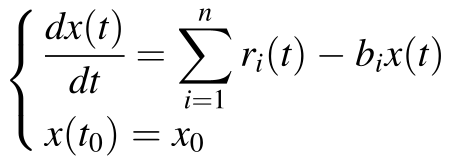
The researchers define the growth of successfully patched nodes through a differential equation that accounts for the dissemination rate and a decay factor :
2. The Cost-Benefit Function
The "Profit" for a node is defined by:
- Rewards: Gained for participating in the defense.
- Energy Costs: Modeled as a quadratic function of the rate .
- Asset Loss: The financial/data damage from being unpatched.
- Congestion Penalty: Added costs as more patches flood the network.
3. Solving for the Nash Equilibrium
Using the Isaacs-Bellman equation, the authors derive the optimal feedback strategy. This ensures that even if the network state changes unexpectedly, the node knows the mathematically perfect rate to minimize its total loss.

Experimental Validation
The authors simulated a network of 60 nodes categorized into different groups based on their "willingness" and "cost sensitivity."
- Profit Growth: As the game progresses, nodes using the optimal strategy see a steady increase in cumulative profit as the threat is neutralized.
- Comparison with SOTA: The proposed scheme was tested against the Bayes Game model. The results showed a significant reduction in total average cost, proving that accounting for the "time-varying" nature of the network is superior to static probability-based defenses.
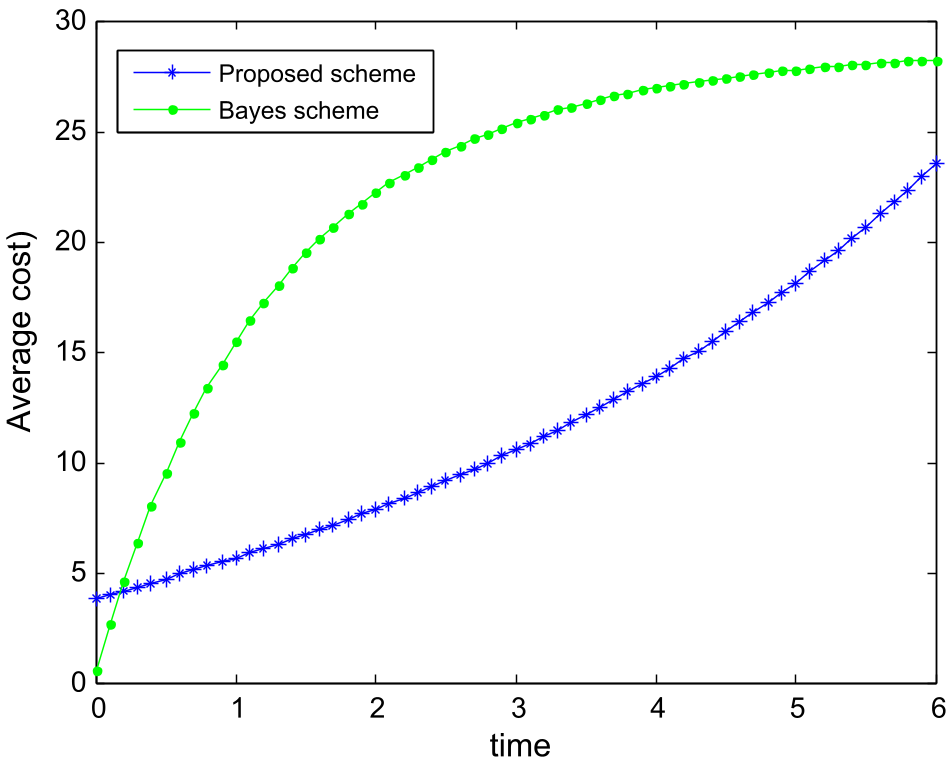 Fig 8: Comparative analysis showing the proposed scheme maintaining lower costs than the Bayes game baseline.
Critical Insight & Conclusion
The significance of this work lies in its Inductive Bias: it assumes that security is not a binary state (infected vs. safe) but a continuous process of resource management.
Limitations: While robust, the model assumes "rational" nodes. In real-world social networks, human behavior or compromised nodes might act irrationally, which could disrupt the Nash Equilibrium. Future extensions could incorporate Stochastic Games to account for random network failures or "Byzantine" actors who intentionally provide false dissemination data.
Final Takeaway: For network administrators and security architects, this paper provides a rigorous mathematical foundation for automating patch delivery systems that are "network-aware"—protecting the user without killing the connection.