
Optimal Pre-Filtering: How to "Trick" Facebook into Preserving Your Image Quality
Optimal Pre-Filtering for Improving Facebook Shared Images
This paper introduces an optimal DCT-domain pre-filtering strategy designed to mitigate quality degradation in color images shared over Online Social Networks (OSNs), specifically targeting Facebook. By treating the platform as a "black box" and modeling its lossy operations, the method achieves significant quality improvements, reaching a Peak Signal-to-Noise Ratio (PSNR) gain of up to 7.61dB for smartphone-captured images compared to direct sharing.
TL;DR
Uploading high-quality photos to Facebook often results in disappointing "pixelated" results due to the platform's aggressive compression. This paper presents a novel pre-filtering algorithm that modifies your images before upload. By mathematically modeling Facebook's black-box processing pipeline, the system "cajoles" the platform into applying its highest quality settings, resulting in PSNR gains of up to 7.61dB—a massive leap compared to traditional denoising.
The Problem: The "Black Box" of OSN Degradation
Most users assume that if they upload a high-resolution JPEG, it stays that way. In reality, Online Social Networks (OSNs) apply a series of lossy operations:
- Format Conversion: Converting everything to 24-bit RGB.
- Adaptive Resizing: Shrinking images if they exceed 2048 pixels.
- Content-Adaptive JPEG Compression: Applying different Quality Factors (QF) based on image complexity.
Traditional solutions involve post-filtering (denoising after download), which is cumbersome and fails because the "noise" added by Facebook is signal-dependent and incredibly complex to model.
Methodology: Designing the "Invisible" Shield
The authors propose a Pre-filtering-then-sharing strategy. Instead of fixing the damage, they prevent it.
1. Reverse Engineering the Pipeline
The researchers treated Facebook as a black box, uploading thousands of images to map its behavior. They discovered a critical "exploit": if an uploaded image's Discrete Cosine Transform (DCT) coefficients follow a distribution similar to an uncompressed raw image, Facebook defaults to its highest Quality Factor (QF=92).
2. The Optimization Framework
The core idea is to add a specific "additive noise" () to the original DCT coefficients (). The goal is to minimize: Where is Facebook's processing function.
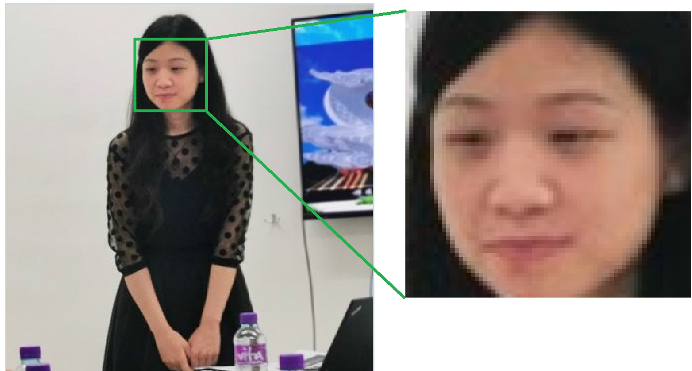 Fig 1: Comparison between traditional sharing (a) and the proposed pre-filtering scheme (b).
3. Distribution Shaping
The pre-filter shifts the AC coefficients of the JPEG image toward a Laplacian distribution (characteristic of raw images) while ensuring the values stay within the original quantization intervals. This ensures that the pre-filtering itself doesn't introduce visible artifacts, but the resulting "modulated" image forces Facebook to be "gentle" during its own compression phase.
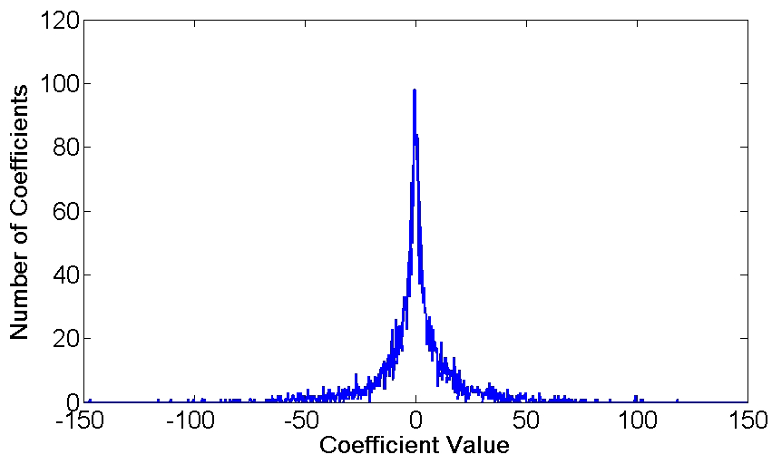 Fig 2: Statistical modeling of AC coefficients used to estimate the target distribution.
Experimental Battleground: Facebook in the Real World
The authors didn't just simulate; they used real Facebook uploads. They tested three datasets: Standard (Kodak), Internet images, and Smartphone photos (iPhone, Huawei, Xiaomi).
Quantitative SOTA Comparison
Compared to state-of-the-art denoising like BM3D or Deep CNN (DnCNN), the proposed method dominated:
- iPhone X Max: +7.61 dB average gain.
- Internet Images: +4.14 dB average gain.
Traditional denoising methods actually suffered PSNR drops in some cases because they couldn't handle Facebook's specific "noise."
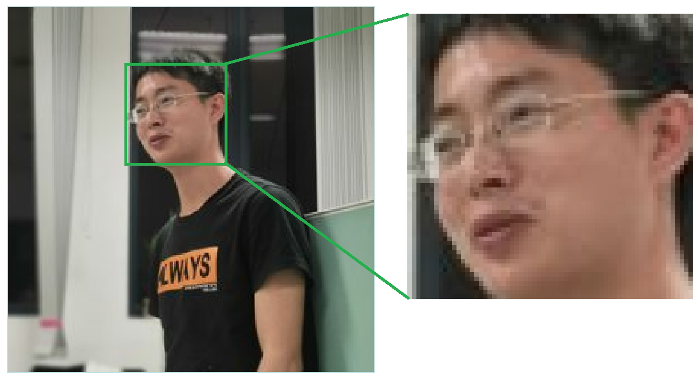 Fig 3: Visual comparison. Notice the suppression of blocking artifacts in the top row and sharper text in the middle row.
Critical Insight: The Cost of Quality
Is there a catch? Yes—File Size. To keep the pre-filtered image "clean" for Facebook, it must be uploaded in a lossless format (like TIFF). This results in an upload file size about 6.7 times larger than a standard JPEG. However, as the authors argue, uploading is a "once-and-for-all" cost, whereas the improved quality is enjoyed by every user who views or downloads the shared image.
Conclusion & Future Outlook
This paper proves that you don't need to change the platform to change the quality. By understanding the Inductive Bias of compression algorithms, we can craft inputs that are "compression-friendly." While this study focused on Facebook, the methodology—probing the black box and optimizing the input distribution—is a blueprint for improving user experience on any image or video-sharing platform in the future.