
Balancing the Scales: Achieving Optimal Privacy in Social Recommender Systems
Achieving Optimal Privacy in Trust-Aware Social Recommender Systems
The paper introduces a privacy-preserving framework for trust-aware recommender systems that utilizes interpersonal trust and data perturbation. It employs a decentralized architecture where user ratings are masked using z-score normalization and random noise, achieving a state-of-the-art balance between recommendation accuracy and data privacy.
TL;DR
Researchers have long struggled with the "Privacy-Accuracy" tug-of-war in recommendation systems. This paper presents a breakthrough framework that masks user ratings using z-score perturbation and fake data insertion, yet miraculously achieves better accuracy than standard non-private trust-based models. By treating the problem as a Pareto optimization, the authors find a "sweet spot" where privacy and performance coexist.
The Core Conflict: Why Trust Isn't Enough
Collaborative Filtering (CF) is the engine behind "Word-of-Mouth" automation. To solve the problem of sparse data, modern systems use Interpersonal Trust—if you trust a friend, the system weights their movie ratings higher for you.
However, this creates a massive security hole:
- Centralization: Most systems require you to upload your honest (and private) preferences to a server.
- Unprotected Trust: Computation of trust often reveals who you interact with and what you like, making you a target for Shilling Attacks (fake profiles manipulating ratings).
The authors argue that privacy and accuracy are inherently conflicting. High perturbation (noise) protects data but kills accuracy. Low noise yields high accuracy but leaks secrets.
Methodology: The Private Trust Architecture
The proposed framework extends the standard trust-aware architecture by inserting a Private Trust Metric and a Private Rating Predictor module.
1. Data Disguising via Z-Scores
Instead of using raw ratings (e.g., 1-5 stars), the system transforms data into z-scores (measuring how much a rating deviates from the user's average).
To hide these values, users add random noise () from a Gaussian or Uniform distribution. This ensures that even if an attacker sees the "masked" vector, they cannot reverse-engineer the original preference.
2. Filling the Void (Unrated Items)
Simply masking existing ratings isn't enough; the pattern of which items you rated can reveal your identity. The authors suggest filling percent of unrated items with random "fake" data to obfuscate the user's actual purchase history.
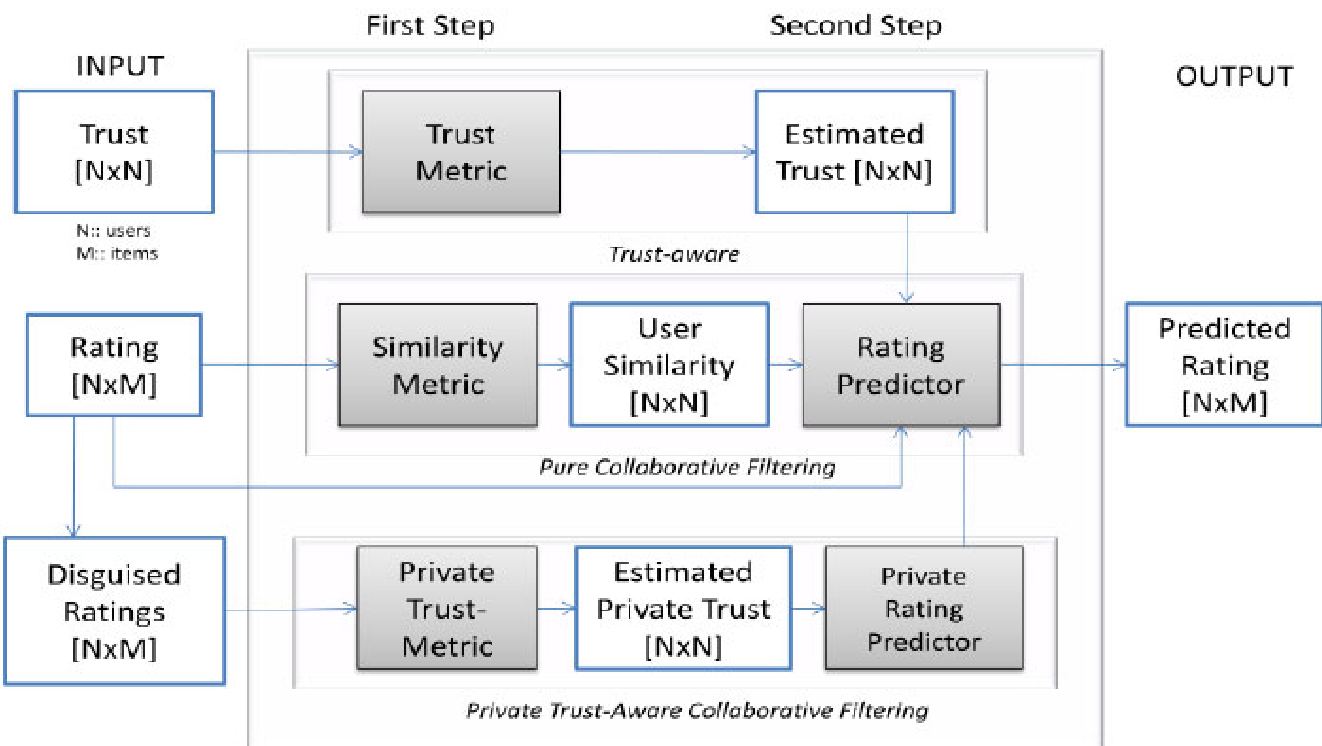 Figure 1: The extended architecture incorporating private trust metrics and masked rating sets.
Finding the "Optimal Privacy Set" (OPS)
The most technical contribution is the use of Pareto Optimality. The authors define two configuration sets:
- PCS (Privacy Configuration Set): Controls the noise levels ().
- TCS (Trust Configuration Set): Controls the recommendation logic ( neighbors, trust threshold).
By using a heuristic search, they found that the configuration provided a stable Pareto frontier.
Experimental Results: Privacy as a Performance Booster?
The results on the MovieLens dataset provided a surprising insight.
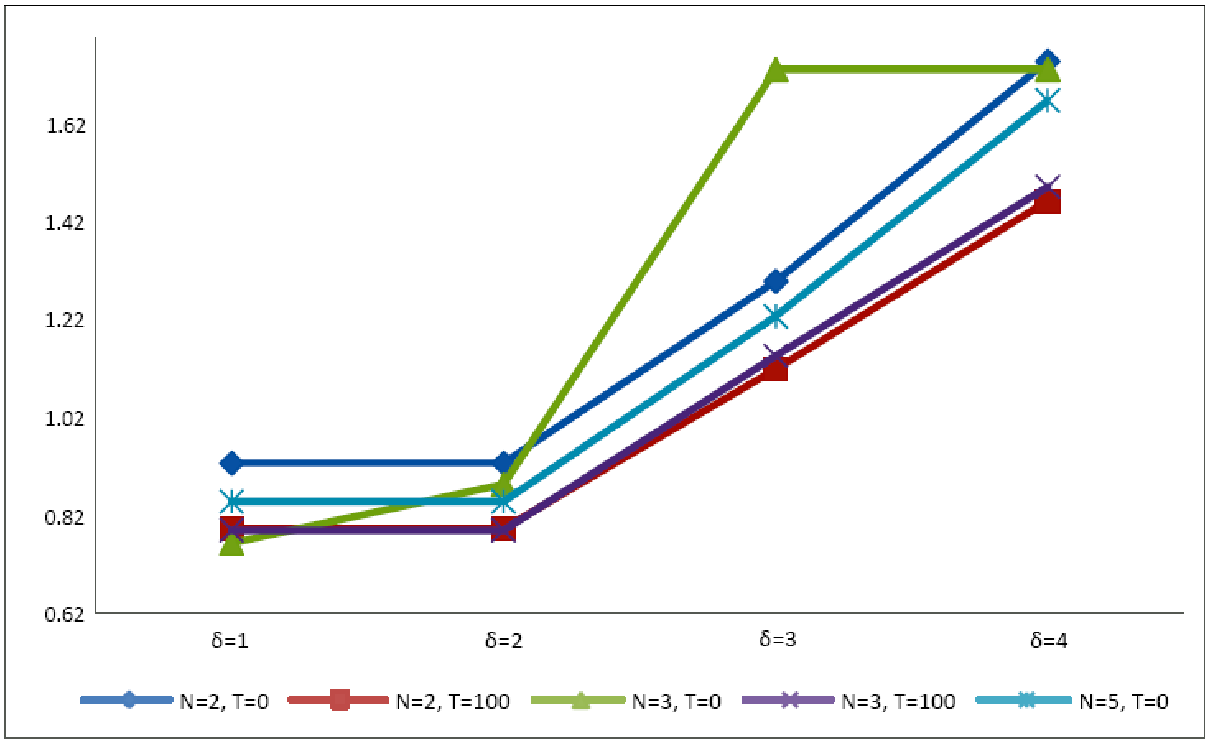 Figure 2: Effects of Gaussian (a) and Uniform (b) noise on Mean Absolute Error (MAE). Lower is better.
- Accuracy Baseline: The non-private trust-aware system achieved a best MAE of 0.863.
- Privacy-Preserving Result: The optimized private framework achieved a superior MAE of 0.7994.
Why did accuracy improve with noise? The researchers suggest that the normalization (z-scores) and the specific "Optimal Privacy Set" act as a regularizer, filtering out the noise inherent in raw user behavior while the trust mechanism preserves the essential social signals.
Critical Insight & Conclusion
This work challenges the cynical view that privacy always costs performance. By carefully choosing the joint configuration of privacy and trust mechanisms, the authors proved that you can "have your cake and eat it too."
However, the framework currently assumes a relatively honest environment regarding the decentralized protocol. Future work is needed to stress-test this architecture against sophisticated shilling attacks where malicious agents deliberately try to poison the Pareto optimization process.
Deep Takeaways
- Z-score normalization is a more effective base for perturbation than raw rating masking.
- Hiding unrated items is just as important as hiding rated ones to prevent profile leakage.
- Trust-aware heuristics can survive, and even thrive, in low-fidelity (masked) data environments.