
Bridging the Age Gap: Crowdsourcing Grandparent-Grandchild Relationships in the SNS Era
Optimized Anonymity for Intergenerational Communication Based on the Concept of Crowdsourcing
This paper explores the creation of "augmented grandparent-grandchild (GP-GC) relationships" by connecting seniors on a dedicated SNS ("Kashiwa Social") with young people on Twitter via a mediator system. The study utilizes a crowdsourcing-inspired approach to bridge the digital divide and foster intergenerational communication in hyper-aged societies.
TL;DR
In hyper-aged societies, the traditional grandparent-grandchild (GP-GC) bond is fraying due to independent living and a digital divide. This paper investigates whether we can "engineer" these relationships using a mediator system that connects seniors on a private SNS with young adults on Twitter. While seniors showed high interest in the lives of the youth, the study reveals a fascinating friction: the clash between the fast-paced, context-heavy "tweet" culture and the mentor-like, often overbearing communication style of seniors.
Context: The Social Loneliness of Hyper-Aged Societies
As global demographics shift, particularly in regions like Japan, the "intergenerational gap" is no longer just a cultural cliché—it is a structural reality. Most seniors now live independently, losing the emotional fulfillment and "mentor" status that comes with the GP-GC relationship. The authors argue that SNS platforms, if designed correctly, could act as a "crowdsourced" solution to this loneliness, providing seniors with a renewed sense of purpose and grandchildren with emotional support.
Methodology: Connecting Two Worlds
The researchers built a Bridge System between two distinct demographics:
- The Seniors: 70 users (avg. age 67) on "Kashiwa Social," a simplified SNS interface designed by NHK.
- The Youth: 5 male university students on Twitter.
The system functioned as a translator. When a student tweeted, it appeared as a topic on the senior SNS. When a senior commented, it was sent back to the student as a Twitter reply.
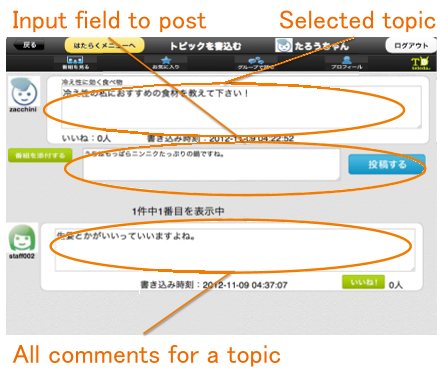
The senior-facing interface (a) provides a simplified "top page" to reduce cognitive load, while the study systematically varied the level of anonymity (as seen in Table 1) to see how much personal data was needed to spark a connection.
The "Overbearing" Paradox: Experimental Results
The findings were a mix of quantitative success and qualitative frustration.
- High Interest: When the mediator system went offline (Day 22–33), views from seniors plummeted. This proves that seniors were genuinely interested in the "lifelogs" of the young people.
- Communication Friction: Although seniors were watching, their interactions were... complicated. Instead of the supportive dialogue the researchers hoped for, seniors often provided "overbearing" advice.
Sample Interactions:
- "You said your English is poor, but you should study much harder before you say so."
- "First, answer your question by yourself."
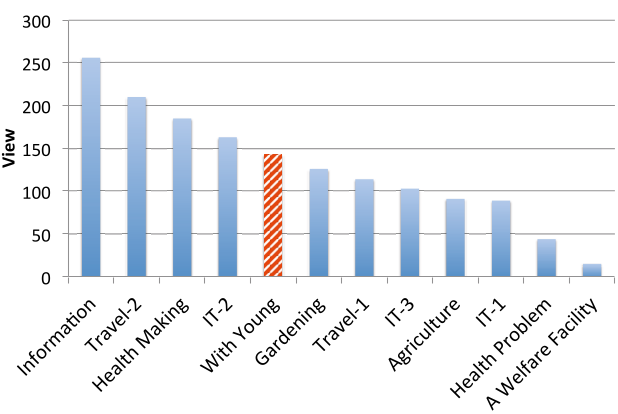
The data shows a clear drop in "Views" (b) when the feed of young people's activities was interrupted, proving that intergenerational content is a significant "hook" for senior engagement.
Critical Insight: The "Anonymity" Mismatch
The study highlights a fundamental cognitive difference in how the two generations perceive online identity.
- The Young are comfortable with "abstract" crowdsourcing and context-heavy, brief tweets.
- The Seniors felt the tweets were "too difficult and complicated." They demanded more concrete data: What does he look like? Is he married? What are his hobbies?
The seniors didn't want a "crowd"; they wanted a person.
Conclusion and Future Outlook
This work serves as a vital first step in "Augmented GP-GC" relationships. It suggests that simply piping Twitter feeds into a senior-friendly UI isn't enough. Future systems must:
- Filter for Context: Translate the "slang" and brevity of youth tweets into something seniors can relate to.
- Manage Expectations: Bridge the gap between the seniors' "preaching" instinct and the youths' desire for casual interaction.
The "crowdsourcing" of family-like bonds is possible, but it requires more than a technical bridge—it requires a cultural translator.
Takeaway for Designers
When building for the "Silver Economy," remember that seniors value explicit identity over functional anonymity. Engagement is high, but the "Social UI" must actively coach seniors on how to participate without becoming overbearing "internet grandparents."