
Optimized Crowdsourcing: Solving the Bike-Sharing Imbalance Problem
Optimizing the Crowdsourcing-based Bike Station Rebalancing Scheme
This paper introduces a crowdsourcing-based rebalancing scheme for Bike-Sharing Systems (BSSs) that recruits workers to move bikes from overflow to underflow stations. The authors propose the "Two-Round Matching" (TRM) algorithm, achieving a 3-approximation ratio in Euclidean space to minimize detour costs, outperforming traditional truck-based or simple greedy approaches.
TL;DR
Researchers have developed a new crowdsourcing framework to keep bike-sharing stations balanced by recruiting workers who are already traveling. By partitioning the problem into discrete time slices and using a novel Two-Round Matching (TRM) algorithm, they achieve a 3-approximation optimal detour cost, making the system both sustainable and computationally efficient for large-scale cities like New York.
Background: The Out-of-Service Nightmare
Bike-sharing systems (BSSs) are victims of their own success. Commuter patterns create "tidal" flows—stations in business districts overflow in the morning, while residential stations run dry. These Out-of-Service (OoS) events frustrate users and lose revenue. Traditionally, operators use trucks to shuffle bikes around, but trucks are expensive, contribute to traffic, and move slowly through congested urban cores.
The Core Insight: Workers as Rebalancers
The authors propose a shift from heavy logistics to crowdsourcing. By offering rewards (like free rides) to "workers" who are already moving between a source and destination, the system can move bikes from overflow stations to underflow stations with minimal extra travel (detour).
The challenge is two-fold:
- Spatial (The WAP): In any given moment, which worker should pick up which bike from which full station and drop it at which empty station to minimize the total detour? This is a 3D Matching Problem, known anyway to be NP-hard.
- Temporal (The CDP): How often should we rebalance, and what should the target bike count be for each station to prevent future OoS events?
Methodology: Two-Round Matching (TRM)
To solve the NP-hard Worker Assignment Problem (WAP), the paper introduces the Two-Round Matching algorithm. Instead of trying to solve the worker-rent-return triplet all at once, it breaks it down:
- Stage 1: Station-to-Station Matching. The algorithm first matches overflow stations () to underflow stations () purely based on distance, ignoring the workers for a moment.
- Stage 2: Worker-to-Pair Matching. It then treats the station pairs from Stage 1 as single units and performs a second matching to assign them to available workers () based on the worker's source and destination.
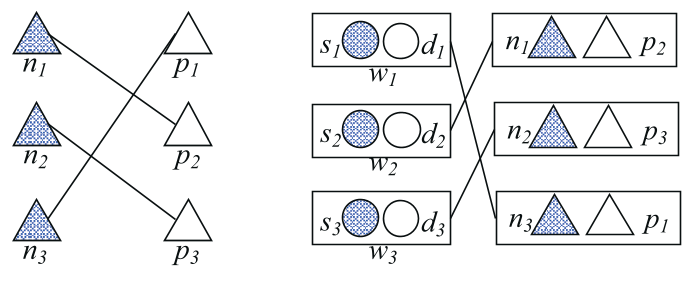 Fig 1: The two-stage matching process simplifies 3D matching into two efficient computation steps.
This approach is mathematically proven to be a 3-approximation algorithm, meaning the total detour will never be worse than three times the theoretical optimum.
Temporal Strategy: GLA vs. kGA
For the temporal domain, the authors compare a fixed-slice approach (kGA) with a Greedily Look-ahead Algorithm (GLA). The GLA calculates the "survival time" of each station—how long it can last without an OoS event—and dynamically adjusts the rebalancing window.
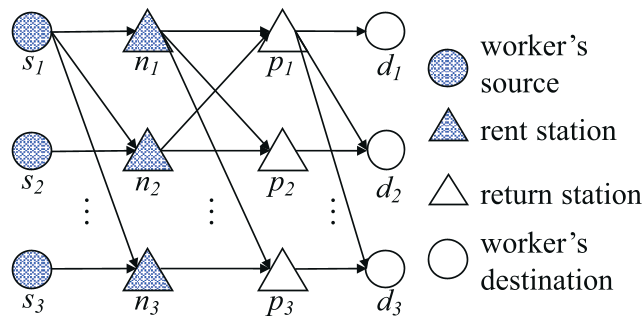 Fig 2: Discretized time slices allow the system to predict and react to station state changes.
Experimental Evidence
The system was tested using 1.5 million trip records from NYC Citi Bike. Key findings include:
- Efficiency: TRM is drastically faster than Local Search (LS). While LS might take over 24 hours for large datasets, TRM provides solutions in seconds, making it viable for real-time operations.
- Density Impact: Higher station density actually reduces detour costs, as workers find stations closer to their natural paths.
- Performance: TRM performs significantly better than a simple greedy baseline and stays close to the absolute optimum (calculated via Branch-and-Bound for small sets).
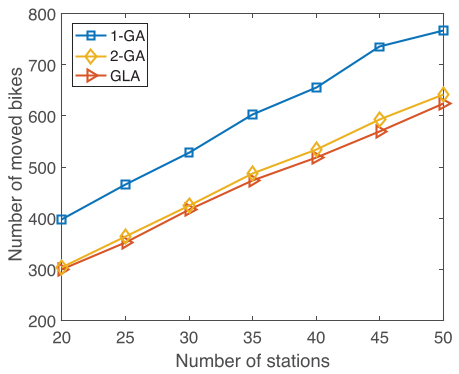 Fig 3: Performance comparison across different station densities and algorithms.
Critical Insight & Future Outlook
The beauty of this research lies in its scalability. By decoupling the spatial and temporal complexities, the authors have turned a daunting urban planning nightmare into a manageable matching problem.
Limitations: The model assumes workers are always available and willing to participate. In a real-world deployment, the "incentive" (monetary reward) would need to be dynamically adjusted based on the difficulty of the detour, a factor that could be integrated with the TRM algorithm in future iterations.
Conclusion: As BSSs continue to grow, crowdsourcing represents the most "green" and cost-effective way to handle rebalancing. This paper provides the mathematical backbone needed to make such a system a reality.