
CSI & Systems Thinking: Designing a Viable Future for Healthcare Optimization
Optimizing Healthcare
This paper introduces "Collective Social Intelligence" (CSI), a holistic framework combining systems thinking and cybernetics to optimize healthcare systems. By integrating the Viable Systems Model (VSM) with a "Knowledge Flow to Value" methodology, the authors propose a scalable template to improve rural healthcare through better collaboration and IoT-driven data analytics.
TL;DR
Healthcare is a "wicked problem" of complexity that cannot be solved by technology alone. This paper presents Collective Social Intelligence (CSI)—a framework that merges cybernetics, design thinking, and Big Data to transform healthcare into a Viable System. By shifting from crisis-oriented models to integrated community-based care, the authors provide a roadmap for "Health, Home, and Hygiene" that leverages IoT and collaborative diagnosis.
The Motivation: Why "Silver Bullets" Fail in Health
The authors argue that there is no singular technological fix for healthcare. Currently, the industry suffers from a "top-down" bias, excelling at emergency surgery but failing at "bottom-up" community integration—rehabilitation, mental health, and home care. With US healthcare costs hitting nearly 18% of GDP, the current trajectory is unsustainable.
The root cause of failure isn't a lack of data, but unmanaged complexity. Most IT projects fail because they lack a clear "Knowledge Model" of how different stakeholders—from rural GPs to major hospitals—actually collaborate.
Methodology: The Cybernetic Pulse of CSI
The core of the paper is the synthesis of several high-level management and engineering frameworks:
- Viable Systems Model (VSM): Derived from Stafford Beer, this allows organizations to be "recursive," meaning every unit (from a clinic to a national network) has the autonomous capacity to regulate itself while contributing to the whole.
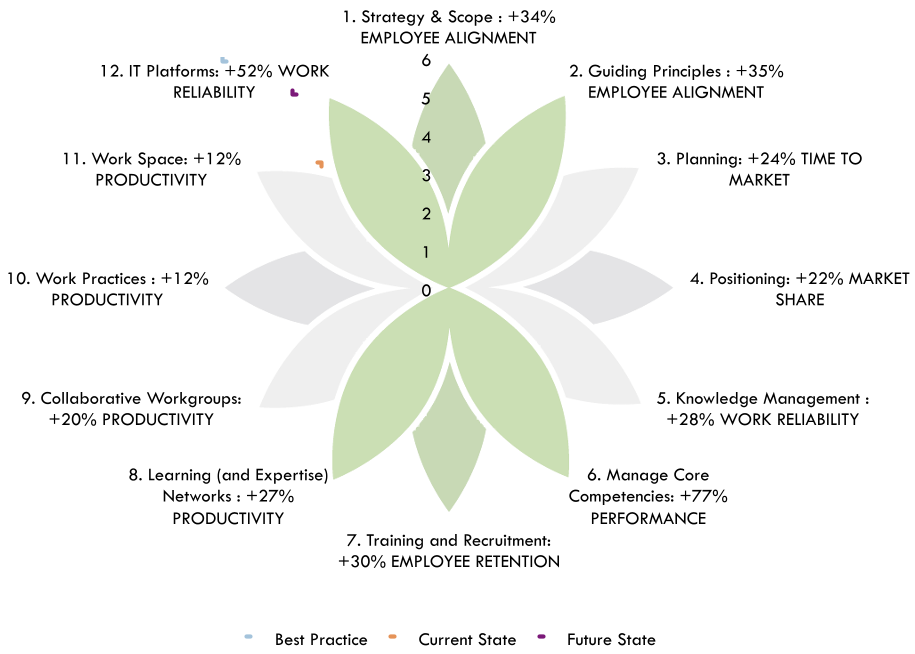
- The 12-Point Plan for Collaboration: A maturity-based assessment categorized into Basic Requirements, Efficiency Enhancers, and Innovation Enhancers.
- OODA Loops (Observe-Orient-Decide-Act): Used to filter "digital rubbish" from the internet and IoT into actionable insights for rapid medical response.
The Healthcare Knowledge Model
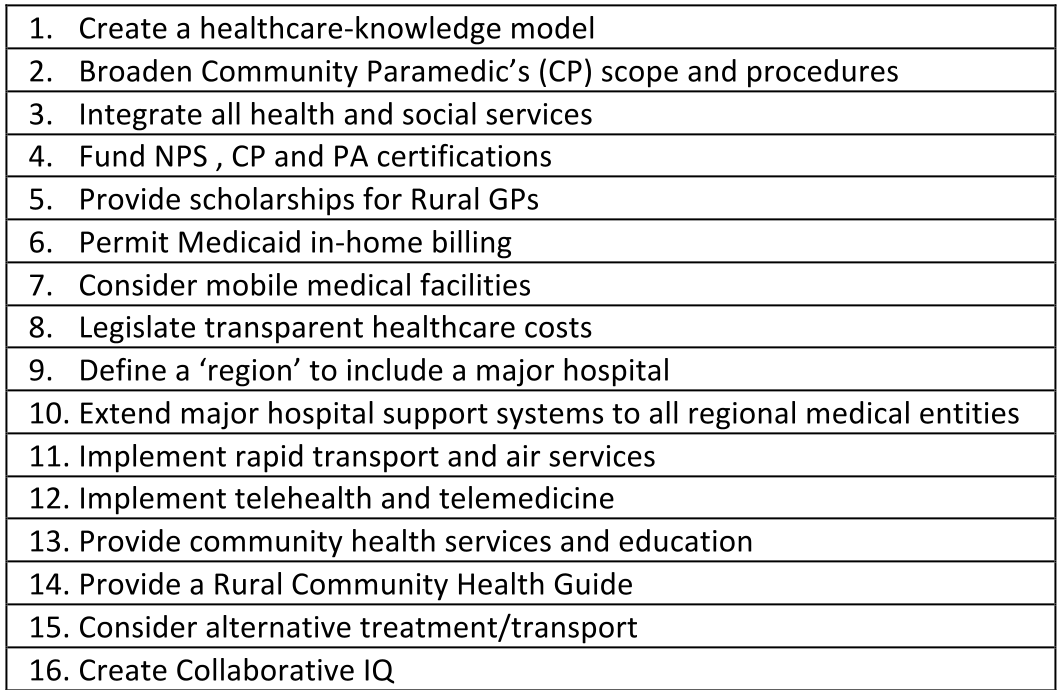
The authors propose a 16-action template for rural communities that expands the scope of Community Paramedics and integrates social services with telehealth.
The Core Concept: Knowledge Flow to Value
A standout contribution is The Document Methodology (TDM). In this context, a "document" is any information object that acts as an input/output of a work process. By modeling these flows, CSI ensures that data gathered from IoT devices or social networks doesn't just sit in a "data wasteland" but actively improves diagnosis.
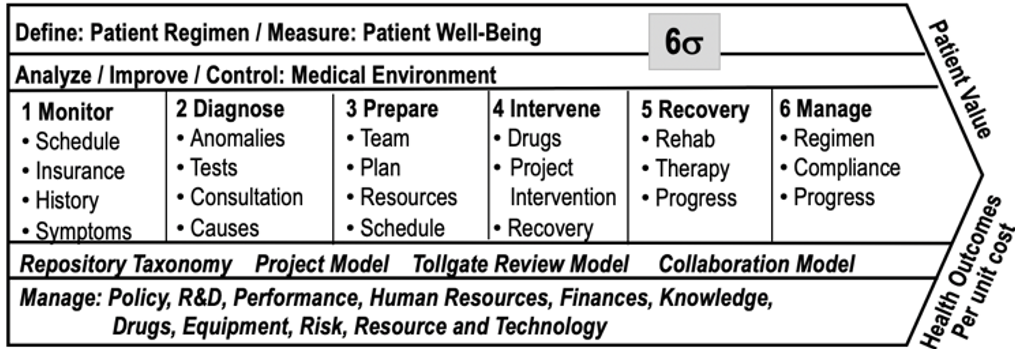
The Integrated Practice Unit (IPU) is the operational vehicle for this flow. It organizes a multidisciplinary team around a specific medical condition rather than a hospital department, ensuring the patient receives a seamless "cycle of care."
Results and Critical Insights
The CSI approach moves beyond theoretical modeling into software deployment through platforms like PlaceOS and JarvizIoE.
- Transparency: By visualizing the "national diamond" of factor conditions, the model forces cost transparency in healthcare legislation.
- Maturity Tracking: Using Polar Plots (Fig. 4), organizations can measure their collaborative maturity across 12 criteria, transforming qualitative "teamwork" into quantitative "Competitive Advantage."
Limitations
While the systemic view is robust, the paper heavily relies on proprietary frameworks and Dr. Jones' previous literature. The success of the "16-action plan" depends significantly on legislative willingness (e.g., Medicaid billing changes), which remains a hurdle outside the technical scope.
Final Takeaway
This work demonstrates that Healthcare Optimization is not an IT problem—it is a Collaborative IQ problem. By treating an organization as a biological, viable system that processes knowledge for value, we can transition from a crisis-managed industry to a community-integrated one.