
Optimizing Social Influence: The Power of Partial Incentives
Optimizing Spread of Influence in Social Networks via Partial Incentives
This paper introduces the Weighted Target Set Selection (WTSS) and Targeting with Partial Incentives (TPI) problems to optimize influence diffusion in social networks. By extending the classical linear threshold model to include non-negative activation costs and fractional incentives that lower node thresholds, the authors provide hardess results and propose two greedy polynomial-time algorithms that achieve optimal results for trees and cliques.
TL;DR
Traditional viral marketing models assume you either "buy" an influencer or you don't. This paper breaks that binary logic by introducing Partial Incentives. By offering small discounts or partial "nudges" to many nodes, we can trigger a global cascade at a much lower cost. The authors provide theoretically grounded algorithms that are proven optimal for specific structures and outperform industry heuristics on real-world social graphs.
Background: Beyond the "Big Seed" Theory
In social network analysis, the Target Set Selection (TSS) problem asks: What is the smallest group of people I need to influence to convince the whole network?
However, real life is more nuanced:
- Heterogeneous Costs: Recruiting a celebrity costs more than a student.
- Fractional Influence: You don't always need to give a product away for free. Sometimes a 20% discount makes someone "susceptible enough" to be convinced later by their friends.
The Core Innovation: Targeting with Partial Incentives (TPI)
The authors define a new optimization problem where an incentive reduces the threshold of a node. If a node's threshold is 5, and we give it an incentive of 2, it now only needs 3 influenced neighbors to "flip."
The Algorithm (TPI)
The proposed algorithm uses a clever "greedy deletion" strategy. Instead of picking who to influence first, it looks at the graph and decides who is least useful to the diffusion process at the current cost and prunes them, or increases incentives for nodes that are "stuck."
The Selection Intuition: The algorithm picks nodes to eliminate based on the ratio: where is the current threshold and is the degree. This formula captures the "bang-for-buck" of each node in the surviving network.
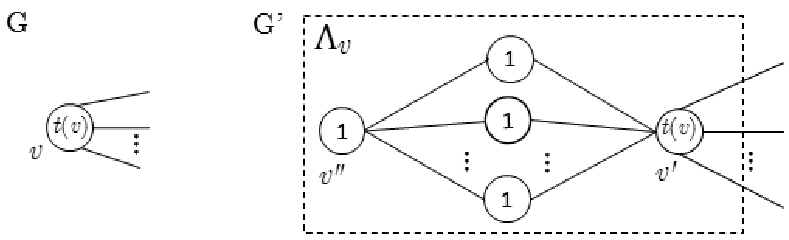 Figure 1: The Weighted Target Set Selection (WTSS) algorithm logic.
Experimental Proof: Real-World Dominance
The authors tested their approach against common heuristics on datasets like Facebook, Amazon, and YouTube.
Key Findings:
- Efficiency: On the Amazon dataset, the closest competitor (DiscountFrac) required 623% more budget than the proposed TPI algorithm to achieve the same result.
- Structure Sensitivity: The algorithm performs exceptionally well in networks with community structures (clusters) that typically block information flow.
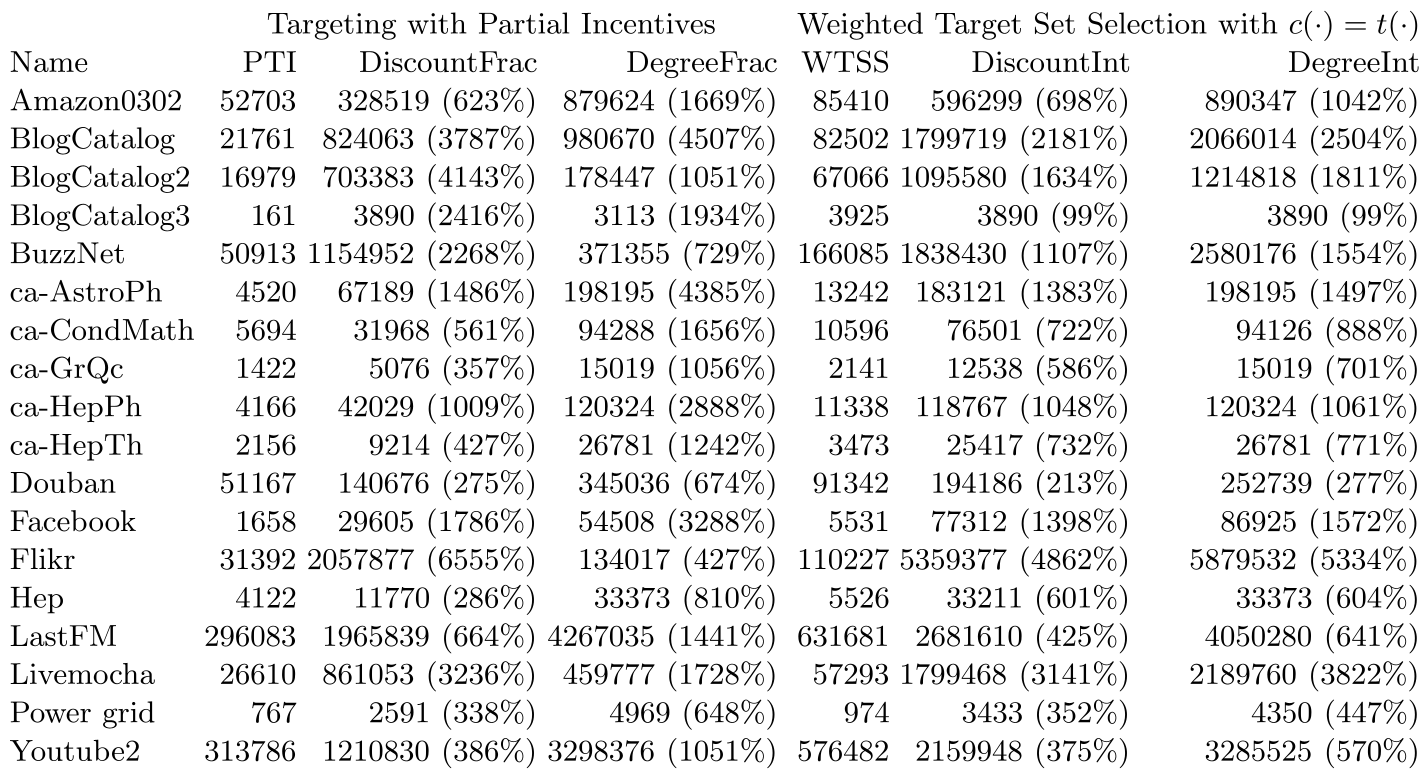 Figure 2: Performance comparison across different social networks. TPI (labeled PTI in table) shows significantly lower costs.
Why It Works: The "Fractional" Advantage
The paper proves that the TPI problem is a "fractional" counterpart to the weighted selection problem. By allowing to be any integer up to , the optimizer gains a massive search space advantage. As shown in the paper's Example 1, in a clique, the cost of full recruitment might be , while partial incentives can trigger the same cascade for .
Critical Analysis & Future Outlook
Strengths:
- Bridging the gap between theoretical graph theory and practical marketing (discounts vs. freebies).
- Rigorous proofs for optimality in Trees and Cliques.
Limitations:
- Static Nature: The model assumes thresholds and costs are known and static. In real social networks, these fluctuate based on time and topic.
- Knowledge Requirement: Implementing this requires high-fidelity data on individual "resistance" (thresholds), which is hard to measure accurately.
Conclusion: This work signals a shift in viral marketing research—moving away from identifying "super-spreaders" and toward optimizing "network susceptibility." For practitioners, the message is clear: don't just buy the top influencers; strategically subsidize the middle-ground nodes to break the network's resistance.