
Optimizing Telemarketing Strategies: A Robust Similarity-Based Classification Approach
Optimizing the prediction of telemarketing target calls by a classification technique
2018-10-01
Summary
Problem
Method
Results
Takeaways
Abstract
This paper proposes a custom similarity-based classification technique to optimize bank telemarketing outcomes for long-term deposits. Using the Portuguese retail bank dataset with 21 selected features, the method outperforms traditional models like Naïve Bayes and SVM, achieving a superior F1-measure of 55.35% while maintaining high stability against variations in feature magnitude.
## TL;DR
This study introduces an optimized classification technique designed to predict which clients are likely to subscribe to bank term deposits. By utilizing a **custom similarity computation** for mixed-type data and addressing the impact of feature scaling, the authors achieved an **F1-measure of 55.35%**, outperforming standard benchmarks like Naïve Bayes and SVM in terms of stability and precision.
## Problem & Motivation: The Tailored Marketing Imperative
In an era of intensive market competition, mass marketing has lost its edge. Banks are pivoting toward **direct marketing (telemarketing)**, but the efficiency of these campaigns hinges on identifying high-probability targets within massive, imbalanced datasets.
Previous research on the famed *Portuguese Bank Dataset* highlighted a recurring issue: state-of-the-art models are often sensitive to the "order of magnitude" of features. For instance, a high-value numerical feature can overshadow significant categorical traits. Moreover, complex models like **Artificial Neural Networks (ANN)**, while powerful, are computationally expensive "black boxes" that are difficult to deploy in real-time call center environments.
## Methodology: Intelligent Similarity Computation
The core innovation lies in how the model treats different data types to maintain **Inductive Bias** consistency.
### 1. Feature-Specific Processing
Instead of a "one-size-fits-all" approach, the authors categorize the 21 features:
- **Numerical/Scaled**: Processed via statistical parameters (mean, variance).
- **Nominal**: Converted using **Occurrence Frequency** ($f_{ij} = m/N$) to weigh labels by their statistical prevalence.
- **Missing Values**: Handled via completion imputation using variable averages.
### 2. Similarity and Normalization
The algorithm assigns an instance to a class based on the **Euclidean distance** to class centers. A critical insight was the use of **Min-Max Normalization** to keep all values within a $[0, 1]$ range.
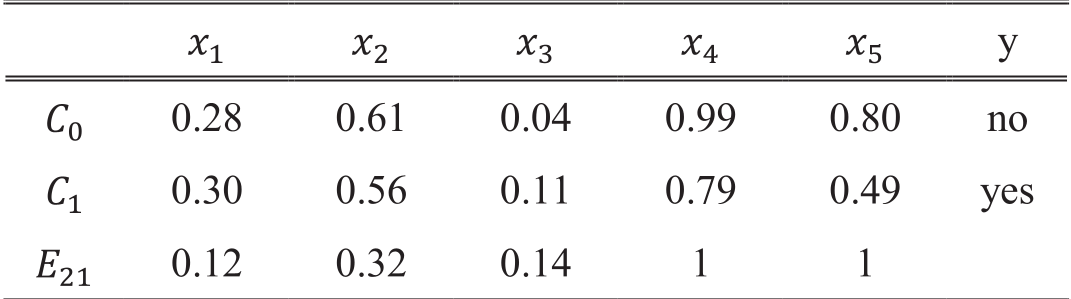
*Table: Normalized Feature Centers (C0 for 'No', C1 for 'Yes') against a test instance (E21).*
The physical intuition here is that by normalizing, we ensure that a feature like `Age` (spanning decades) doesn't numerically dominate a feature like `Campaign outcome`.
## Experiments & Results: Stability as a Competitive Advantage
The proposed model was benchmarked against Naïve Bayes (NB), Decision Trees (DT), ANN, and SVM.
### Key Findings:
- **Superior Precision**: The proposed method yielded the highest precision, meaning fewer wasted calls to uninterested clients.
- **F1-Measure Dominance**: With a score of **55.35%**, it significantly outperformed NB (44.52%) and SVM (42.60%).
- **Stability Performance**: While other algorithms' performance *decreased* with normalization, the author’s method improved, proving its robustness against variable amplitudes.
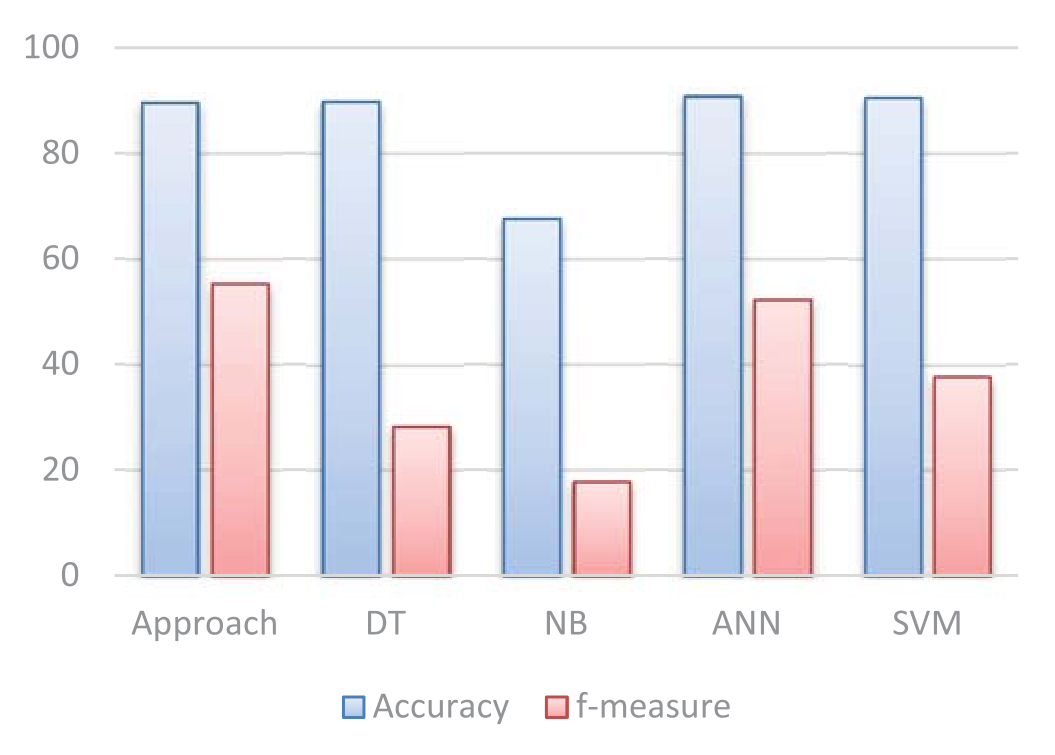
*Fig. 3: Performance comparison (Accuracy/F-measure) post-normalization.*
## Critical Analysis & Conclusion
### The "Duration" Paradox
The authors candidly admit a limitation: the **"Call Duration"** feature is highly predictive but practically useless because it is only known *after* the call is finished. Including it provides a benchmark (SOTA comparison) but lacks "real-world" predictive utility.
### Future Outlook
The next step for this research is moving toward **discriminant models** that omit post-event variables like duration. Furthermore, the efficiency of this similarity-based approach suggests it is a prime candidate for **Live Telemarketing**, where inference speed is as crucial as accuracy.
### Takeaway
This work serves as a reminder that before reaching for high-parameter deep learning, optimizing the **mathematical representation of feature similarity** can produce more stable, interpretable, and efficient results for industrial CRM tasks.