
Bridging the Gap: An Ontological Blueprint for Business Understanding in Data Mining
Organization-Ontology Based Framework for Implementing the Business Understanding Phase of Data Mining Projects
The paper proposes an Organization-Ontology Based Framework designed to structure the "Business Understanding" phase of the CRISP-DM methodology. It integrates 67 prescribed activities with specific tools and techniques, enabling semi-automated data flow between project phases via formal ontological mappings.
TL;DR
The "Business Understanding" (BU) phase is the most critical yet least structured part of a data mining project. This paper introduces an Organization-Ontology Based Framework that maps 67 discrete activities to formal concepts, providing a rigorous "how-to" guide and a mechanism for semi-automating the flow of information from business goals to technical execution.
Contextual Positioning
In the data mining lifecycle (CRISP-DM), we often jump straight into data cleaning and modeling because they are well-defined. However, without a robust BU phase, models often solve the wrong problems. This work moves BU from a "checklist" mentality to a structured Knowledge Engineering approach, positioning itself as a vital piece of "middleware" between corporate strategy and data science.
The "How" and "Why" of Ontological Mapping
The authors argue that the chaos in the BU phase stems from a lack of formal tools. By using an Organization Ontology, they treat the business environment as a formal information system.
Key Insights:
- Activities as Queries: Instead of "guessing" who the stakeholders are, the framework treats the activity as a competency question (e.g., “Who are the key agents and their roles?”) answered by navigating the ontology.
- Standardized Outputs: By formalizing the output of a "Business Objective," it can be programmatically passed to a machine learning pipeline as a "Success Metric."
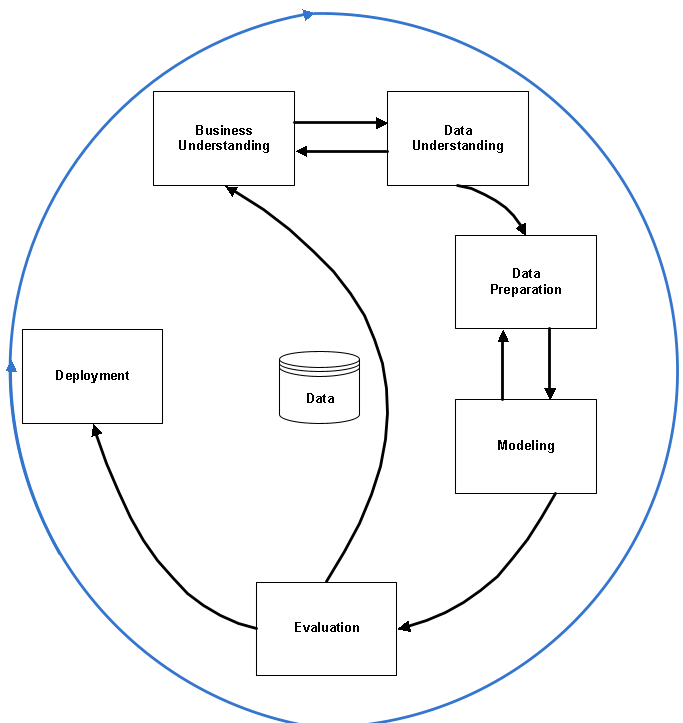 Figure 1: The CRISP-DM Cycle - Note how Business Understanding anchors the entire loop.
Methodology: Extending the Enterprise Model
The paper doesn't just use existing ontologies; it extends them to handle the high-stakes nature of Data Mining. They introduce seven critical extensions:
- Stakeholder Inclusion: Adding Customers, Suppliers, and Regulators.
- Process vs. Activity: Separating the ordered execution from individual tasks.
- Constraint Mapping: Binding rules and policies to processes rather than just activities.
- Requirement Specification: Formalizing what the business expects as an output.
- Task Granularity: Categorizing tasks into Human, Tool, or System tasks.
- Resource Ontology: Breaking resources into Data, Information, Knowledge, and Tools.
- Risk & Contingency: Explicitly modeling what could go wrong.
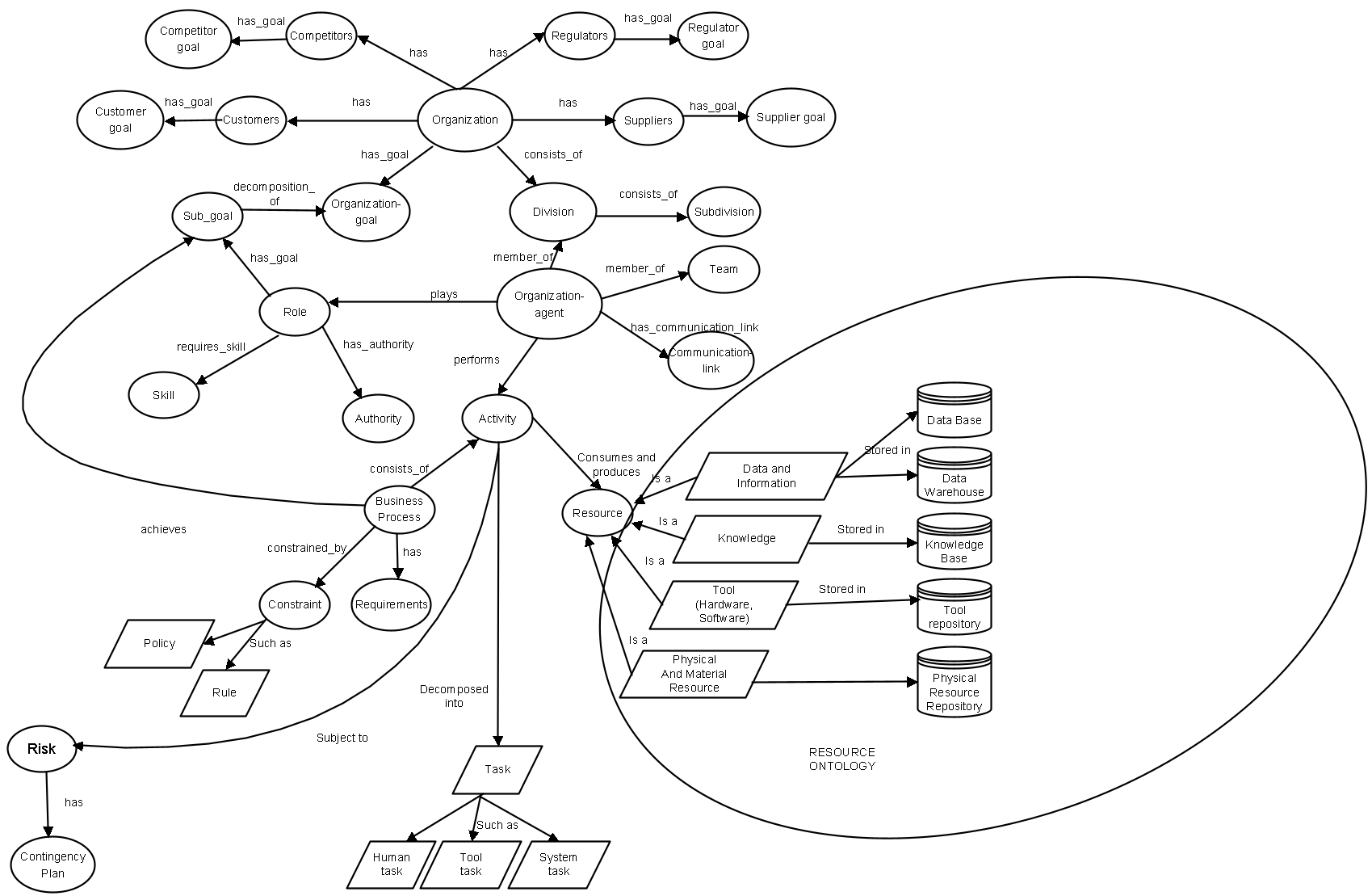 Figure 2: The Extended Organization Ontology proposed by Sharma and Osei-Bryson.
Impact: Semi-Automation in Action
The most compelling contribution is the "Semi-Automation" of the 67 activities. For example:
- Cost-Benefit Analysis: The output of "Cost Estimation" and "Benefit Specification" can be automatically aggregated to generate a ROI report.
- Model Selection: Success criteria defined in the BU phase aren't just text; they become parameters that a DM software can use to automatically rank models during the Evaluation phase.
Critical Analysis & Conclusion
Takeaway
This framework is a powerful antidote to "Data Science for the sake of Data Science." It forces practitioners to ground every technical goal in a formal organizational concept.
Limitations
- Initial Overhead: Populating an organization-wide ontology is a monumental task. If the ontology isn't already there, the BU phase might become even slower.
- Dynamic Environments: Businesses change rapidly; keeping the ontology "live" and in sync with reality remains a significant challenge not fully addressed by the paper.
Future Outlook
As we move toward AI-driven Research Agents, this type of ontological framework will be essential. It provides the "world model" that an autonomous AI agent would need to understand a business problem before it starts writing SQL or Python code.