
Beyond Hofstede: A New Cultural Dimension for the Virtual World
Yet another dimension of organizational culture: Implications from mobile social games in Japan
This paper examines the diverging evolution of mobile social games in Japan versus Global platforms like Facebook. It proposes a new cultural dimension—the "Dependency of real-world trust for social identity"—to explain why Japanese users prefer virtual, device-bound identities over real-name systems.
TL;DR
Why did Facebook struggle in Japan while local mobile social games flourished? This paper argues that the Western "Real-Name" trust model clashes with a distinct Japanese preference for "Virtual Identities." It proposes a new cultural dimension focusing on how social networks establish trust—either through real-world identity or technological device-binding.
Background: The Clash of Two Social Worlds
In the late 2000s, the world saw the meteoric rise of Facebook, built on the principle of radical transparency and real-world connections. Simultaneously, Japan developed a parallel social universe (Mobaga, GREE, Mixi) centered on mobile gaming and avatars. Despite Facebook's global dominance, it hit a wall in Japan, where users preferred separate virtual personas over their real-world identities.
The Problem: The Gap in Cultural Frameworks
Prior work by pioneers like Geert Hofstede identified cultural dimensions such as Individualism vs. Collectivism and Uncertainty Avoidance. However, these were designed for real-world organizational behavior. They couldn't explain:
- Why Japanese users feel safer behind a virtual avatar.
- Why "Device Identity" (linking a profile to a specific phone) is perceived as more trustworthy than a real name in certain contexts.
- The failure of "Real-Friend" social models to capture the Japanese gaming market.
Methodology: Redefining Trust in the Digital Space
The author identifies a fundamental difference in how trust is anchored:
- Real-World Integration (The Facebook Model): Trust is derived from photo-sharing and real-name accountability. It assumes that "hiding" information is antisocial.
- Virtual-World Protection (The Japanese Model): Trust is anchored in the Mobile Handset ID. Security is maintained by the difficulty of obtaining multiple handsets, allowing users to be "anonymous but authenticated."
The Trust Architecture
As shown in the paper's comparison, the Japanese approach allows for a "delicate management" of game balance and social interaction that real-name systems cannot replicate.
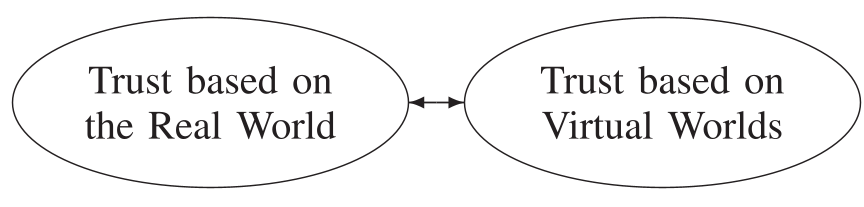 Fig 1. Differences in Trust: Facebook relies on real identity linkage, while Japanese SNS rely on hardware-validated virtual identity.
Key Results: The Power of Anonymity
While Facebook's growth in Japan was sluggish (only reaching 5 million users by the paper's time), local platforms like Mobaga and GREE exploded to over 20 million users each. The key findings include:
- Gaming Dominance: 70% of Japanese SNS users joined primarily for games.
- Monetization: Japanese developers perfected "indirect item purchasing," making their games more "sophisticated" than the relatively "naive" real-friend-oriented Western apps.
- The Identity Paradox: Users often found real-world identities a constraint on gameplay, preferring the freedom of a virtual persona.
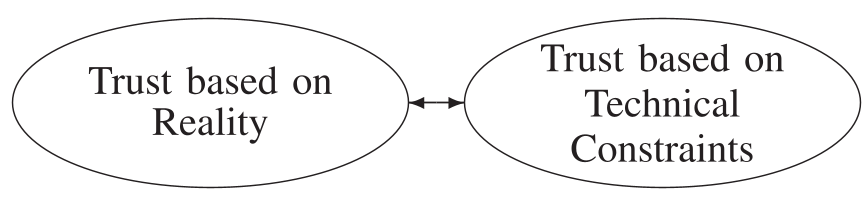 Fig 2. The diverging sources of trust—Real-world information vs. Technological identifier binding.
Critical Insight & Future Outlook
The paper introduces the "Dependency of real-world trust for social identity" as a new lens for organizational study.
Why it matters:
- Business Model Engineering: Companies cannot simply port Western social models to Asia and expect success; they must engineer business models that respect local "Trust Origins."
- The Virtual Pivot: Research is shifting from how we act in the office to how we interact in digital workspaces and virtual worlds.
Limitations:
This is a qualitative work. Further quantitative research is needed to determine if these behaviors are truly cultural or merely "stage-specific" (related to the early evolution of mobile internet).
Conclusion
The successful "Galapagos" evolution of Japan’s mobile social games isn't a fluke—it's a demonstration of a unique cultural dimension. As we move closer to a Metaverse-centric economy, understanding whether a culture prefers "Authentic-Real" or "Authentic-Virtual" identities will be the difference between market dominance and total failure.