
Oriental Lifestyle Reconstructed: A Means-End Approach to Modern Furniture Design
Oriental Lifestyle Construction and Furniture Design Based on a Means-End Theory
This paper introduces a design methodology for Oriental lifestyle furniture based on Means-End Theory, bridging the gap between abstract personal values and concrete product attributes. By implementing a structured workshop approach, the authors successfully developed furniture collections—one of which secured a silver award at the Shanghai International Furniture Fair—demonstrating a systematic path for modernizing cultural design.
TL;DR
Bridging the gap between ancient cultural values and contemporary industrial design remains a challenge for the global furniture market. This paper presents a systematic framework based on Means-End Theory to move beyond the superficial "copy-pasting" of traditional Chinese elements. By mapping personal values to specific product attributes, the researchers developed award-winning furniture collections that resonate with modern Oriental aesthetics.
The "Copy-Paste" Trap in Cultural Design
The furniture industry in China has historically struggled with a pivot from purely functional manufacturing to high-value design. The authors identify a critical bottleneck: many brands either stick to "Basic" wood-focused styles or "Moderate" styles that use traditional elements without modern transformation. The missing link is a deep understanding of the Cognitive Structure of the modern consumer—how a specific curve on a chair (Attribute) leads to a sense of tranquility (Emotional Consequence) and aligns with the value of "Peace" (Personal Value).
Methodology: Mapping Values to Varnish
The core of this research is the application of the Means-End Theory, a research method traditionally used in marketing to predict consumer behavior. The authors inverted this to create a "Meta-design" workflow.
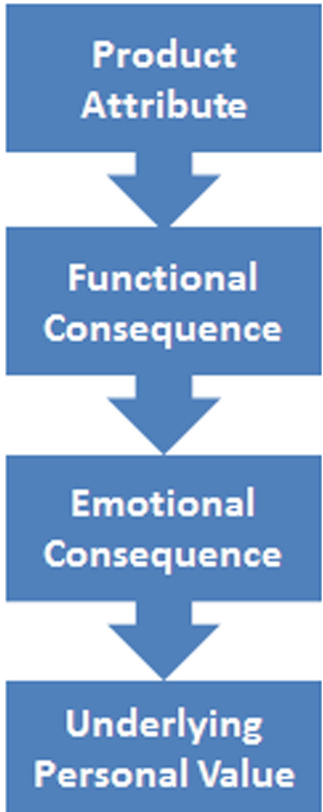
1. The Four-Step Hierarchical Model
The process begins at the top of the pyramid and flows down to the physical product:
- Personal Value: The ultimate life goal (e.g., Peace, Zen).
- Emotional Consequence: How the user feels (e.g., calm, respected).
- Functional Consequence: What the product does (e.g., ergonomic support).
- Product Attributes: The physical design elements (e.g., warm white color, hidden joints).
2. Workshop-Driven Keyword Extraction
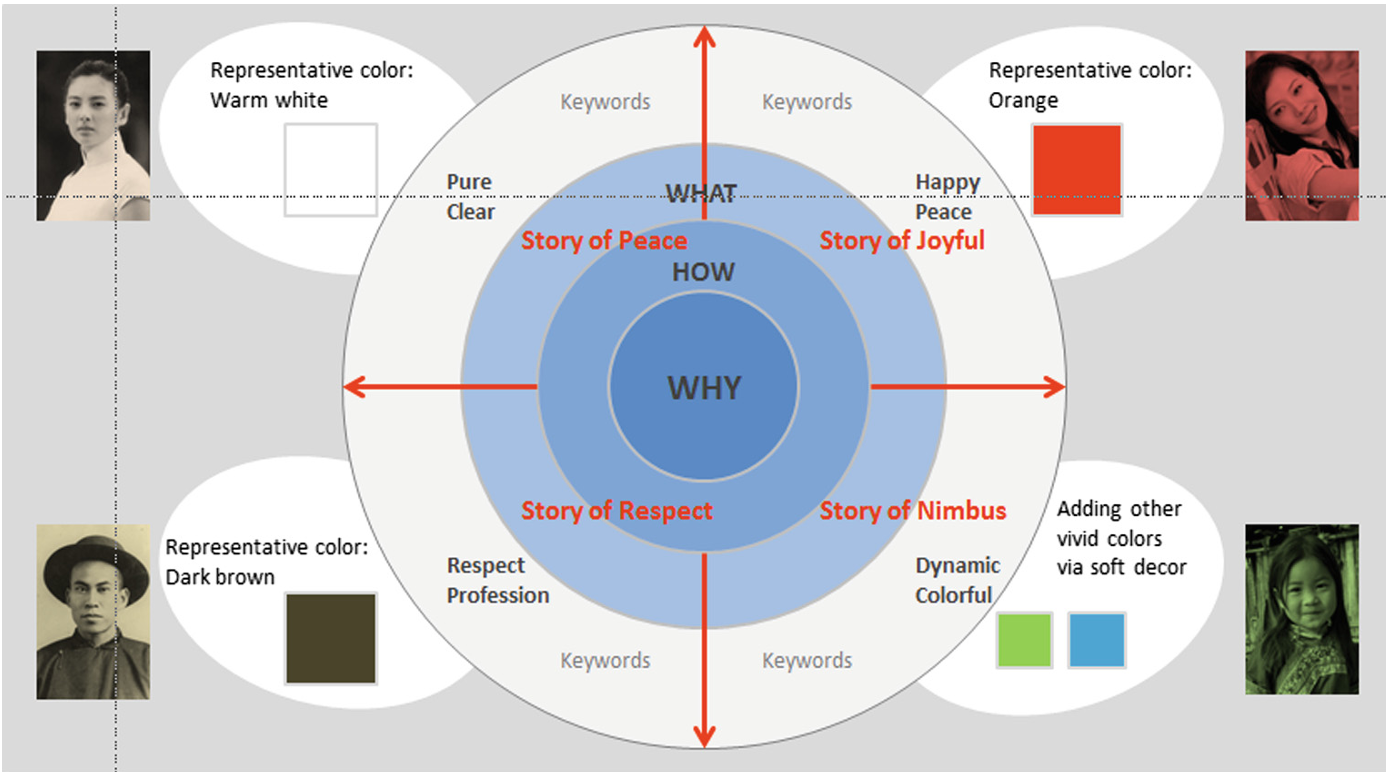
Through a workshop involving social workers, literature experts, and designers, four core keywords were extracted to define the "Oriental Lifestyle": Joyful, Peace, Respect, and Nimbus.
For the "Peace" theme, the team moved from the abstract value to a "Mood Board" (Fig. 3) that dictated a specific color palette—primarily warm whites—and a "pure" atmosphere.

From Theory to the International Fair
The effectiveness of this theory wasn't just academic; it was validated by the "Product Attribute Research" (Fig. 4), which translated the keywords into manufacturing guidelines. By defining the "Why, How, and What," the designers ensured brand consistency across different furniture pieces.
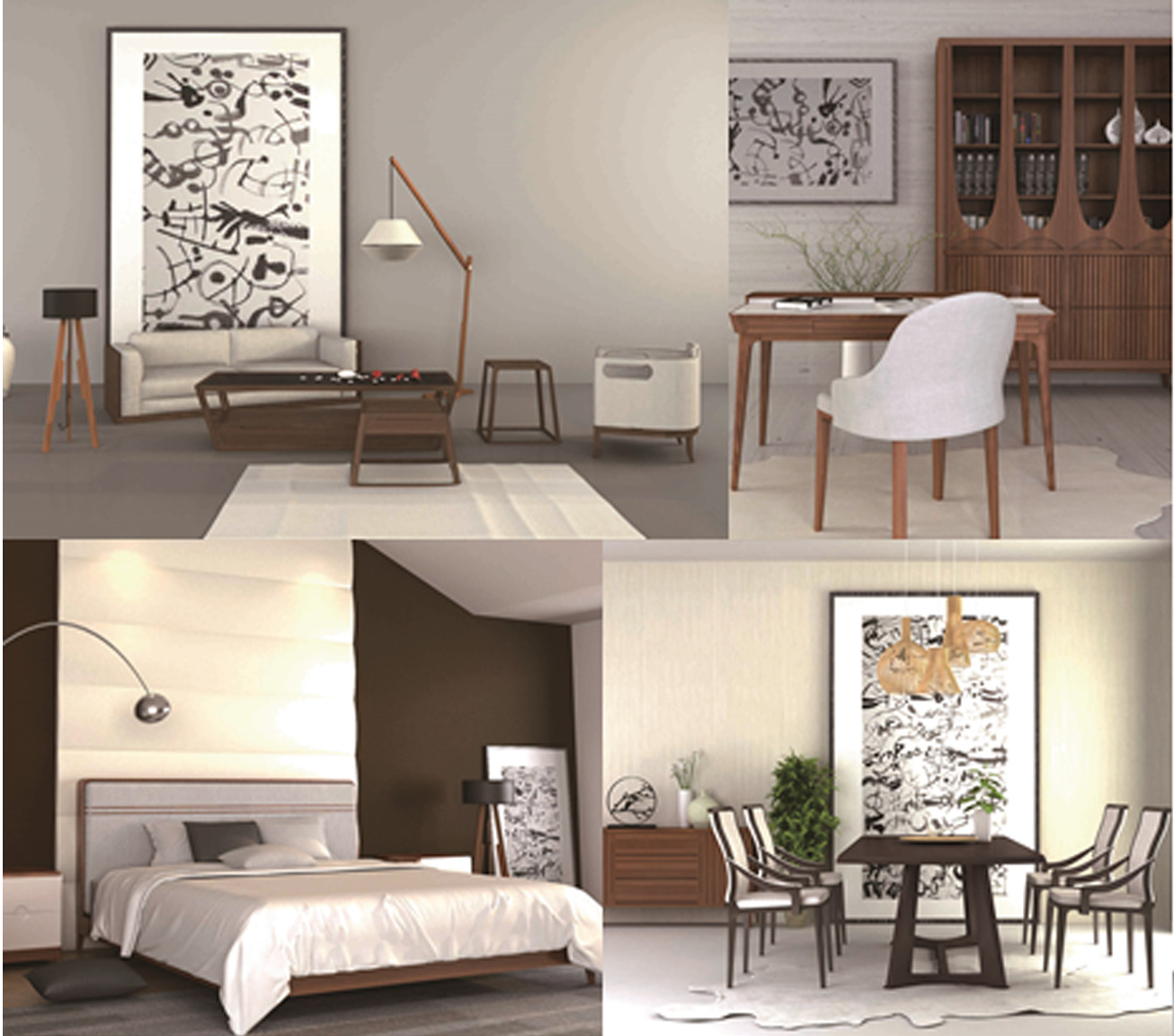
The results were striking. The team produced final render graphs (Fig. 5) that displayed a sophisticated, minimalist Oriental aesthetic. More importantly, these designs were manufactured and showcased at the Shanghai International Furniture Fair, with one collection receiving a Silver Award.
Critical Insights & Future Outlook
This study proves that Means-End Theory is a potent tool for "Meta-design." Its primary strength lies in its ability to force designers to justify every aesthetic choice through a chain of logic that ends in consumer value.
- Key Advantage: It avoids "design for design's sake" by anchoring every element in a predefined lifestyle context.
- Limitation: The initial extraction of keywords (like "Nimbus") remains highly subjective and dependent on the expertise of the workshop participants.
- The Future: As AI starts to handle more iterative design tasks, frameworks like the Means-End Theory will be essential for humans to provide the high-level "Value" and "Consequence" prompts that drive meaningful cultural products.
In conclusion, the "Oriental style" is not an ancient relic to be copied, but a dynamic construct of values that, when mapped correctly, can lead to world-class industrial design.