
The OsGSK2-OsTCP19 Module: Bridging Nitrogen Sensing and Hormonal Growth in Rice
OsGSK2-OsTCP19 Module Integrates Nitrogen and Brassinosteroid Signaling to Regulate Nitrogen Utilization and Root Growth in Rice.
This study identifies the OsGSK2-OsTCP19 molecular module as a critical bridge integrating Nitrogen (N) and Brassinosteroid (BR) signaling in rice. The authors demonstrate that nitrate activates BR responses to promote lateral root development and N utilization through the targeted degradation of the negative regulator OsTCP19.
TL;DR
Rice research has long sought the "missing link" between nutrient availability and hormonal response. A new study reveals that the OsGSK2-OsTCP19 module acts as a direct molecular bridge. Nitrate triggers Brassinosteroid (BR) signaling, which in turn leads to the degradation of OsTCP19—a protein that normally "brakes" root growth and nitrogen uptake. By removing this brake, the plant optimizes its architecture for nutrient foraging.
Background: The Nitrogen-Hormone Interplay
Nitrogen (N) is the lifeblood of crop yield, and Brassinosteroids (BR) are the master architects of plant form. While we knew that nitrogen status affects BR levels, the "High-Level Design" of this crosstalk was a black box. This paper positions the OsGSK2-OsTCP19 axis as a central regulatory hub in the rice "operating system," coordinating how the plant "invests" in root growth based on external nitrate supply.
Problem & Motivation: Why Roots Stop Growing
Plants face a dilemma: when nutrients are scarce, they must forage; when nutrients are abundant, they must optimize uptake. Previous studies showed that high nitrogen promotes tillering but can sometimes inhibit or promote roots depending on the context. The researchers aimed to find the specific transcription factors that sense these hormonal shifts and translate them into physiological changes in roots.
Methodology: The Core Mechanism
The study identifies OsTCP19 as a negative regulator. Under low nitrate or low BR signaling, the kinase OsGSK2 (a core inhibitor of BR signaling) interacts with OsTCP19, phosphorylating it at residues Ser141 and Thr289. This phosphorylation stabilizes the protein, allowing it to stay in the nucleus and repress Nitrogen-responsive genes (like OsNRT2.4) and root development genes (OsIAA3, 助PIN1b).
Architecture of the Interaction
When nitrate levels rise, BR signaling is activated. This inhibits OsGSK2, leading to the degradation of OsTCP19. Without OsTCP19, the "repression" is lifted, enabling robust lateral root elongation and efficient N assimilation.
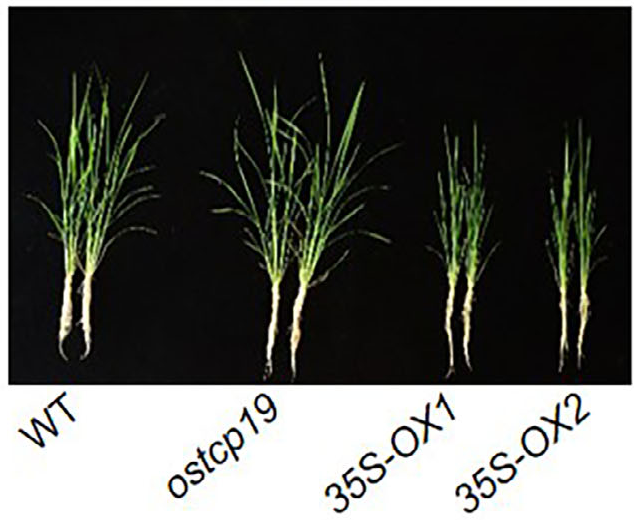 Note: Figure 4 highlights the physical interaction and phosphorylation of OsTCP19 by OsGSK2.
Experiments & Results: Quantifying the Growth
The team used various mutants to prove this dependency:
- Nitrate Sensitivity: Nitrate treatment increased the lamina joint angle (a BR sensitivity marker) in a dose-dependent manner up to 2.5 mM.
- Rescue Experiments: The growth defects in BR-insensitive mutants (like dlt) were mirrored by OsTCP19 overexpression, while ostcp19 mutants showed significantly enhanced lateral root length and 15N-nitrate accumulation.
- Molecular Evidence: ChIP-seq and EMSA confirmed that OsTCP19 directly binds to the GGNCCCAC motif in the promoters of nitrate-uptake genes, acting as a transcriptional repressor.
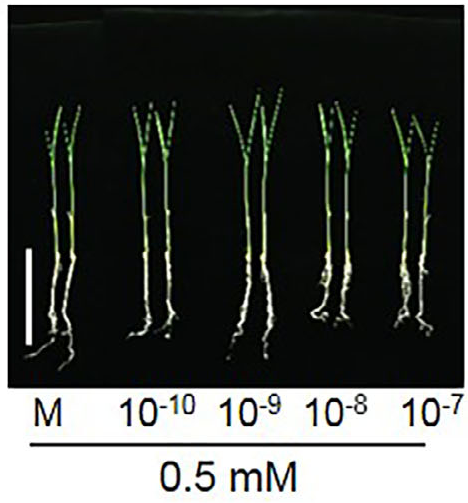 Note: Figure 3 demonstrates how OsTCP19 mediates the synergistic interaction between nitrate and BR in driving lateral root growth.
Deep Insight & Conclusion
This research moves the field beyond descriptive "crosstalk" toward a precise biochemical circuit.
Takeaway: The OsGSK2-OsTCP19 module is not just a signaling pathway; it's a metabolic thermostat. It ensures that the plant doesn't over-invest in roots when N is absent, but rapidly activates the "foraging mode" once nitrate signals the presence of BRs.
Limitations & Future Work: While the module is clear in rice, it remains to be seen if this mechanism is identical in dryland crops or if other nutrient signals (like Phosphorus) utilize similar TCP-family "brakes." The next step is translating this into "Green Super Rice" varieties that maintain high yields with lower fertilizer inputs.