
OSNGuard: Defeating Social Network Worms via User Interaction Traces
OSNGuard: Detecting Worms with User Interaction Traces in Online Social Networks
This paper introduces OSNGuard, a client-side defense system designed to detect and block Online Social Network (OSN) worms. By proposing the EP-Model (Enticement and Payload-Submission), the authors identify that both JavaScript and Executable worms share a common trait: submitting malicious payloads to servers without authentic user confirmation or through forged interactions.
TL;DR
OSNGuard is a lightweight client-side security system that identifies OSN worms by ensuring every data submission is backed by a verified trail of human interactions (clicks/typing). By modeling the "Enticement-Payload" (EP) behavior, it successfully blocks both malicious scripts (J-worms) and executable malware (E-worms) with less than 2.5% memory overhead and negligible latency.
Background: The Trust Deficit in Social Networks
Online Social Networks (OSNs) have transformed from communication hubs into major attack vectors. Unlike traditional worms that hunt for software bugs, OSN worms exploit the "human vulnerability"—the trust we place in a friend’s link or a popular post.
The authors categorize these threats into two main types:
- J-worms (JavaScript): Leverage XSS vulnerabilities to silently post messages on a user's behalf.
- E-worms (Executable): Use social engineering to trick users into downloading a file that then hijacks the browser or OS components to spread further.
Current solutions fail because they either look for "bad code" (which is easily obfuscated) or "bad traffic" (which looks exactly like a normal status update).
The Core Insight: The EP-Model
The researchers propose the EP-Model (Enticement and Payload-Submission). They observed that while the "Enticement" (the trick) varies wildly, the "Payload-Submission" (the spread) always lacks a genuine user confirmation.
- Human Behavior: Browse page → Type comment (Keystrokes) → Click Submit (Mouse Click).
- Worm Behavior: Silent POST request (J-worm) OR Forged click via API without typing (E-worm).
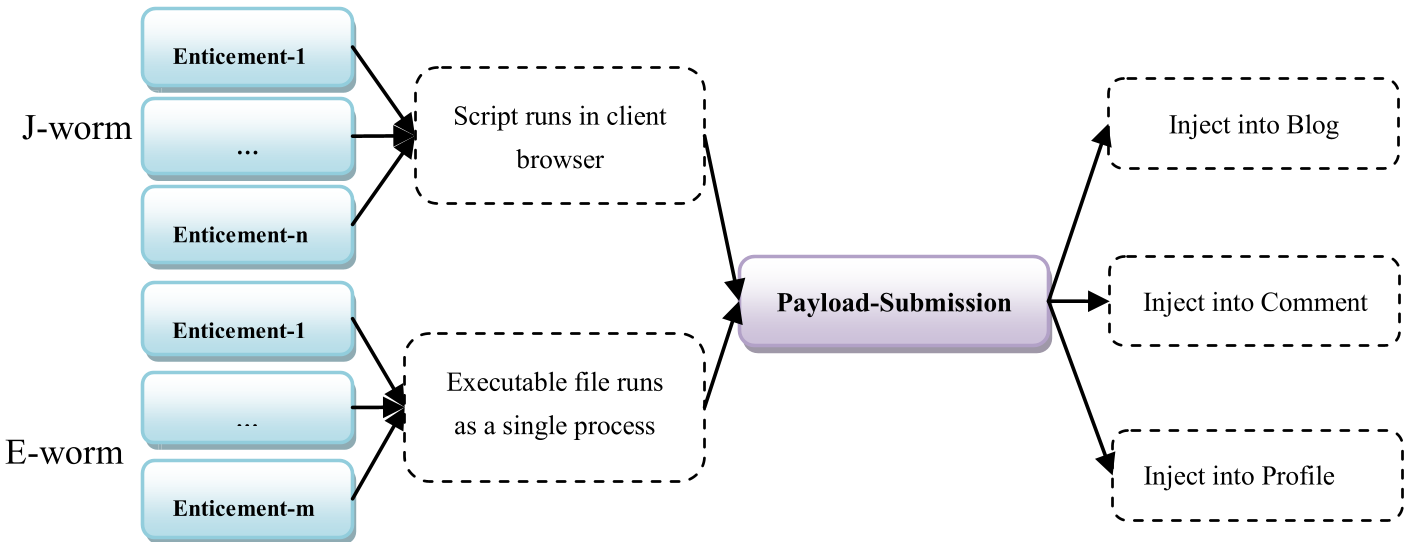 Fig 1: The EP-Model illustrating the common steps of OSN worm propagation.
Methodology: How OSNGuard Works
OSNGuard operates as a client-side sentinel composed of three primary modules:
- Social Traffic Monitor (STM): Uses Windows SPI to watch for processes connecting to OSN domains. It intercepts outbound POST requests, even those encrypted via SSL, by hooking encryption libraries.
- Social Interaction Tracer (SIT): It records every low-level input (Windows Messages). Crucially, it uses a hook-based method to detect actual HTML button clicks rather than just screen coordinates, making it resilient to UI changes.
- OSN Worm Detector (OWD): This is the brain. When a POST request is detected, OWD checks the User Interaction Trace (UIT). If the trace matches a "Normal UIT" (Inputs → Confirm), the request passes. If the POST happens "out of nowhere," it is blocked.
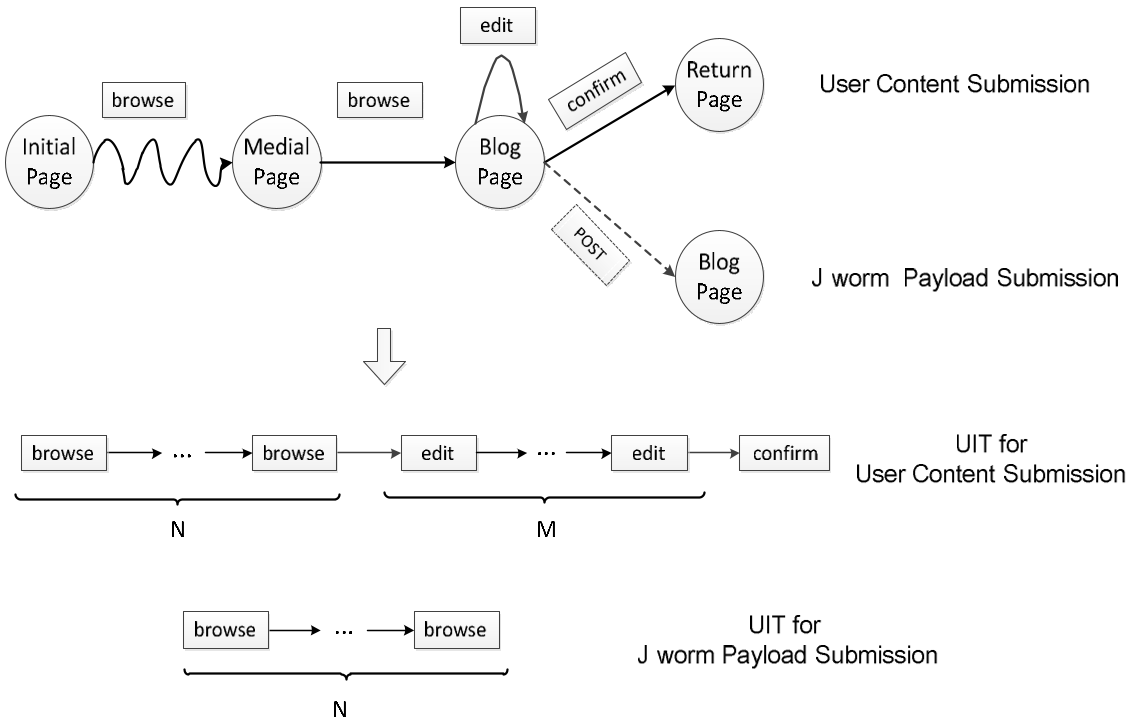 Fig 2: The OSNGuard System Architecture showing the flow from traffic monitoring to interaction tracing.
Experimental Validation
To test the system, the authors built "MyOSN," a lab-controlled social network. They unleashed real-world threats like the Samy Worm and Koobface.
Effectiveness
The system showed a 100% success rate in the lab environment. As shown in the UIT logs, legitimate users (User 10037, 10045) had clear traces of typing (K) and clicking (M) before a confirmation (C). In contrast, the infection attempts lacked these prerequisites and were instantly flagged.
Performance
For a security tool to be viable, it cannot lag the browser.
- Latency: Even with a complex history of 500+ interactions, the detection delay stayed under 20ms.
- Resource Usage: Monitoring 10 simultaneous processes consumed only 2.03% additional memory.
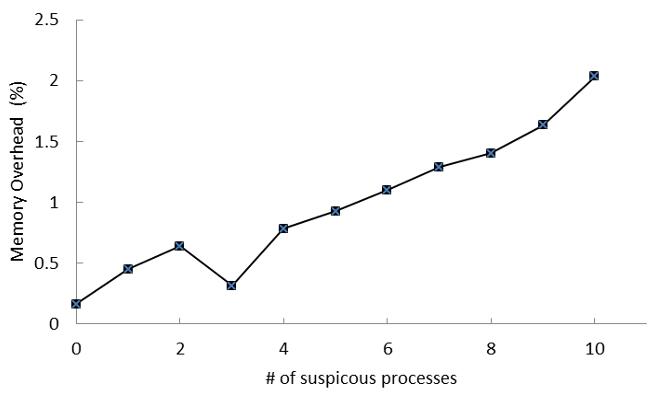 Fig 3: Performance analysis showing negligible delays on POST requests and linear memory scaling.
Critical Analysis & Conclusion
OSNGuard provides a robust "last line of defense." By tying network activity to physical user input, it creates a high-fidelity filter that doesn't rely on signature databases.
Limitations: The authors candidly admit that "Clickjacking" (hiding a button under a legitimate one) or "Reflected XSS" (where a user is tricked into clicking a malicious link themselves) could still bypass this logic, as those involve real (albeit misled) user clicks.
Future Outlook: The next step for this research is the integration of Behavioral Biometrics. If future worms begin to mimic human-like clicks and typing delays, OSNGuard could be upgraded to analyze the rhythm of those clicks—ensuring that the hand on the mouse is truly human.
Key Takeaway
The battle against social malware is moving away from code analysis and toward Intent Verification. If the system doesn't "see" you interact, it won't let your data leave.