
Decoding Cross-Border Mobility: A Deep Dive into Chinese Social Media Footprints in Japan
15022_Outbound behavior analysis through social network data A case study of Chinese people in Japan.
This study investigates the behavior and preferences of Chinese tourists and residents in Japan using large-scale social media data from Weibo. By employing LDA (Latent Dirichlet Allocation) topic modeling and sentimental analysis, the research identifies "Tourism" (24.01%) and "Food and Drink" (14.48%) as dominant themes, uncovering spatial-temporal patterns of cross-border mobility.
TL;DR
Understanding the movement and preferences of international tourists is critical for modern urban planning. This study leverages Weibo data to map the "digital shadows" of Chinese visitors in Japan. By applying LDA Topic Modeling, the researchers moved beyond simple "visitor counts" to understand the why and what behind the travel, revealing a heavy emphasis on tourism (24%), food (14.5%), and specialized shopping (12.3%).
Problem & Motivation: Beyond the Questionnaire
For decades, the tourism industry relied on airport surveys and government statistics. While accurate for "how many," these methods fail to capture:
- Granularity: What exactly are people doing in Kamakura versus Odaiba?
- Spontaneity: Real-time emotional shifts during a trip.
- Connectivity: How do physical locations correlate with digital "Topic Classes"?
The researchers identified that Chinese tourists, a massive market for Japan, use Weibo as their primary platform for "check-ins," providing a goldmine of unstructured textual and spatial data that remains largely untapped for academic urban analysis.
Methodology: The NLP Pipeline
The study follows a rigorous computational social science workflow:
- Data Acquisition: Geocoded microblogs filtered for the Japan region.
- Topic Discovery: Using Latent Dirichlet Allocation (LDA), the authors clustered millions of keywords into 11 distinct classes.
- Spatial Analysis: Mapping these topics to specific geographic coordinates to identify "Interest Hotspots."
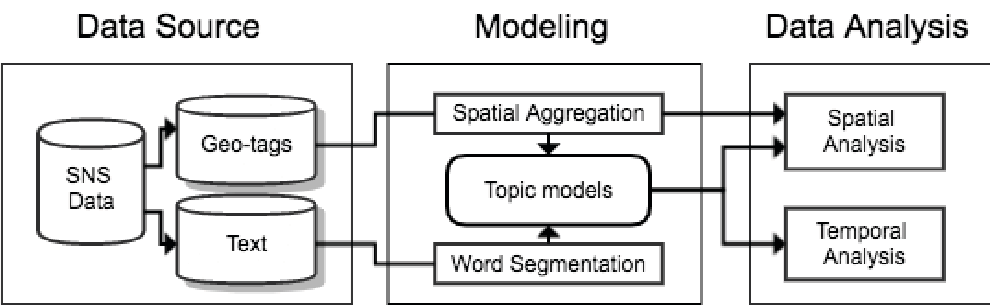 Figure 1: Overall conceptual framework of the Weibo Data Analysis pipeline.
Experiments & Results: What Do They Talk About?
The most striking finding was the concentration of interests. "Tourism" and "Food" dominated the discourse, but the granularity provided by LDA revealed sub-topics like "Daigou" (surrogate shopping) and specific interests in Shrines and Temples.
Key Topic Rankings
| Topic Class | Representative Keywords | Percentage |
|---|---|---|
| Tourism | Hot spring, Cherry blossom, Night view | 24.01% |
| Food and Drink | Ramen, Seafood, Taste | 14.48% |
| Feeling/Wish | Effort, Hope, Happiness | 14.07% |
The spatial mapping showed that while Tokyo remains the hub, specific sub-districts attract vastly different "Topic Densities." For instance, Tourism topics peaked in Kyoto, while Shopping dominated the Ginza and Shinjuku areas.
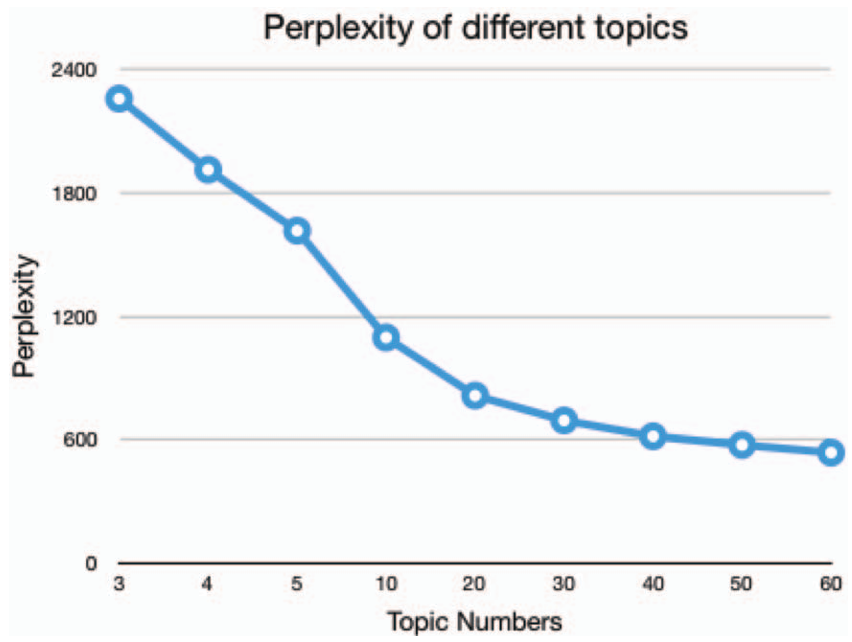 Figure 2: Heatmap showing the spatial distribution of diverse check-in topics in urban centers.
Critical Analysis & Conclusion
The study proves that LDA-based topic modeling is not just an NLP exercise but a tool for spatial intelligence.
Key Takeaways:
- The "Golden Route" is shifting: While Tokyo/Osaka are stable, the data shows rising interest in niche locations like Kamakura and Yokohama driven by pop culture.
- Sentiment matters: A high percentage of "Feelings and Wishes" (14%) suggests that travel for this demographic is deeply tied to emotional fulfillment and social status sharing.
Limitations: The reliance on geocoded data may introduce a selection bias, as only a subset of users enable location services. Furthermore, LDA lacks the contextual nuance of modern Transformer-based models, which might better capture sarcasm or complex sentiment in Chinese slang.
Future Outlook: Integrating this textual data with real-time transport logs (like IC card data) could create a "Digital Twin" of international tourism, allowing cities to predict overcrowding before it happens.