
Paclobutrazol: The Chemical Architect of Resilience in Modern Agriculture
Paclobutrazol: a novel plant growth regulator and multi-stress ameliorant
This review article explores the multifaceted role of Paclobutrazol (PBZ), a triazole plant growth regulator, as a potent multi-stress ameliorant. It highlights how PBZ modulates hormonal balances—specifically inhibiting gibberellins while enhancing abscisic acid (ABA) and cytokinins—to improve yield and survival under abiotic stresses like drought, chilling, and salinity.
TL;DR
Paclobutrazol (PBZ) is not just a growth retardant; it is a sophisticated biochemical tool that re-engineers a plant's hormonal profile. By suppressing growth-promoting Gibberellins and boosting stress-responsive Abscisic Acid (ABA) and Cytokinins, PBZ acts as a "multi-stress protectant," shielding crops from drought, cold, and salinity while optimizing yield through improved source-to-sink partitioning.
Beyond Growth: The Motivation for Multi-Stress Ameliorants
In the context of global climate instability, plants are rarely subjected to a single stressor. A heatwave often accompanies a drought; salinity often follows flooding. Most agricultural interventions are reactive and specific. The research community’s interest in Paclobutrazol stems from its ability to induce a systemic state of Stress Hardiness. Unlike simple fertilizers, PBZ alters the plant's fundamental physiology, allowing it to maintain a positive water balance and photosynthetic activity when the environment turns hostile.
Methodology: The Hormonal "Pivot"
The core of PBZ's effectiveness lies in its interference with the Isoprenoid Pathway.
- Gibberellin Inhibition: PBZ blocks the oxidation of ent-kaurene to ent-kauronoic acid. This reduces internodal elongation, resulting in shorter, sturdier plants with localized resource allocation.
- ABA and Cytokinin Surge: With the GA pathway partially blocked, metabolic precursors are diverted to increase ABA and Cytokinin levels. ABA facilitates stomatal closure to prevent water loss, while Cytokinins delay senescence (the "Stay-Green" effect) and boost chlorophyll production.
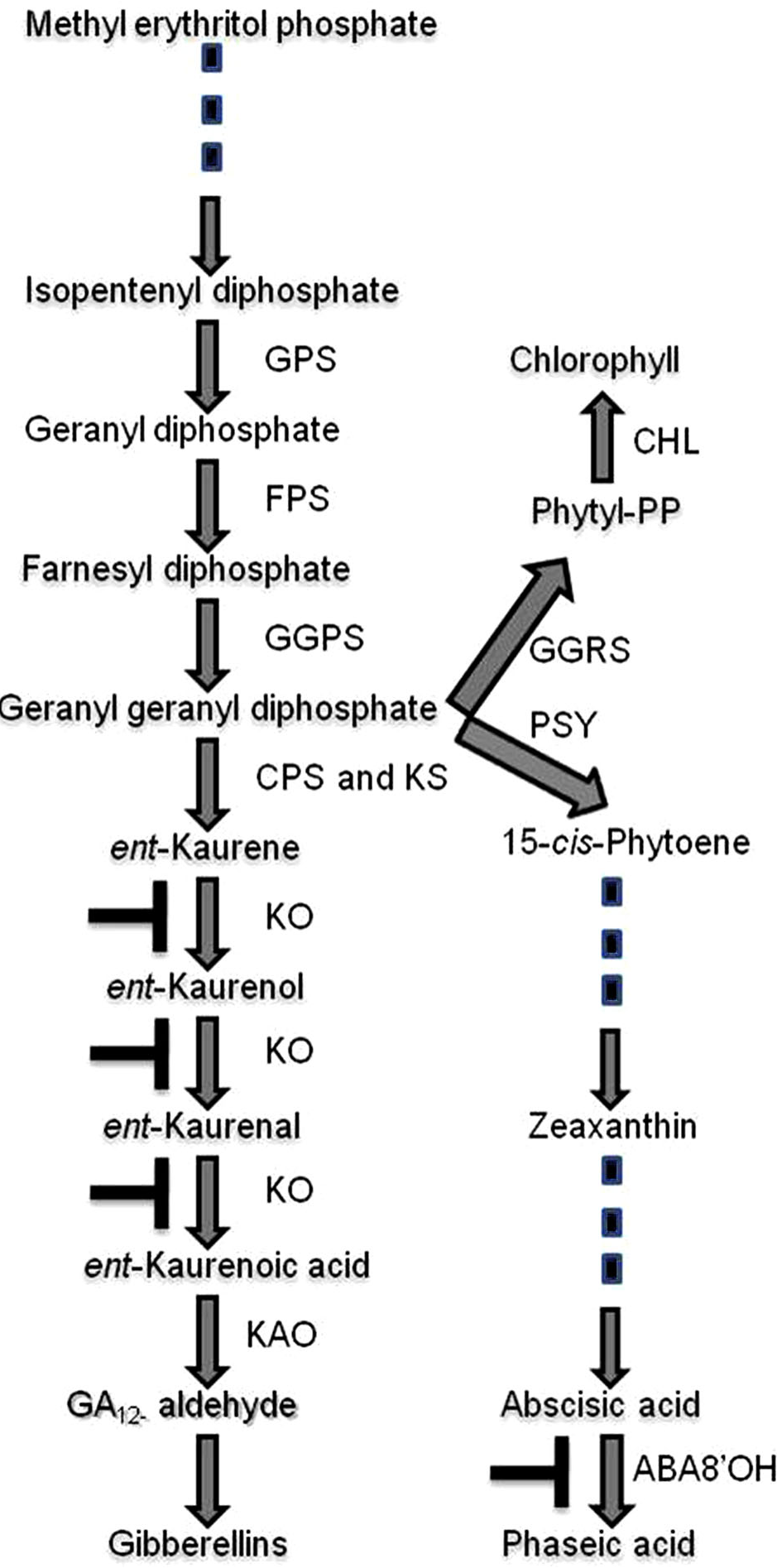 Figure 1: Molecular structure of Paclobutrazol, the triazole backbone enabling its high biological activity.
Protecting the "Engine": Chloroplast and Membrane Integrity
One of the paper's most significant insights is the visual evidence of PBZ’s protective power. Under water stress, the chloroplast—the plant's energy factory—typically undergoes structural collapse, including thylakoid swelling and lipid droplet accumulation.
PBZ application mitigates this by:
- Anti-Oxidant Defense: Upregulating enzymes like Superoxide Dismutase (SOD) and Catalase (CAT) to scavenge Reactive Oxygen Species (ROS).
- Proline Accumulation: Increasing the levels of compatible solutes that act as molecular sponges to maintain turgor pressure.
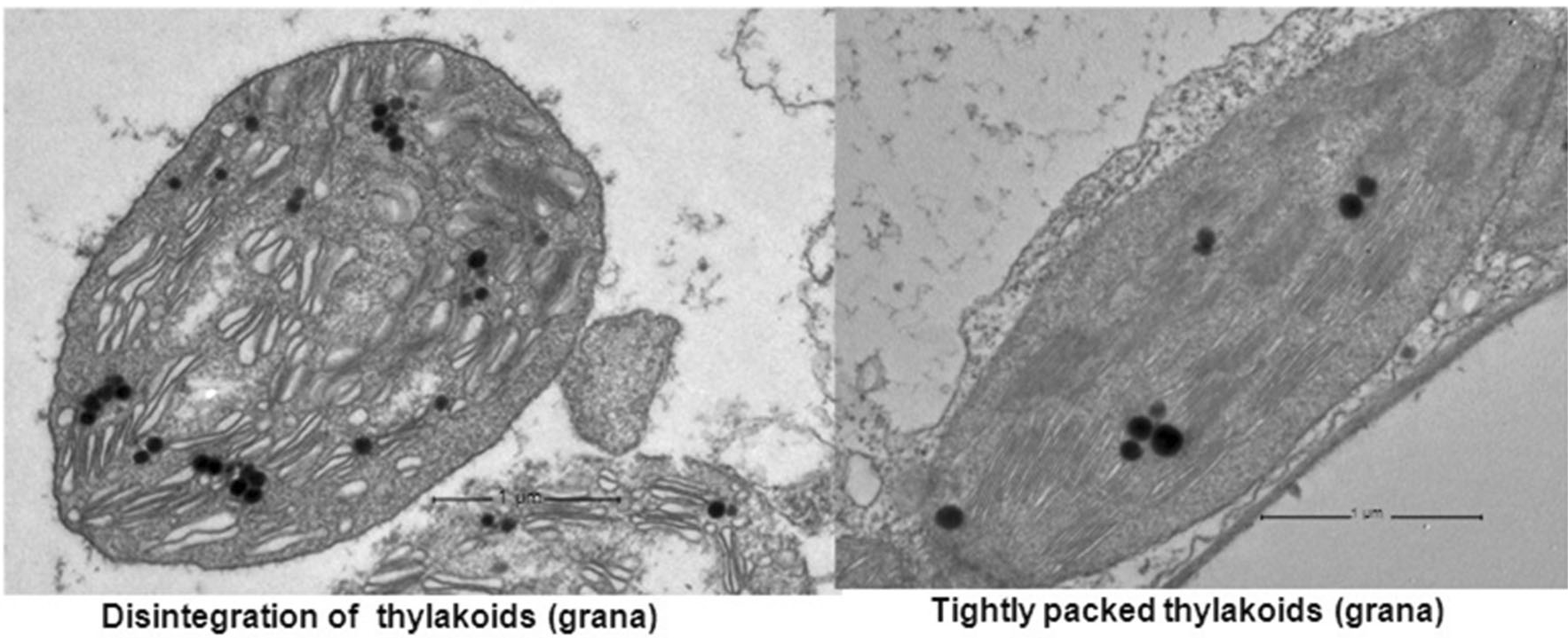 Figure 2: The stark difference in chloroplast health under stress with (right) and without (left) PBZ treatment.
Experimental Outcomes and Yield Optimization
The review highlights that PBZ-treated plants are not just survivors; they are optimized producers.
- Morphological Shifts: Darker, thicker leaves with increased mesophyll tissue.
- Root-to-Shoot Ratio: PBZ often stimulates radial root growth, allowing for better water and nutrient uptake.
- Yield Retention: In crops like Brassica and Camelina, PBZ increases the number of seeds per pod and thousand-grain weight by prolonging the photosynthetic period and facilitating the flow of carbohydrates toward the seeds (reproductive sinks).
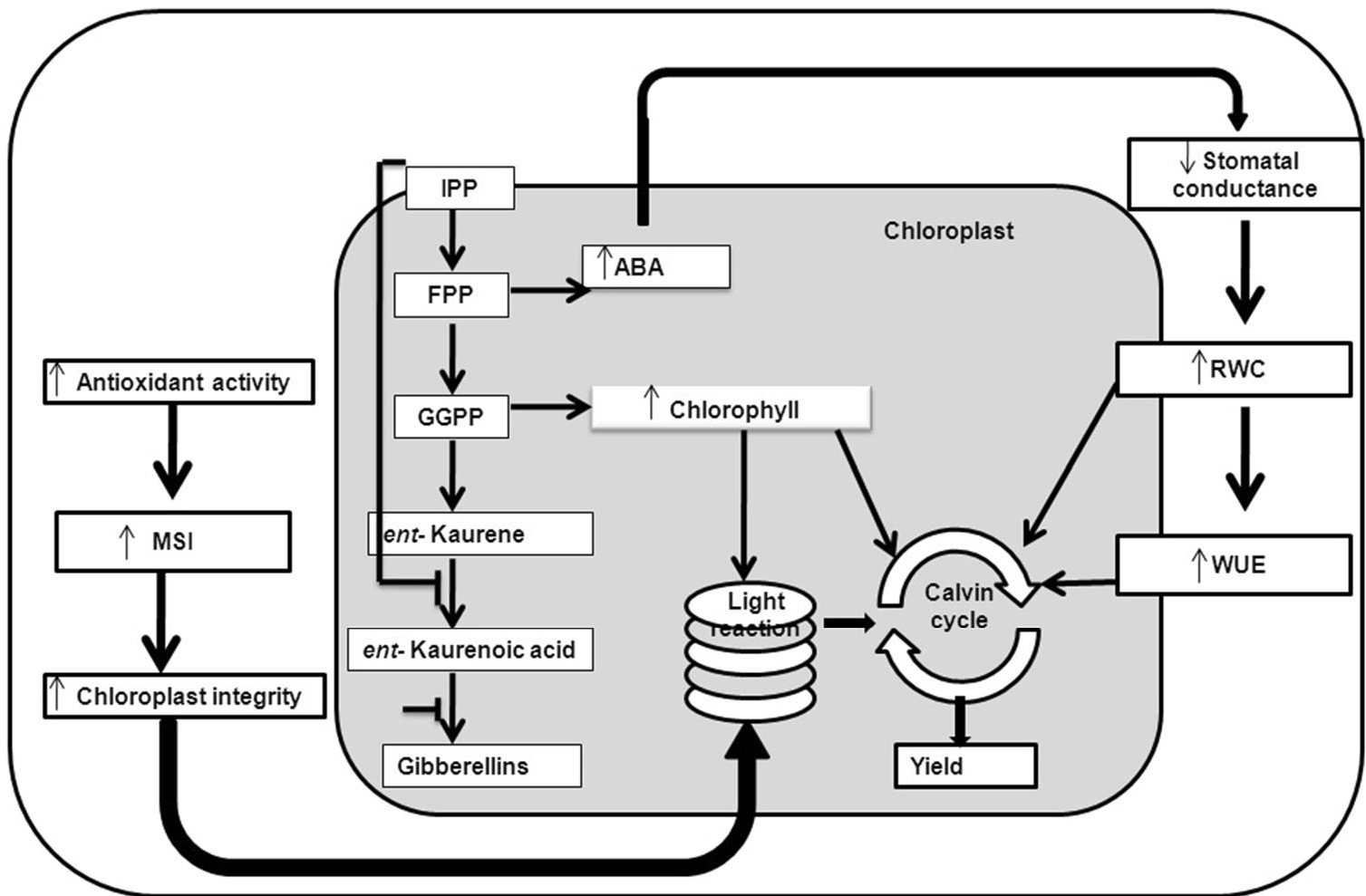 Figure 3: A comprehensive model illustrating how PBZ redirects the MEP pathway to enhance stress tolerance and yield.
Critical Insight: The "Stay-Green" Advantage
The industry value of PBZ lies in its ability to extend the "Stay-Green" character of a crop. By maintaining chlorophyll efficiency for a longer duration, plants can continue carbon fixation even during late-season stress. This "stay-alive, stay-productive" mechanism is essential for stabilizing food security in water-scarce regions.
Conclusion and Future Outlook
While PBZ presents a powerful solution for multi-stress protection, its application requires precision. Future research must bridge the gap between physiological observations and the underlying "cross-talk" of stress-responsive genes. As we move toward 2030, integrated growth regulators like Paclobutrazol will likely transition from specialty horticultural tools to mainstream components of climate-resilient agriculture portfolios.