
Decoding Irony: A Structural Approach to Twitter Sarcasm
Parsing-based Sarcasm Sentiment Recognition in Twier Data
The paper introduces two algorithmic approaches for sarcasm detection in Twitter data: Parsing-Based Lexicon Generation (PBLGA) and Interjection Word Start (IWS). By leveraging grammatical structures and hyperbolic features, the combined framework achieves a peak F-score of 0.90 in identifying sarcastic tweets.
TL;DR
Sarcasm is the "interfering factor" that breaks traditional sentiment analysis. This paper proposes a dual-algorithm strategy: PBLGA (which detects contradictions between positive vibes and negative realities) and IWS (which flags sarcasm via interjections like "Wow"). The result? A highly effective system that catches the nuances of social media wit with an F-score of up to 0.90.
The "Why": Why Sarcasm Breaks Machines
Sentiment analysis usually works by "counting" positive and negative words. But sarcasm is a linguistic trap. Consider the tweet: "Nothing I love more than a crowded library with no seats." A simple model sees "love" and tags it as positive. However, the situation (no seats) contradicts the sentiment (love). This paper addresses the gap by moving from simple word counts to grammatical parsing.
Methodology: Parsing and Hyperbole
The authors break down the problem into two distinct structural patterns:
1. The PBLGA Approach (Sentiment vs. Situation)
This algorithm parses a tweet into its constituent parts: Noun Phrases (NP), Verb Phrases (VP), and Adjective Phrases (ADJP). It then compares the Sentiment Score of the expression against the Situation Score. If you have a high positive sentiment phrase followed by a negative situation phrase, the system flags it as sarcasm.
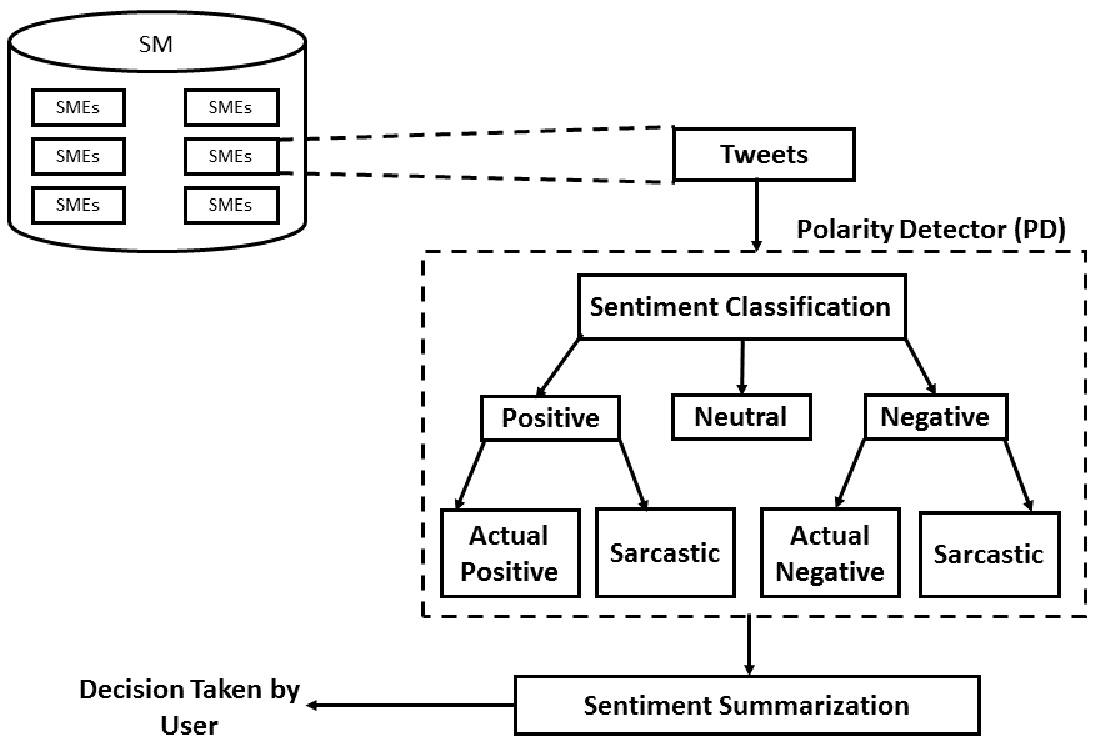 Fig 1: The System Model for automated decision making via sentiment/sarcasm detection.
2. The IWS Approach (The Power of "Wow")
The authors observed that tweets starting with interjections (UH) are highly likely to be sarcastic when followed by an intensifier (adjective or adverb).
- Rule: If
First_Tag = InterjectionANDNext_Tag = Adjective/Adverb, thenSarcasm = True.
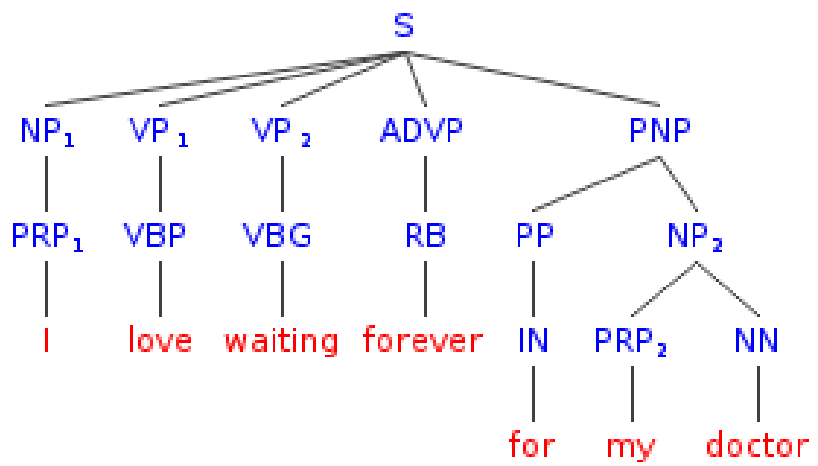 Fig 2: A parse tree used to decompose the sentiment "I love" vs. the situation "waiting forever".
Experimental Results
The researchers tested their algorithms on a massive dataset of 50,000 tweets. The results showcased the strength of structural rules:
- PBLGA: Achieved 0.89 Precision, meaning when it predicts sarcasm, it is almost always right.
- IWS: Achieved a massive 0.96 Recall, proving that interjections are one of the most reliable "tells" for sarcastic intent in microblogs.
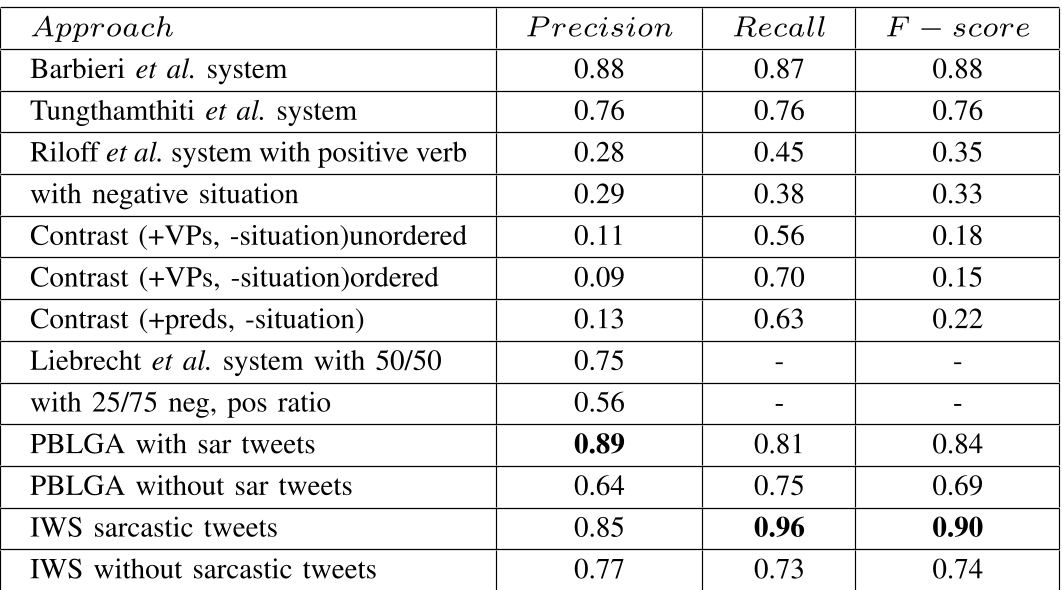 Table 1: The proposed PBLGA and IWS systems outperform several traditional baselines in Precision and Recall.
Critical Insight & Conclusion
While many modern approaches throw massive Neural Networks at the problem, this paper proves that Linguistic Intuition—specifically the use of Part-of-Speech (POS) tagging and phrase parsing—still holds immense value.
Takeaway: The "interjection start" is a powerful feature for social media monitoring. If your brand's sentiment analysis tool isn't looking for sarcastic "Wows," you might be misreading your customer's frustration as excitement.
Future Work: The authors suggest moving into audio and image sarcasm (multi-modal), as tonal stress and facial expressions are the physical counterparts to the textual "hyperbole" studied here.