
The Algorithmic State: Utilizing Web 2.0 for Collective Policy Intelligence
Participation and e-democracy how to utilize web 2.0 for policy decision-making
This paper introduces a cutting-edge E-Democracy System (EDS) designed to integrate Web 2.0 technologies into policy-making through a collaborative framework. It proposes a hybrid model combining the "wisdom of the crowd" with proxy representation, utilizing modular tools like E-Petitions, Policy Wikis, and electronic Voting to facilitate collective intelligence in the policy cycle.
TL;DR
This research explores a transformative E-Democracy System (EDS) that replaces rigid partisan representation with a fluid, Web 2.0-driven model. By integrating wikis, forums, and a novel "Proxy Delegation" system, it aims to harness the Collective Intelligence (CI) of a nation to solve complex policy problems.
The "Paternalism" Gap: Why Modern Democracy is Stalling
Traditional liberal democracy is often a "black box." Citizens vote once every few years and are then excluded from the actual labor of policy-making. This leads to voter apathy and a disconnect between public needs and legislative output. Simultaneously, the counter-argument—that citizens aren't "qualified" for complex decisions—has historically blocked the path to direct democracy.
The author, Klaus Petrik, suggests that the problem isn't the people's lack of intelligence, but the lack of a system to aggregate that intelligence effectively.
Methodology: The Modular E-Democracy Architecture
The proposed system isn't a single app but an integrated ecosystem of tools designed to mirror the "wisdom of crowds" seen in platforms like Wikipedia or dict.cc.
1. The Collaborative Policy Cycle
Instead of top-down mandates, the policy cycle is broken into four transparent stages:
- Problem Definition: Initiated via a Suggestion System (Petitions).
- Goal Specification: Consensus on what a "success" metric looks like.
- Strategy Choice: Users submit and rank different solutions (e.g., higher fines vs. recycling incentives).
- Implementation & Evaluation: A feedback loop where the public judges if the goal was actually met.
2. The Proxy Delegation System (The Hybrid Solution)
To solve the "knowledge constraint," the EDS introduces Liquid Democracy. If you are an expert on infrastructure, you vote directly. If you don't understand the energy sector, you don't lose your vote; you delegate it to a trusted friend, a scientist, or even an NGO. This creates a "Proxy Chain" where power is assigned based on expertise and trust rather than party lines.
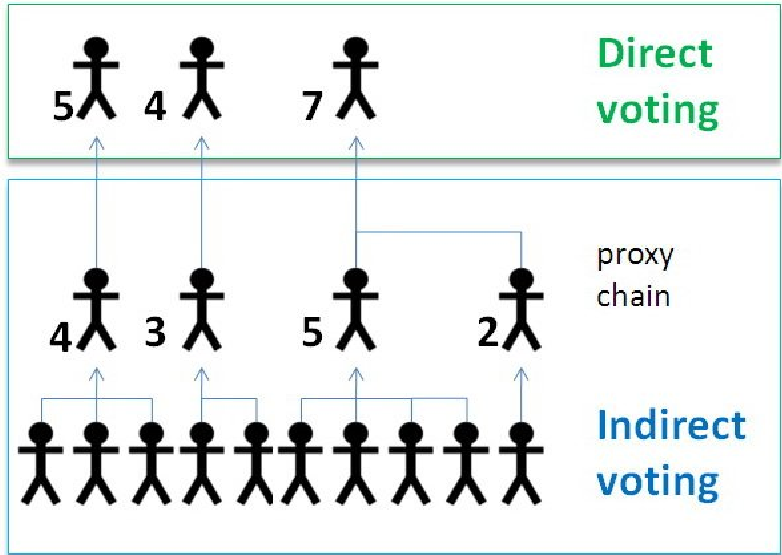 Figure 1: Direct and indirect voting via proxy, allowing for a fluid transition between personal participation and expert representation.
Collective Learning and Intelligence
The core of the paper is the idea of democracy as a learning cycle. By forcing strategies to be evaluated via an "Evaluation System" (ES) before they are voted on, the system makes the trade-offs (e.g., "this strategy helps the environment but costs more tax") visible to everyone.
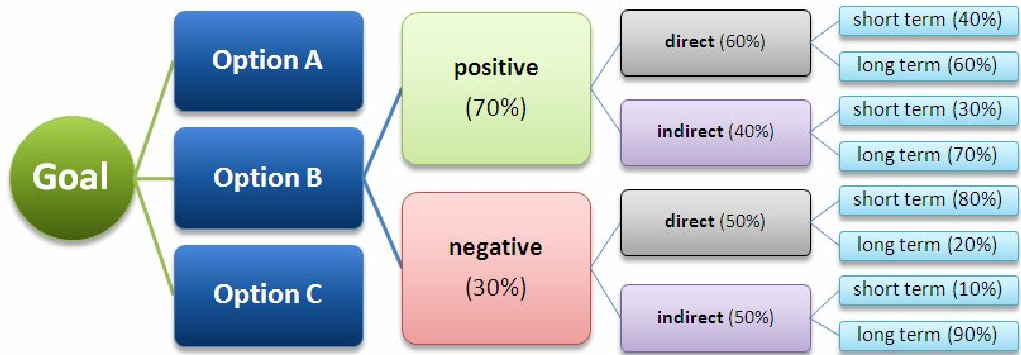 Figure 2: A sample result from the Evaluation System showing the expected positive and negative societal impacts of a proposed policy.
Critical Insight: Transparency vs. Manipulation
The EDS advocates for a "Proxy Government" where high-performing proxies (rated by public feedback and the success of their voted policies) become the de facto authorities. This shifts the focus from political campaigns (style) to policy performance (substance).
The system architecture also includes a sophisticated voting protocol using TAN (Transaction Number) codes to ensure both anonymity and the ability for a voter to verify that their proxy actually cast the vote they intended.
Conclusion & Future Outlook
While written in 2009, this paper's vision for a "Wikipedia-style" government is more relevant than ever in the age of decentralized technologies. The primary limitation remains the Digital Divide—ensuring everyone has the access and literacy to participate. However, if properly implemented, this system moves us from a democracy of "one person, one vote every four years" to a democracy of continuous, informed collaboration.
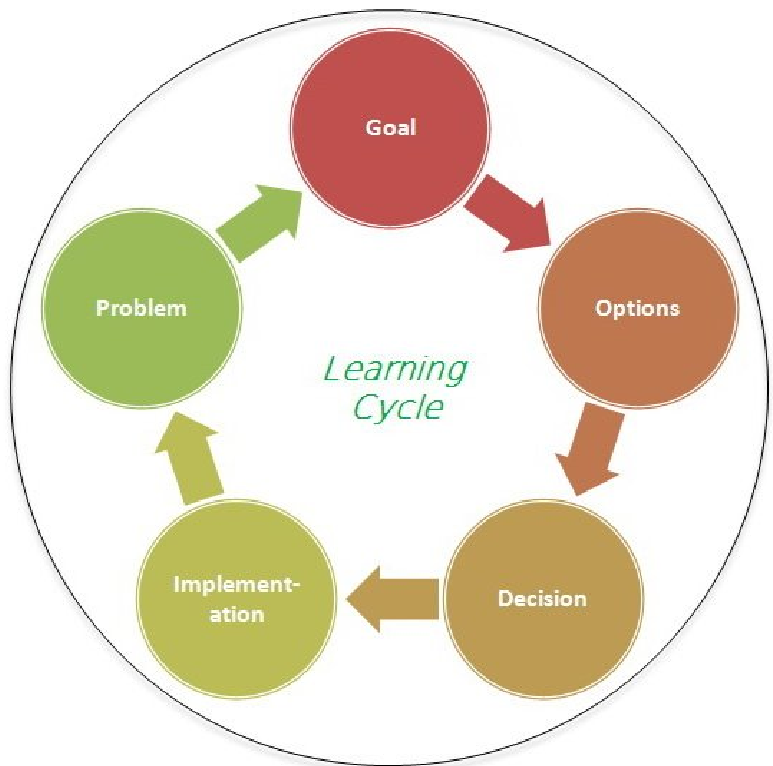 Figure 3: The E-Policy Cycle as a collective feedback loop, improving the electorate's decision-making skills over time.