
Participative Marketing: When IoT Turns Products into Social Platforms
Enabling Participative Marketing through the Internet of Things
This paper proposes "Participative Marketing," a framework leveraging the Internet of Things (IoT) to bridge the gap between physical products and digital social media. It utilizes identification technologies like NFC, RFID, and QR codes to enable "prosumers" (proactive consumers) to access collective intelligence and co-create brand reputation.
TL;DR
This paper introduces the concept of Participative Marketing, a paradigm shift where the Internet of Things (IoT) acts as a bridge between the physical product and social intelligence. By using NFC, RFID, and QR codes, consumers (or "prosumers") can instantly access and contribute to a product's reputation at the point of sale, moving beyond static advertising toward a shared "Brand Experience."
Background: Beyond the Billboard
In the traditional marketing landscape, brand identity was a one-way street: companies told consumers what to think. Even with the advent of Social Media Marketing, a "Community Manager" still acts as a gatekeeper. This paper identifies a critical friction point: the physical act of shopping is disconnected from the wealth of digital experience available online. The authors argue that to fix this, we must empower the Prosumer—the proactive consumer who doesn't just buy, but co-creates value through feedback and collective intelligence.
The Problem: The "Line of Sight" Gap
Why hasn't digital word-of-mouth completely revolutionized the grocery aisle yet?
- Friction: Searching for a specific product review on a phone while standing in an aisle is tedious.
- Static Data: Traditional labels (barcodes) offer no dynamic information regarding a product's current reputation or ethical traceability.
- Trust: There is a lack of "Brand Integrity"—the gap between what a brand promises and what the community experiences.
Methodology: The Cyber-Physical Interaction Model
The authors propose a matrix that adds a fourth dimension to marketing: Brand Experience. This is achieved through a three-tier interaction model.
1. The Interaction Ecosystem
The framework utilizes three primary touchpoints:
- Shop Terminals: Public kiosks for users without personal devices.
- Mobile/Personal Devices: The "Smart Phone" generation using cameras for QR/Barcodes and NFC readers for smart tags.
- Online Platforms: The centralized hub where "Collective Intelligence" (similar to a Wikipedia for products) is stored.
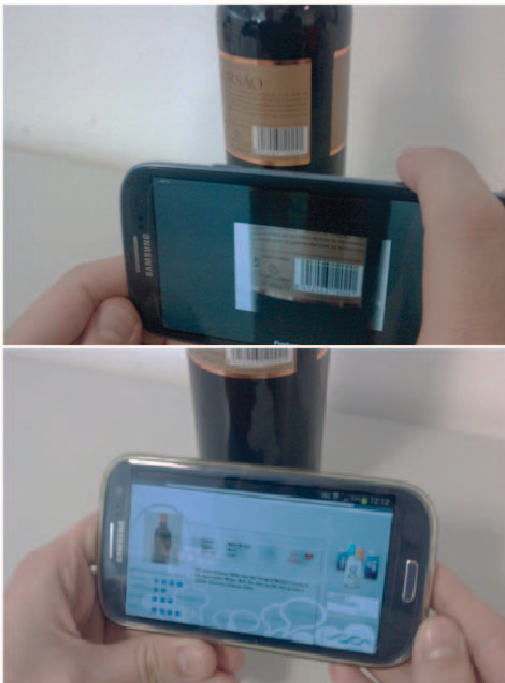 Fig 4: The ecosystem connecting physical products to the digital social fabric via IoT identifiers.
2. The Tech Stack: From Barcodes to NFC
The methodology moves from "Legacy" to "Future" tech:
- Barcodes: Simple identification but limited storage.
- QR Codes: Links directly to URLs, allowing for a "Cyber-Social" jump without manual typing.
- NFC/RFID: The gold standard. These allow for "ubiquitous identification," where a bottle of wine (see Fig 8) can share its fermentation history, origin, and peer reviews just by being near a smartphone.
Critical Insight: Co-Creation of Value
The paper cites Peter Jackson’s Lord of the Rings as a prime example of co-creation, where fan feedback shaped the final product. Participative Marketing seeks to apply this at scale to everyday commodities. By scanning a product, a user doesn't just see a price; they see a Social Brand Reputation—a metric built on the altruistic contribution of thousands of other users.
Experimental Validation: The Online Platform
The authors developed a platform that aggregates quality, experience, popularity, and cost.
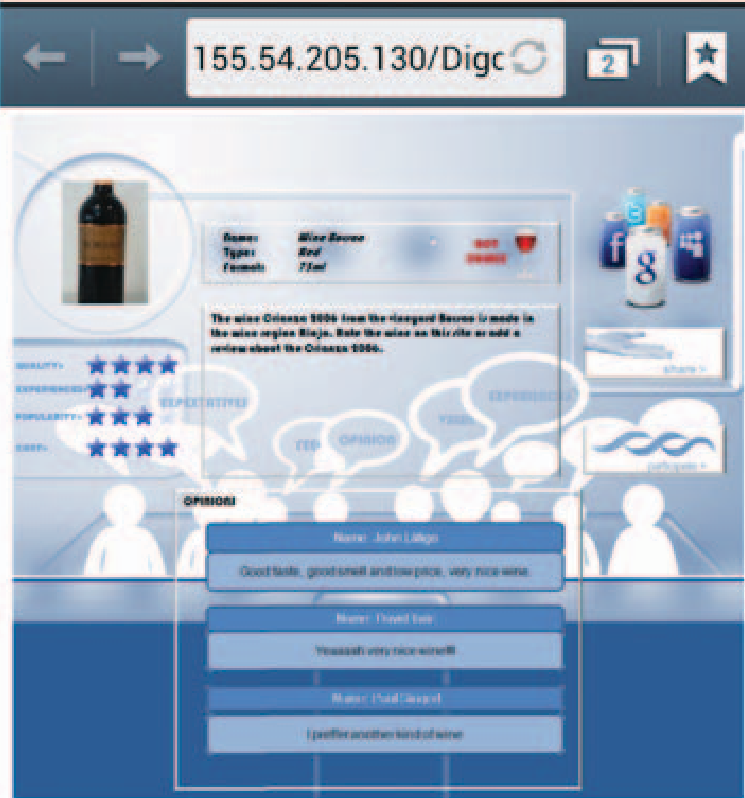 Fig 5: The UI demonstrates how real-time ratings and social media sharing (Facebook, Twitter) are integrated into the product scanning workflow.
By testing these technologies on real-world items like wine bottles, the research shows that NFC/RFID provides a more seamless experience than QR codes because it removes the "line-of-sight" requirement, allowing for faster, more natural interactions.
Conclusion & Future Outlook
The core takeaway is that The Experience IS the Brand. As we move toward a world with 50 billion connected devices, the product becomes a communication channel.
Limitations: The paper assumes a high level of "altruistic participation" from users. While Wikipedia proves this is possible, maintaining a high-quality, bot-free database for millions of commercial products remains a significant logistical and "Social Media Marketing" challenge.
Future Work: Future researchers should look at how these IoT interactions can be gamified or incentivized to ensure the "Collective Intelligence" remains fresh and reliable in a competitive market environment.