
Participatory Defense: Decentralizing Identity Theft Detection in the 5G Era
Participatory detection of identity theft on mobile social platforms
The paper proposes a Participatory Detection Framework for identifying identity theft on mobile social platforms. By leveraging Mobile Edge Computing (MEC) and community engagement, the system distributes lightweight Decision Tree tasks across a user's connection network (followers) to detect anomalous behavior without centralized semantic analysis.
TL;DR
With the convergence of 5G, mobile networks, and social platforms, identity theft has become a critical threat. This paper presents a participatory framework that moves away from centralized, heavy-duty processing. Instead, it empowers a user's social circle (followers) to identify compromised accounts by running distributed, lightweight Decision Trees on their own devices. The result? A detection rate over 90% with minimal central overhead.
Problem & Motivation: The Bottleneck of Centralized Security
As smart cities integrate more real-time social data for public services and financial transactions, the social profile has become a "digital key." Current SOTA (State Of The Art) methods, such as COMPA, perform well but are traditionally centralized. This creates several bottlenecks:
- Computational Cost: Processing sentiment and semantics for millions of users is expensive.
- Privacy Concerns: Centralized analysis requires massive data aggregation.
- Inertia: Centralized systems often lack the agility to detect profile hijacking at the "Edge."
The authors' insight is simple yet profound: Your followers know your behavior better than a distant server. By delegating small identification tasks to a subset of connections, we can create a "neighborhood watch" for digital identities.
Methodology: Community-Driven Verification
The framework operates through a synergistic interplay between three entities: the Followed Node (potential victim), the Aggregator, and the Followers.
1. The Power of "Small" Feature Subsets
Rather than one giant model, each participating follower selects a small, arbitrary subset of features . These features include metadata like:
Geo_enabled/timezonehashtagList/urlListisMarkedAsPossiblySensitive
2. The Feedback Loop
The Aggregator Node acts as a broker. It doesn't just average the results; it uses a dynamic algorithm to reconfigure feature weights () and matching thresholds () based on successive iterations.
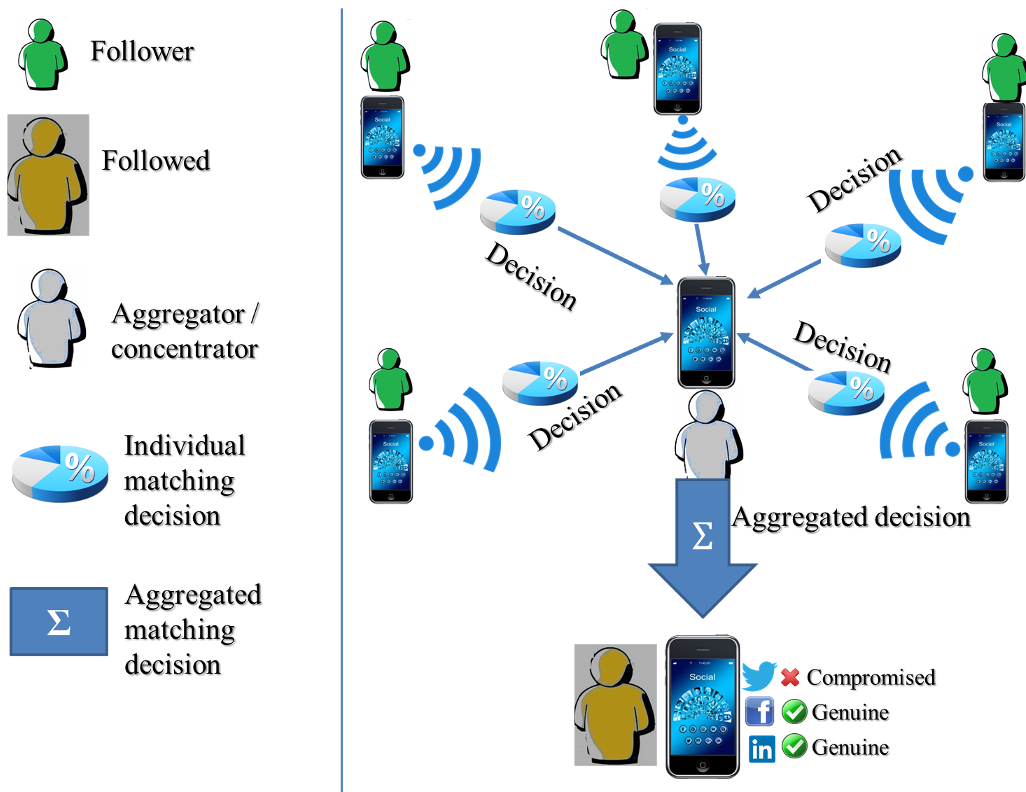 Fig 1: Minimalist illustration of the proposed framework for participatory detection.
The training function iterates through tweet windows, adjusting weights to find the most "stable" representation of the user's behavior. If an incoming tweet stream (potentially from a thief) deviates significantly from the aggregated consensus, an alert is triggered.
Experiments & Results
The researchers validated the framework using real-world data from 20 diverse Twitter accounts. To simulate identity theft, they injected Additive White Gaussian Noise (AWGN) into the tweet timelines.
Key Findings:
- Threshold Sensitivity: The "Sweet Spot" for the initial threshold is 50%. Setting it too high (e.g., 90%) actually makes the system less effective because it becomes too rigid to accommodate natural behavioral shifts.
- High Detection Accuracy: As shown in Fig. 3, the system consistently achieves an ITDR > 90% for most users when configured correctly.
- Rapid Response (RITA): In most scenarios, the "community" detected the identity theft within the first or second window of tweets (approx. 40-70 tweets), proving the system is highly responsive to "on-the-fly" attacks.
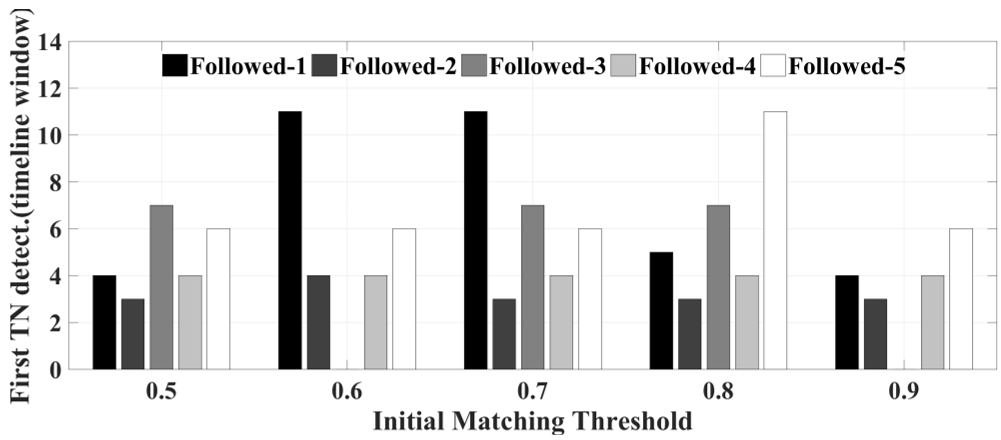 Fig 2: ITDR Performance across different followed users. Note the stability at 50% initial threshold.
Critical Analysis & Conclusion
Takeaway
The paper proves that distributed intelligence at the Mobile Edge is a potent weapon against identity theft. By breaking down a complex detection task into 100 small "Decision Trees," the framework achieves high security without the need for semantic analysis (which is often language-dependent and computationally intensive).
Limitations & Future Work
- The "Trusted Aggregator" Assumption: The framework currently assumes the aggregator is honest. In a real-world adversarial environment, a malicious aggregator could suppress alerts. Integrating Blockchain or TEE (Trusted Execution Environments) could mitigate this.
- Incentive Mechanisms: While the paper mentions battery usage for aggregators, a robust economic model (e.g., tokens or platform credits) is needed to ensure long-term participant engagement.
This work serves as a foundational step toward Participatory Security, where the strength of our digital identity is derived not from a password, but from the collective recognition of our social community.