
Sizing Up Oxidation: How Particle Dimensions Dictate Radical and Electron-Transfer Pathways
Particle size-dependent structure-activity relationship governing radical and electron-transfer pathways in peroxymonosulfate activation.
The study investigates the particle size-dependent structure-activity relationship of metal-free, Si-O-modified carbon catalysts for peroxymonosulfate (PMS) activation. By synthesizing silica-templated carbon spheres ranging from 0.1 to 5.0 μm, the authors achieved SOTA catalytic performance (up to 94.6% Tetracycline removal) and elucidated how size governs the competition between radical and electron-transfer pathways.
TL;DR
Researchers have uncovered a fascinating "size-switch" in metal-free carbon catalysts used for water purification. While reducing particle size to the sub-micron level (0.1 μm) drastically boosts the Electron Transfer Pathway (ETP) and total radical generation, larger particles are actually more efficient at utilizing the radicals they produce. This study provides a masterclass in using structural engineering (Si-O doping and silica templating) to fine-tune advanced oxidation processes (AOPs).
The "Size" Blind Spot in Carbon Catalysis
In the quest to remove recalcitrant antibiotics like Tetracycline (TC) from our water, Peroxymonosulfate (PMS) activation has emerged as a frontrunner. Carbon-based catalysts are preferred for their stability and low cost, yet most research focuses purely on chemical doping (adding Nitrogen or Sulfur). The physical geometry—specifically the particle size—has remained a "black box." Does a smaller particle simply provide more surface area, or does it fundamentally change how electrons move between the pollutant and the oxidant?
Methodology: The Silica Template Strategy
The team synthesized a series of Si-O-modified carbon spheres (0.1-SS to 5.0-SS) using a sacrificial silica template. This ensured that the chemical "flavor" of the catalysts remained identical, leaving particle size as the only major variable.
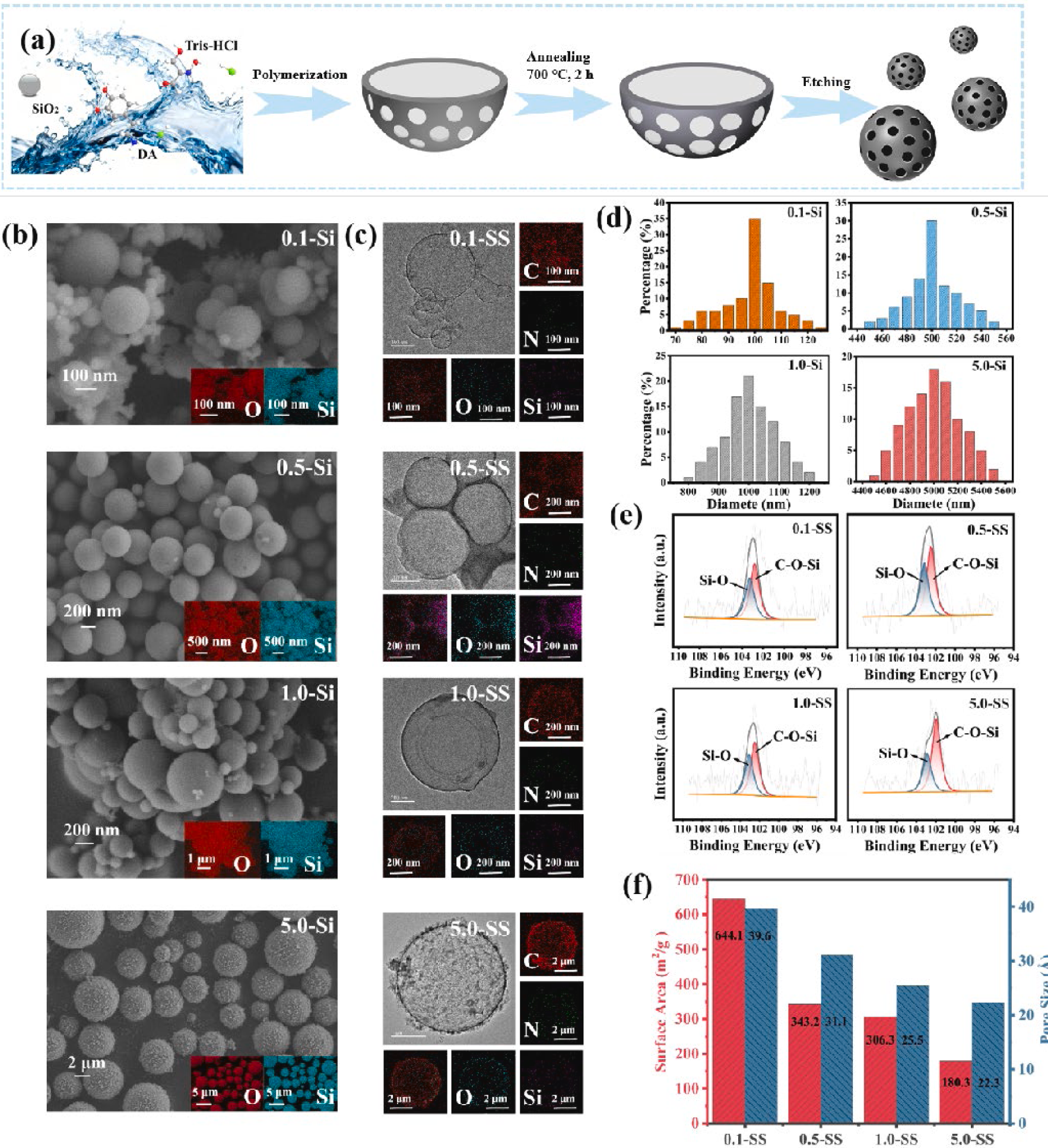 Figure 1: The fabrication process (a) and SEM/TEM imaging (b-c) show the precise control over sphere diameter while maintaining consistent chemical composition.
The Core Insight: A Tale of Two Pathways
The study reveals a nuanced relationship between size and mechanism:
- The Radical Pathway: Smaller particles generate a higher concentration of radicals (SO₄•⁻ and •OH) due to their high surface area. However, because they are packed so tightly, these radicals often "crash into each other" and self-quench before they can hit a pollutant molecule.
- The Electron Transfer Pathway (ETP): This is where 0.1-SS shines. The smaller size facilitates a "bridge" effect. DFT calculations showed that smaller particles have a lower LUMO (Lowest Unoccupied Molecular Orbital) energy level, making them much hungrier for electrons from pollutants.
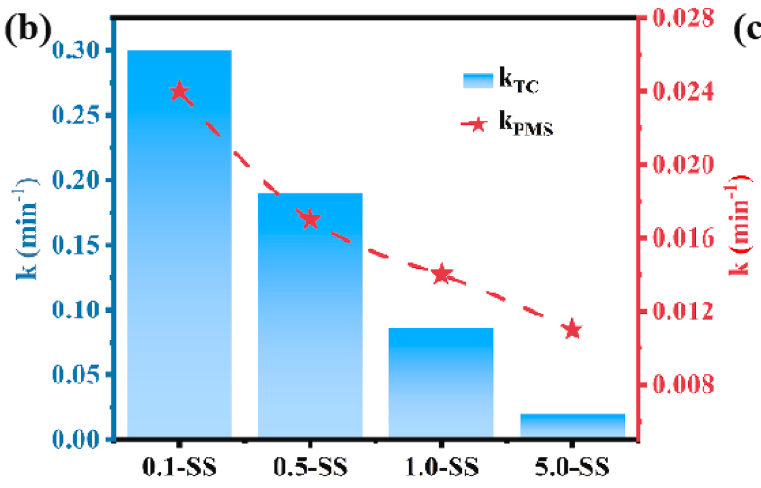 Figure 2: Comparison of TC removal (a) and reaction rates (b). Note the significant performance leap as the particle size shrinks to 0.1 μm.
Selective Killing of Contaminants
Not all pollutants are created equal. The 0.1-SS/PMS system showed a "preference" for electron-donating compounds. By mapping the HOMO-LUMO energy gaps, the researchers derived a predictive model: if a pollutant has a low half-wave potential (φ1/2 < 1.2 V), it is an easy target for this electron-bridge mechanism.
 Figure 3: Evaluating the system against various antibiotics. The negative correlation (c) between potential and rate constants proves the selective nature of the ETP.
Sustainability and Real-World Use
A critical highlight of this work is the Life Cycle Assessment (LCA). The 0.1-SS system demonstrated a lower environmental footprint compared to traditional iron-based (Fenton) systems. Furthermore, the team successfully integrated the catalyst into a continuous-flow reactor, maintaining 90% removal efficiency over 7 hours—a vital step toward industrial scalability.
Critical Analysis & Conclusion
This research moves the field beyond the simple "more surface area = better" mantra. It proves that particle size is a regulatory knob for switching between radical and non-radical chemistry.
Takeaways:
- Scale matters: Sub-micron sizing is essential for ETP-dominant systems.
- Efficiency vs. Yield: Higher radical yield in small particles doesn't always equal higher utility due to self-quenching.
- Stability: The Si-O modified carbon backbone provides exceptional resistance to the "scavenging" effects of common ions like Chlorides or Sulfates found in real water.
Limitations: The use of dopamine hydrochloride as a precursor is costly; future work should look toward cheaper bio-carbon sources while maintaining this precise size control.