
Hybrid PSO: The Evolution of Power Grid Optimization
Solution of an Economic Dispatch Problem Through Particle Swarm Optimization: A Detailed Survey – Part II
This paper provides a comprehensive survey of hybrid Particle Swarm Optimization (PSO) techniques for solving the constrained Economic Dispatch (ED) problem. It identifies how PSO, when combined with deterministic and metaheuristic methods, overcomes premature convergence to find global optima in complex nonconvex power system models.
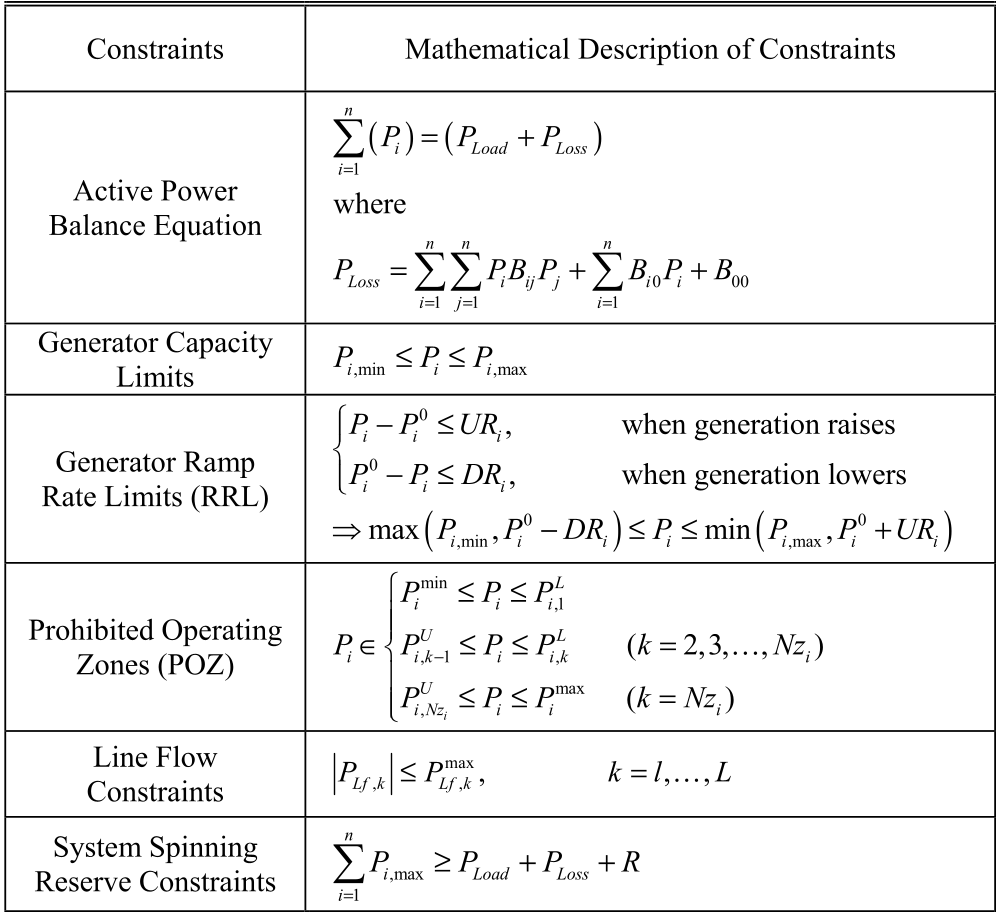
In the world of power systems, Economic Dispatch (ED) is the bread and butter of operational efficiency. The goal is simple: meet electricity demand at the lowest cost. However, real-world physics—like valve-point loading and ramp-rate limits—turn this simple goal into a mathematical nightmare of nonconvexity.
In this detailed survey, Abbas et al. (Part II) dive deep into how Particle Swarm Optimization (PSO) has evolved through hybridization to conquer these complexities.
TL;DR
- The Core Problem: Standard PSO is fast but prone to "Premature Convergence"—getting stuck in "good enough" local solutions.
- The Solution: Hybridization. By merging PSO with other algorithms, researchers have created "super-optimizers" that balance global exploration with surgical local search.
- The Verdict: Whether it's combining with Gradient methods for precision or Genetic Algorithms for diversity, hybrid PSO is the current SOTA (State of the Art) for thermal unit dispatch.
Why Standard PSO Fails the "Real World" Test
Standard PSO relies on two primary drivers: Personal Best (pbest) and Global Best (gbest). For a smooth, convex problem, this is great. But thermal units have "valve-point effects" (represented as sinusoidal ripples in cost curves) and "prohibited operating zones" (disconnected feasible regions).
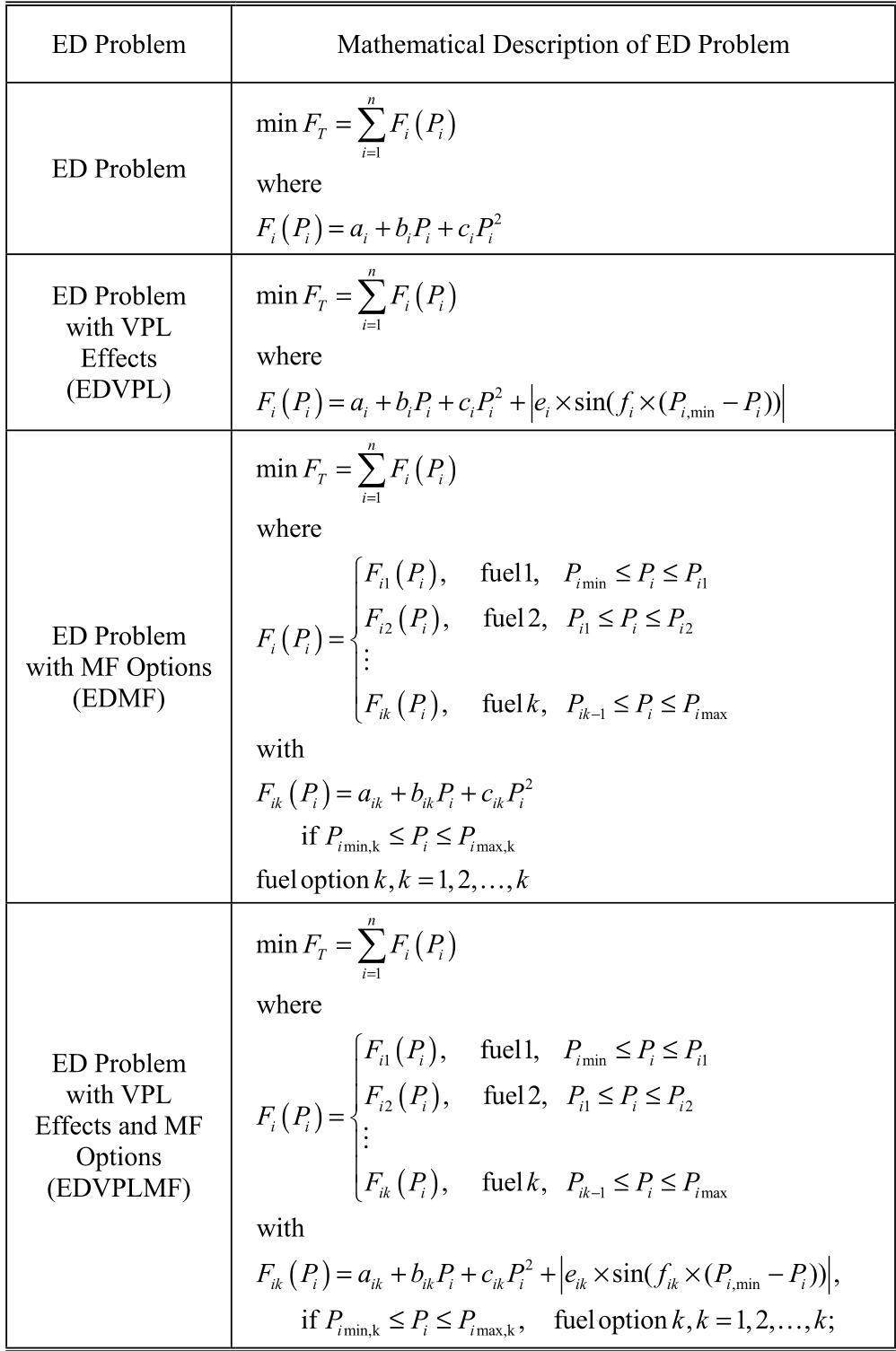
In these scenarios, the swarm often collapses into a single point in the search space far before finding the true minimum. This is the Premature Convergence trap.
Methodology: The Power of the Hybrid
The paper breaks down hybrid strategies into two major categories:
1. PSO + Deterministic Methods (The Surgeons)
When you combine PSO with methods like Sequential Quadratic Programming (SQP) or Quasi-Newton (QN), you get a two-phase optimizer.
- Phase 1: PSO explores the wild landscape to find the "valley" containing the global minimum.
- Phase 2: The deterministic method takes over as a "Fine-Tuner," using gradient information to sprint to the bottom of that valley.
2. PSO + Other Metaheuristics (The Diversifiers)
Combining PSO with Genetic Algorithms (GA) or Differential Evolution (DE) introduces operators like "Crossover" and "Mutation."
- Insight: If the swarm loses diversity, a "Mutation" operator (borrowed from GA/DE) forces particles to jump to unexplored regions, effectively "restarting" the search without losing the memory of the best solutions found.
Key Performance Indicators: When It Works
The survey highlights the PSO-SQP and HPSOTVAC/BFA models as particularly effective. For instance:
- Scalability: These models handle large-scale systems (up to 80 units) where standard PSO usually fails.
- Convergence: Even in the presence of transmission losses (which add quadratic complexity), hybrid forms show a smoother, faster convergence curve.
Depth Insight: The "Why" Behind the Hybrid
Why does hybridization work so much better? It’s about Inductive Bias. PSO has a bias toward social learning. By adding DE’s mutation, you add a bias toward diversity. By adding SQP, you add a bias toward localized gradient descent.
The paper concludes that Hybridization is a synergy of strengths and a cancellation of weaknesses.
Critical Analysis & Future Outlook
While this survey is exhaustive, it points to a clear trend: the future isn't just "PSO vs. GA," it's about Adaptive Hybridization.
Limitations: Most of these hybrids introduce more hyperparameters (mutation rates, crossover constants), making them harder to tune for non-experts. Future Work: The authors suggest moving toward Multi-objective Economic Dispatch, where we optimize not just for cost, but for emissions and reliability simultaneously.
For the modern power engineer, this paper serves as a roadmap: if your optimizer is failing, don't switch algorithms—hybridize it.
Reference: Abbas, G., et al. "Solution of an Economic Dispatch Problem Through Particle Swarm Optimization: A Detailed Survey – Part II." IEEE Access, 2017.