
Who Should I Invite? The CD-UIP Approach to Mastering Social Event Curation
Who should I invite for my party? Combining user preference and influence maximization for social events
The paper introduces the Influential Preferable Set (IPS) mining problem in Event-Based Social Networks (EBSNs). It proposes the CD-UIP algorithm, which integrates user preference modeling with a credit distribution-based influence maximization framework to identify the optimal set of invitees for real-world social events.
TL;DR
Organizing a party through social media is more than just a numbers game; it's about finding the "Activity Fans" who also have the social clout to bring others along. This paper introduces CD-UIP, an algorithm that mines the Influential Preferable Set (IPS). By combining historical preference matching with a credit-based social influence model, it triples the efficacy of event attendance compared to traditional influence-only strategies.
Academic Positioning: This work bridges the gap between Recommendation Systems (User Preference) and Social Network Analysis (Influence Maximization), specifically tailored for the "Online-to-Offline" (O2O) dynamics of Event-Based Social Networks (EBSNs).
The "Spam" Problem in Social Invitations
In platforms like Facebook Events or Douban, a host's "invite all" strategy is often counterproductive.
- Low Conversion: Most followers have no interest in the specific event.
- Social Fatigue: Constant irrelevant notifications can lead to followers "unfollowing" or muting the host.
- The Context Gap: Online influence doesn't always translate to physical presence unless the content and context (spatio-temporal) align with the user's habits.
Methodology: The CD-UIP Framework
The core innovation lies in the Credit Distribution-User Influence Preference (CD-UIP) model. Unlike the Independent Cascade (IC) model which uses Monte Carlo simulations, CD-UIP mines actual history logs to see who actually influenced whom in the past.
1. Preference Modeling
The system uses a Multi-Factor (MF) model to calculate . It considers:
- Content: Using LDA to match event descriptions with user history.
- Context: Spatio-temporal proximity (Is the event near the user? Does it match their active hours?).
- Social: The strength of the bond between the host and the user.
2. Influence Credit with Preference Injection
The direct influence credit (the credit given to influencer for moving user ) is redefined using this formula:

The model accounts for:
- Time Decay: Influence fades exponentially as the gap between 's action and 's action increases.
- Influenceability: Some users are naturally more prone to social nudges.
- Preference Weight: Influence is amplified if both the influencer and the follower high interest in the event category.
Experimental Battleground: Douban Events
The researchers crawled 21 months of data from Douban Events, one of China's most active EBSNs.
Performance Comparison
When predicting influence spread, CD-UIP outperformed the industry standards (IC and LT models).
- The Baseline Trap: The standard Influence Maximization (UI) algorithm picks "popular" people, but they might not care about this specific party.
- The Preference Trap: Picking only fans (UP) ignores the "viral" potential—those fans might not have any friends to bring along.
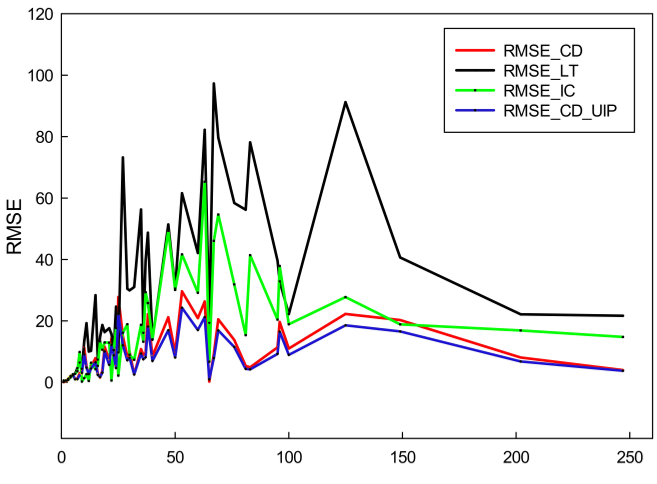 Figure: CD-UIP consistently maintains the lowest error (RMSE) in predicting how many people will actually show up.
The "Per Activity" Metric
The most striking result:
- UI Model: 11.24 participants.
- UP Model: 15.24 participants.
- CD-UIP Model: 35.95 participants.
By selecting the "Influential Preferable Set," the host attracts over 3x more people than by simply picking the most influential followers.
Critical Insight & Takeaways
The brilliance of CD-UIP is its recognition that social influence is not a static property of a person; it is context-dependent. A user might be a massive influencer in "Tech Meetups" but have zero influence in "Board Game Nights."
Key Takeaways for Future Systems:
- Log-Based Learning: Moving away from theoretical probability models (IC/LT) to log-based credit distribution yields much higher accuracy in real-world scenarios.
- Hybridization is King: Recommendation and Influence are two sides of the same coin in social commerce.
Limitations: The model currently relies heavily on historical logs. For "cold-start" users with no attendance history, the preference modeling would need to rely on cross-domain social data.
Future Outlook: We expect these IPS mining techniques to be integrated into targeted advertising within Metaverse social hubs and O2O platforms like Meituan or Yelp.