
Beyond 123456: Deciphering Password Vulnerabilities via Big Data Analytics
A password creation and validation system for social media platforms based on big data analytics
This paper introduces a novel password creation and validation system driven by big data analytics on leaked datasets. By utilizing a specialized "All Repeated Patterns Detection" (ARPaD) algorithm and LERP-RSA data structures, the methodology identifies both frequent and obscure character sequences to preemptively block weak passwords.
TL;DR
Researchers have developed a breakthrough system that moves beyond simple password rules (like "must include a symbol"). By using the ARPaD algorithm to mine millions of leaked passwords, the system identifies the "DNA" of weak passwords—the specific substrings people love to use—and blocks them in real-time. This method is computationally massive yet efficient, analyzing millions of patterns in minutes where previous methods took years.
The "Randomness" Illusion: Why Your Password Isn't Safe
The fundamental conflict in cybersecurity is Security vs. Memorability. When forced to meet complex requirements, humans don't become random; they become predictable. We use "LinkedIn123!" for LinkedIn or "P@ssword1" to satisfy the "one capital, one symbol" rule.
The authors argue that current password meters are lying to you. A password like aqwerty might be marked as unique because it doesn't appear in a standard dictionary, but it contains the highly frequent keyboard pattern qwerty.
Methodology: The Power of ARPaD and LERP-RSA
To catch these patterns, the authors didn't just look for words; they looked for substrings.
1. The Data Structure: LERP-RSA
They utilized the Longest Expected Repeated Pattern Reduced Suffix Array (LERP-RSA). Unlike traditional Suffix Arrays that can be memory-heavy, LERP-RSA uses a probabilistic approach to keep space complexity manageable while allowing for lightning-fast lexicographical sorting of every possible fragment of a password.
2. The Algorithm: ARPaD
The All Repeated Patterns Detection (ARPaD) algorithm then traverses this array to find every single repeated sequence across the entire dataset.
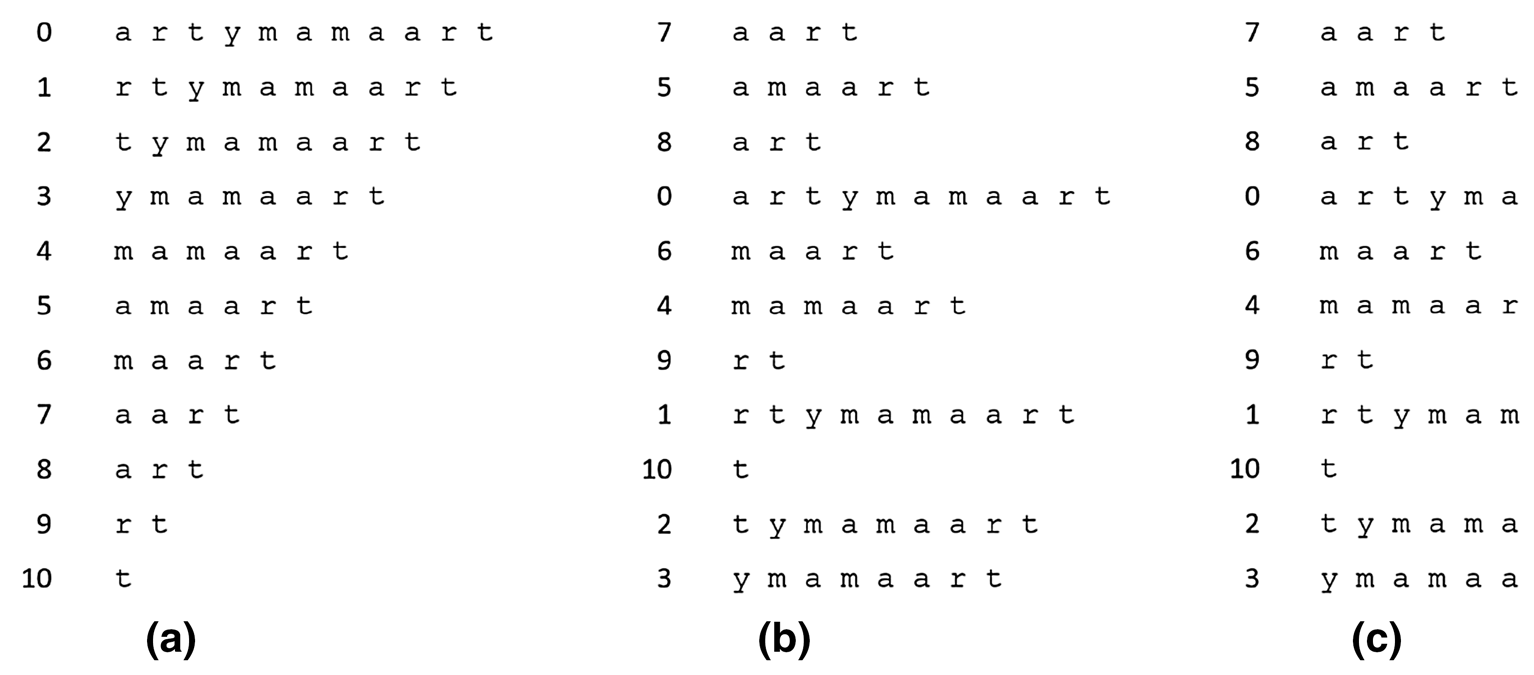 Figure 1: Illustration of how suffix strings are truncated and sorted to identify repeated patterns efficiently.
Revolutionary Insights from the LinkedIn Leak
The team analyzed 5.6 million LinkedIn passwords. Their findings expose the "logic" of human password creation:
- The Power of Substrings: Two passwords might look different, but share a 4-character substring like
mama. This single piece of knowledge reduces brute-force cracking time by 10 billion times. - The "Area Code" Trap: The team found that "random" numbers like
212appeared frequently. Why? It's the New York area code. Users frequently use phone numbers, believing their length (10+ digits) makes them strong. - Platform Mangling: Thousands of users on LinkedIn used the word
linkedinor leet-speak versions likel1nk3dwithin their password.
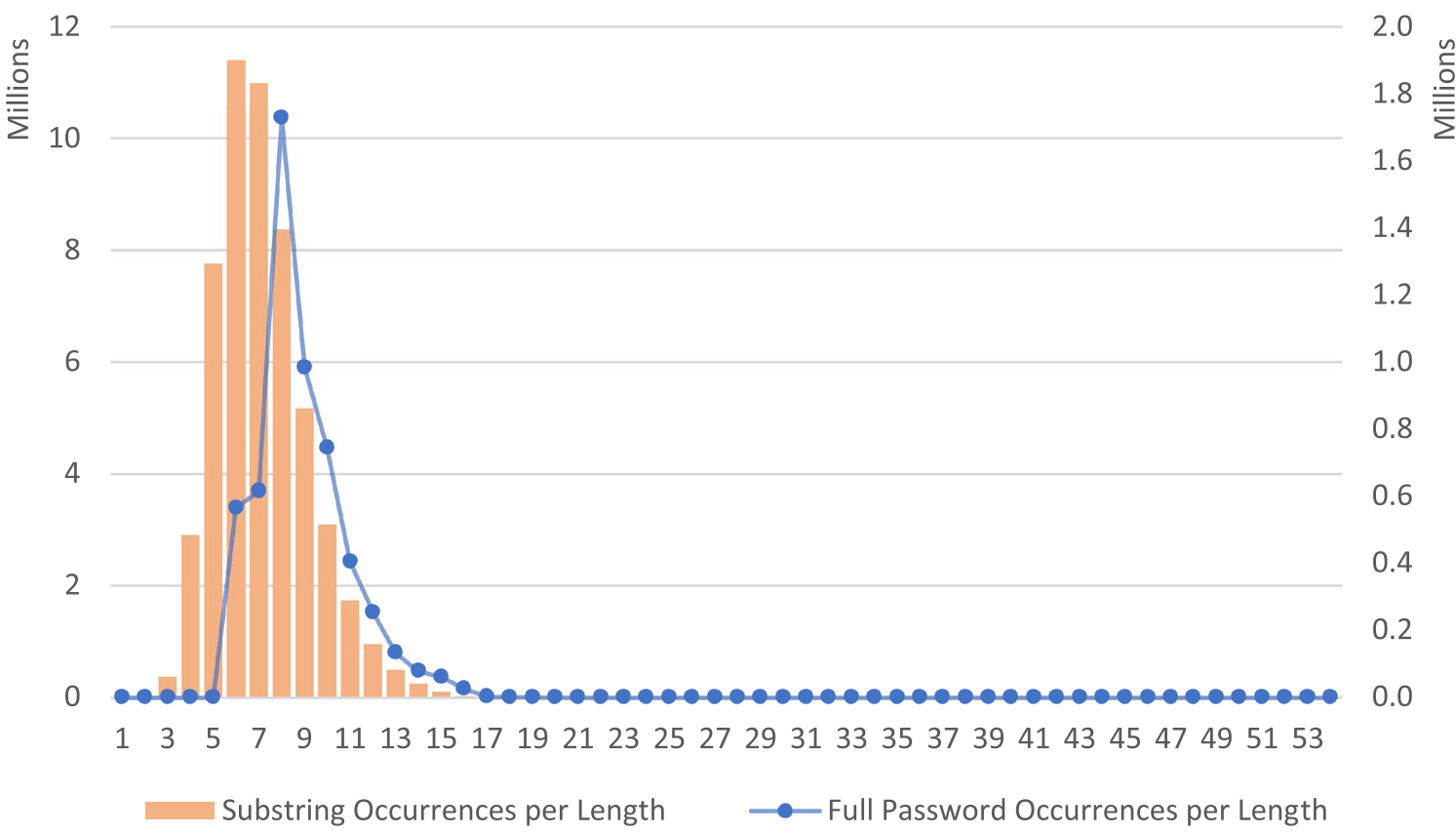 Figure 2: Distribution showing that while most passwords are ~9 characters, the patterns within them are the true indicators of weakness.
The Proposed System: PCVS
The proposed Password Creation and Validation System (PCVS) acts as a proactive shield.
- Real-time Analysis: As you type, the system breaks your password into LERP-RSA fragments.
- Frequency Check: It compares these fragments against a massive database of known patterns.
- Dynamic Blocking: If you type
qwe..., the system immediately flags it as a weak prefix and suggests "lower frequency" substrings to increase entropy.
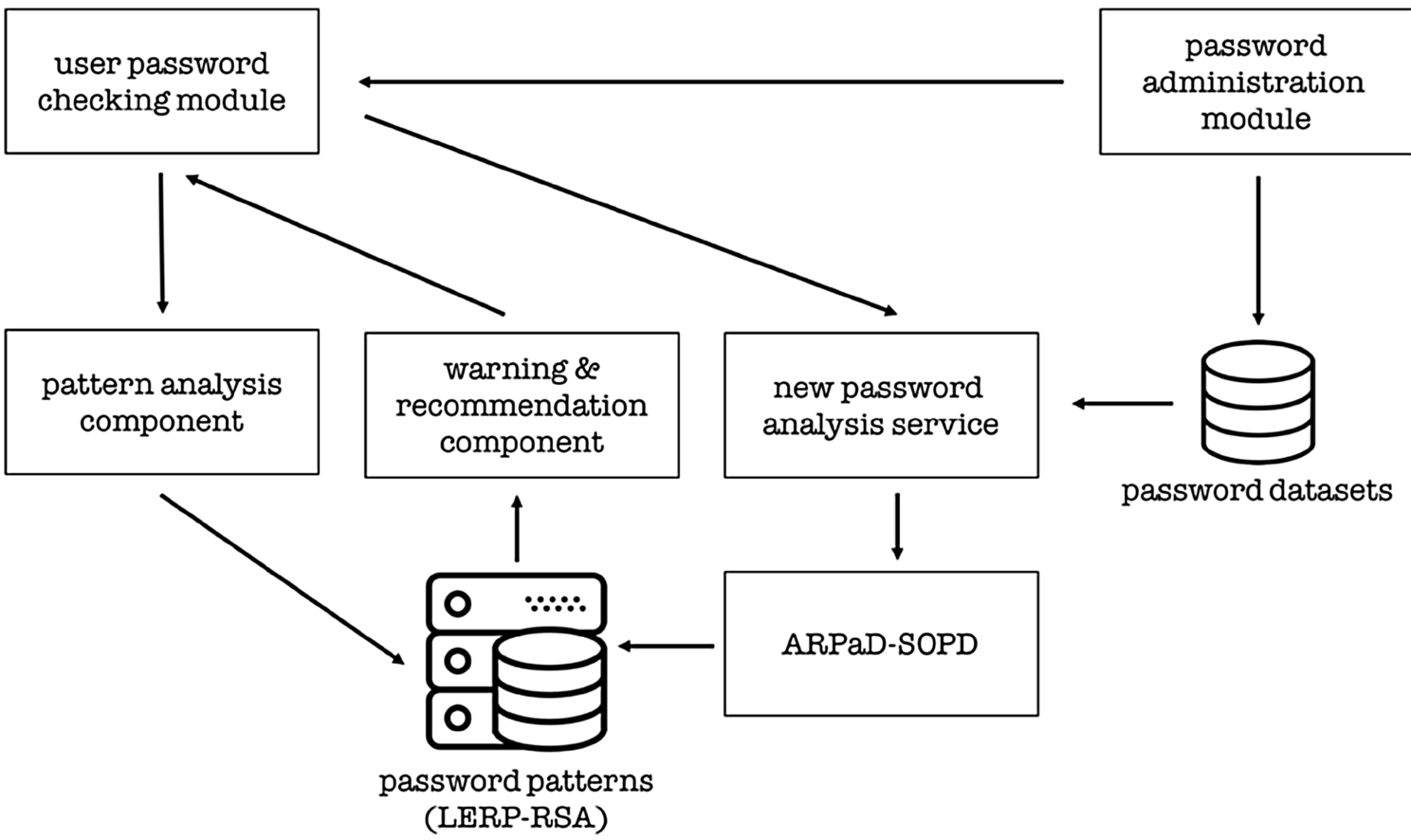 Figure 3: The PCVS Architecture designed to integrate into existing social media registration flows.
Critical Analysis & Conclusion
Takeaway
The genius of this work lies in its efficiency. While n-gram analysis was historically too slow for long strings, the ARPaD approach makes deep pattern matching viable for production systems.
Limitations
The system relies on the availability of leaked datasets for "training" its pattern database. As attackers evolve, the system must constantly ingest new breaches to stay ahead of new human trends in password creation.
Future Outlook
This methodology could be extended to biometric template protection or automated honey-pot generation, where systems generate "believable" but fake user credentials to trap attackers.