
Beyond the Password: Engineering Seamless Authentication for Modern Social Networks
Password-free authentication for social networks
This paper proposes a multi-layered, password-free authentication framework specifically designed for social networks. It leverages a hybrid system of deterministic markers (Cookies, HTML5 Local Storage, Cached Images) and probabilistic Web-based Device Fingerprinting to identify users without requiring traditional registration or login credentials.
TL;DR
The friction of account creation is the "silent killer" of new social platforms. This paper by Dr. Erol Ozan outlines a robust, password-free authentication architecture. By synthesizing deterministic storage (Cookies, HTML5) with probabilistic browser fingerprinting (Canvas, hardware sensors, and geolocation), platforms can recognize users instantly upon arrival with an acceptable security-reliability trade-off.
Problem & Motivation: The "Login Wall"
Social networks face a paradox: they require user-specific data to provide value, yet the act of asking for a username and password often drives users away. Existing solutions like OAuth (Social Login) are frequently rejected due to privacy concerns or "spam-phobia."
Furthermore, the traditional reliance on Cookies is failing. With nearly a third of users clearing their cookies every month, a more persistent and multi-faceted approach is required to maintain session continuity without re-authentication.
Methodology: The Stepwise Authentication Core
The author proposes a four-layer stack to ensure that if one identification method fails (e.g., the user clears their cache), others can "resurrect" the user identity.
1. Deterministic Layers (The "Hard" Identifiers)
- Cookie Layer: The baseline tracking mechanism.
- Cached Image Authentication: A clever trick where the server embeds a unique ID into a single pixel of a GIF. Because browsers cache images to save bandwidth, this ID persists even if cookies are deleted.
- HTML5 Local Storage: Utilizing the 5MB+ storage limit of modern browsers to store identity data that often survives cookie-clearing cycles.
2. Probabilistic Layer (The "Soft" Signature)
This is where the paper delves into Web-based Device Fingerprinting. By querying the browser for its specialized attributes—User-Agent, screen resolution, installed fonts, and even the way its hardware renders a <canvas> element—a unique "fingerprint" is generated.
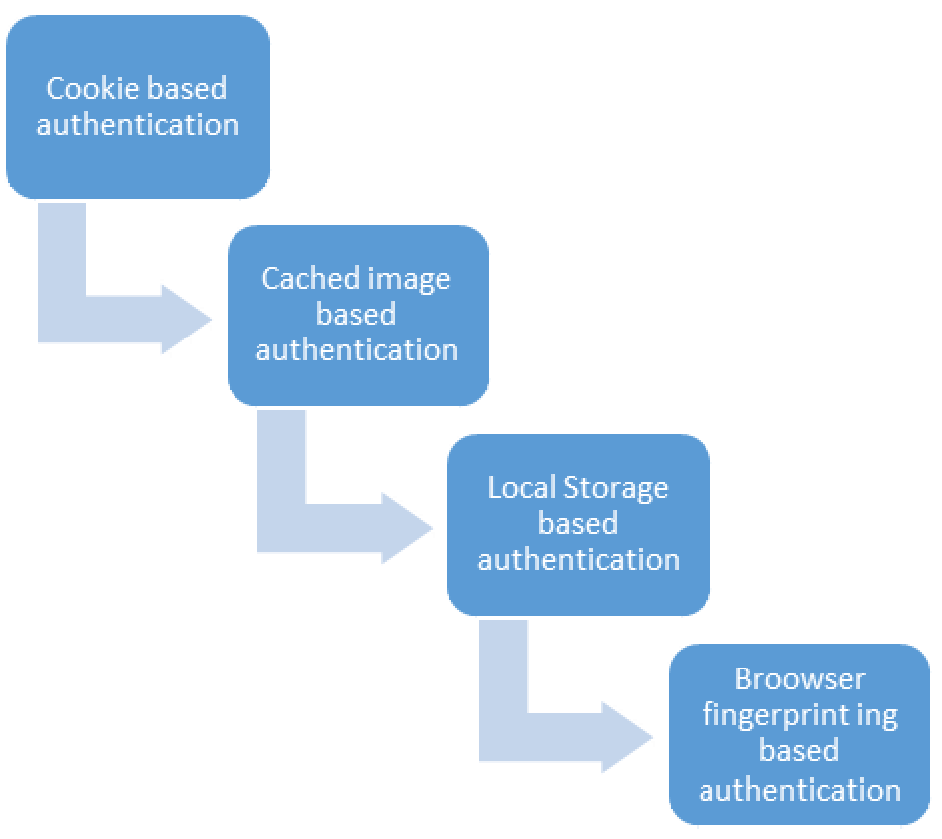 Fig 1: The proposed hierarchy of authentication layers.
High-Entropy Insights: Hardware & Geolocation
The paper reveals two particularly fascinating "side-channel" identifiers:
- Sensor Fingerprinting: Mobile devices have tiny hardware imperfections in their accelerometers and speakers. These imperfections act like a "physical fingerprint" that can be accessed via JavaScript without the user ever seeing a permission prompt.
- Browser-Specific Geolocation: Even on the same machine, different browsers (Chrome vs. IE) interpret location data slightly differently due to their internal APIs. This variance actually helps identification because it adds to the uniqueness of the device's profile.
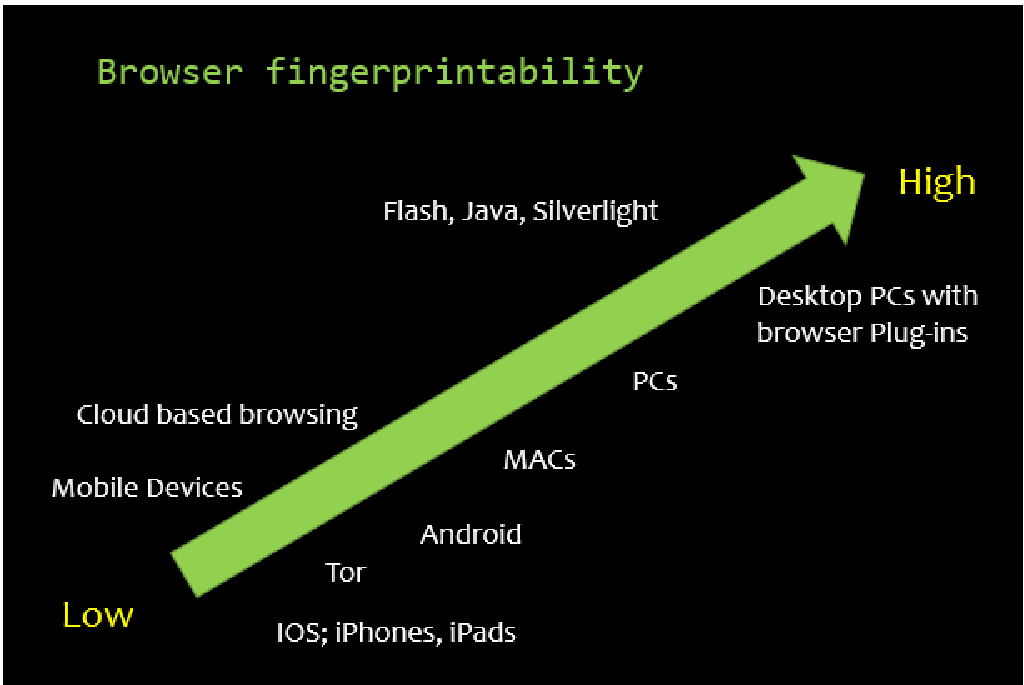 Fig 2: Comparison of how easily different systems can be "fingerprinted" based on their plug-in configurations.
Experimental Analysis
The research demonstrates that Windows machines are generally easier to track than mobile devices because they tend to have more varied plug-ins (Flash, Java, Silverlight), which increase the entropy (uniqueness) of the fingerprint. Mobile devices, being more standardized, require the "deeper" sensor-based techniques mentioned earlier to achieve a distinct ID.
Critical Analysis & Conclusion
Takeaway
The paper successfully argues that device identity is becoming the new user identity. As we move toward a world where our smartphones are inseparable from our personas, the device’s physical and software signature is a viable alternative to the archaic password.
Limitations
- Privacy & Law: The author acknowledges that fingerprinting is a "gray area." GDPR and other privacy regulations have become significantly more stringent since this research, often requiring explicit consent for "fingerprinting" similar to cookie banners.
- Cross-Device Gap: This method primarily tracks a specific device. If a user switches from a laptop to a phone, the password-free link is broken unless a "bridge" (like a one-time email link) is established.
Future Outlook
The next frontier is Behavioral Biometrics—tracking not just what the device is, but how the user interacts with it (typing cadence, scroll speed). When combined with the fingerprinting methods discussed here, the "password" may finally become a relic of the past.