
GTR: Patching the "Blind Spots" in ISP Neutrality Detection Using Geographic Intelligence
Patching Traceroute Using Geographic Information In Neutrality Inference Crowdsourcing
This paper introduces GTR, a novel geographic-based patching mechanism for Traceroute designed to enhance network neutrality inference Crowdsourcing. By leveraging the physical regularities of Internet routing and geographic metadata, GTR repairs incomplete Traceroute paths (timeouts) to provide robust inputs for tomography-based detection systems like System 4.
TL;DR
In the battle for Net Neutrality, crowdsourced data is our best weapon, but Traceroute timeouts often render this data useless. This paper presents GTR, a mechanism that uses the physical geographic layout of cities and provinces to "patch" missing network hops. By filling in these gaps, GTR increases the visibility of shared network paths by up to 75%, allowing users to catch ISPs that unfairly throttle specific traffic.
Problem: The "Timeout" Wall
To prove an ISP is violating neutrality (e.g., throttling Netflix but not its own video service), researchers use Network Tomography. A popular system, System 4, compares different network paths to see where traffic is being treated unfairly.
However, there is a massive practical hurdle: ISPs don't like being watched. They often configure routers to be anonymous, leading to the infamous * * * (timeout) in Traceroute. The authors found that nearly 40% of hops result in timeouts. When nodes are missing, the system cannot see where paths overlap, making it impossible to accurately blame a specific link for neutrality violations.
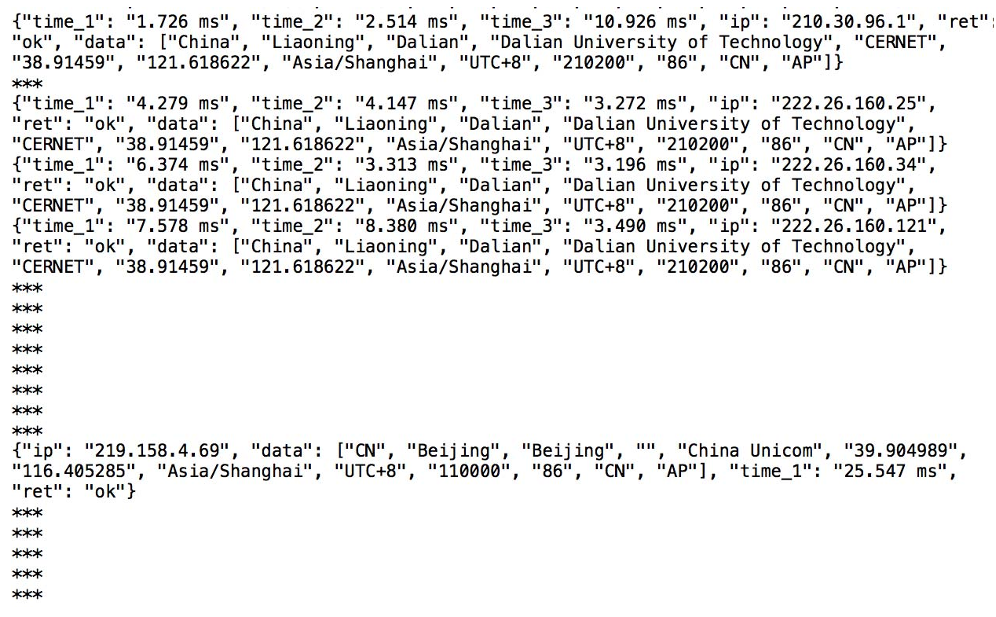 Fig 1: When Router 2 (R2) is anonymous, the overlapping link (link3) becomes invisible to the inference system.
Insight: Geography is the Network's Blueprint
The authors' core insight is that network topology follows administrative geography. In China (and many other countries), traffic from a small city must pass through its provincial capital before hitting the national backbone. This hierarchical structure (City → Province Capital → National Core) is stable and predictable.
The GTR Methodology
GTR (Geographic Traceroute) functions in three main stages:
- Landmark Discovery: They deployed a "spider" to find IP addresses of government (.gov) and education (.edu) servers. These are perfect landmarks because they are physically located in the cities they represent and rarely change.
- Geo-Tagging: Using databases like IPIP.net, every hop in a Traceroute is tagged with a geolocation.
- Path Patching: If a Traceroute shows a jump between two locations that doesn't follow the known geographic hierarchy, GTR inserts "logical nodes" (Access Points or IXPs) to bridge the gap based on the refined network mapping.
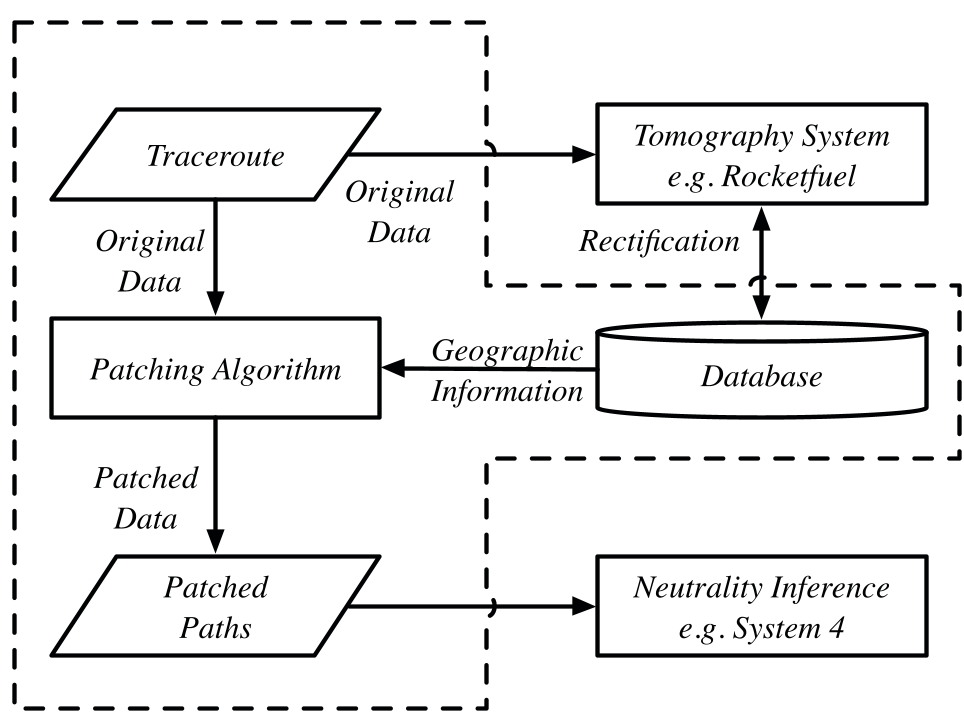 Fig 2: The GTR workflow—from raw Traceroute to Geographically Patched Paths.
Experimental Results: Turning "Noises" into Signals
The authors tested GTR across several cities in Northern China (Anshan, Dalian, Panjin, Qinhuangdao) on the China169 (China Unicom) network.
- Recognition Boom: In Qinhuangdao, where timeouts were most severe, GTR improved the number of detected links by 80%.
- System 4 Enhancement: By patching the paths, the "Shared Path Recognition Rate" (crucial for pinpointing violations) improved significantly.
- Simulation Stability: Even with 1 to 5 nodes missing from a path, GTR maintained a 14% higher inference accuracy compared to raw Traceroute data.
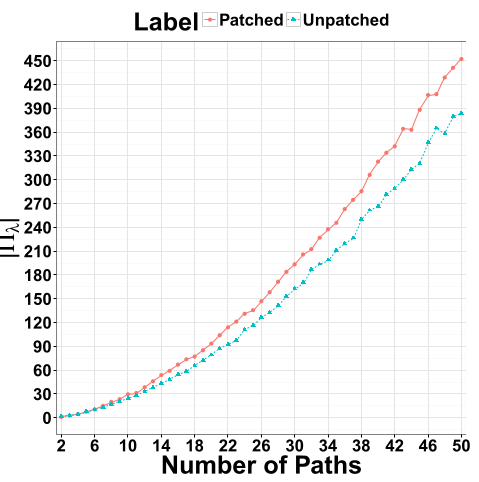 Fig 3: Comparison of detected paths in Qinhuangdao. The patched data (Red) provides a much richer view of the network than the original (Blue).
Critical Analysis: Why This Matters
The brilliance of GTR lies in its simplicity. It doesn't require ISP cooperation or expensive hardware; it simply uses the "physical reality" of where routers are placed to correct "digital gaps."
Limitations:
- Granularity: GTR provides a "coarse-grain" topology. While enough for neutrality inference, it might not be sufficient for fine-grained congestion debugging.
- ISP Deviations: If an ISP uses highly non-traditional routing (e.g., sending traffic from Northern China to Southern China and back), the geographic assumption might introduce errors.
Conclusion
GTR proves that crowdsourced neutrality monitoring is viable even in restrictive network environments. By using geographic intuition to patch technical failures (timeouts), this work empowers the average user to contribute to a more transparent and open Internet. For researchers, it highlights a powerful truth: when the digital map is incomplete, look at the physical world for the answer.