
Decoding the Teacher’s Perspective: Why Educational Robots Struggle to Enter the Classroom
15383_Pedagogical Uses of Thymio II How Do Teachers Perceive Educational Robots in Formal Education
This study investigates the integration of Thymio educational robots in Swiss formal education through a survey of 43 teachers. It employs a multidimensional framework of utility, usability, and acceptability to determine how educators perceive robotics as a pedagogical tool for students aged 4-15.
TL;DR
While educational robots like Thymio are celebrated for boosting student motivation, their success in formal education depends entirely on the teacher's perception. This study reveals that while teachers see immense value in robots for teaching "transversal skills" (collaboration and reflection), the main hurdles are not the students' abilities, but the teachers' own technical confidence and the rigid constraints of school curricula.
The "Curriculum Sword of Damocles"
For decades, robotics has been seen as a "supplementary" or "extracurricular" activity. The authors point out a striking paradox: while 97% of teachers think ICT is useful, only 5% use it daily. The gap isn't caused by the technology itself being "bad," but by a lack of institutional alignment. Teachers are currently caught between the excitement of new tools and the "Sword of Damocles"—the pressure to complete a pre-defined official curriculum that often ignores robotics.
Methodology: The Utility-Usability-Acceptability Triad
The researchers analyzed the Swiss-made Thymio robot—a platform designed to be affordable, gender-neutral, and "ready-to-use." They evaluated its impact through three lenses:
- Utility: Does it actually help teach math, science, or social skills?
- Usability: How hard is it for a non-expert teacher to set up a lesson?
- Acceptability: Do teachers want to use it, or do they feel forced by external pressure?
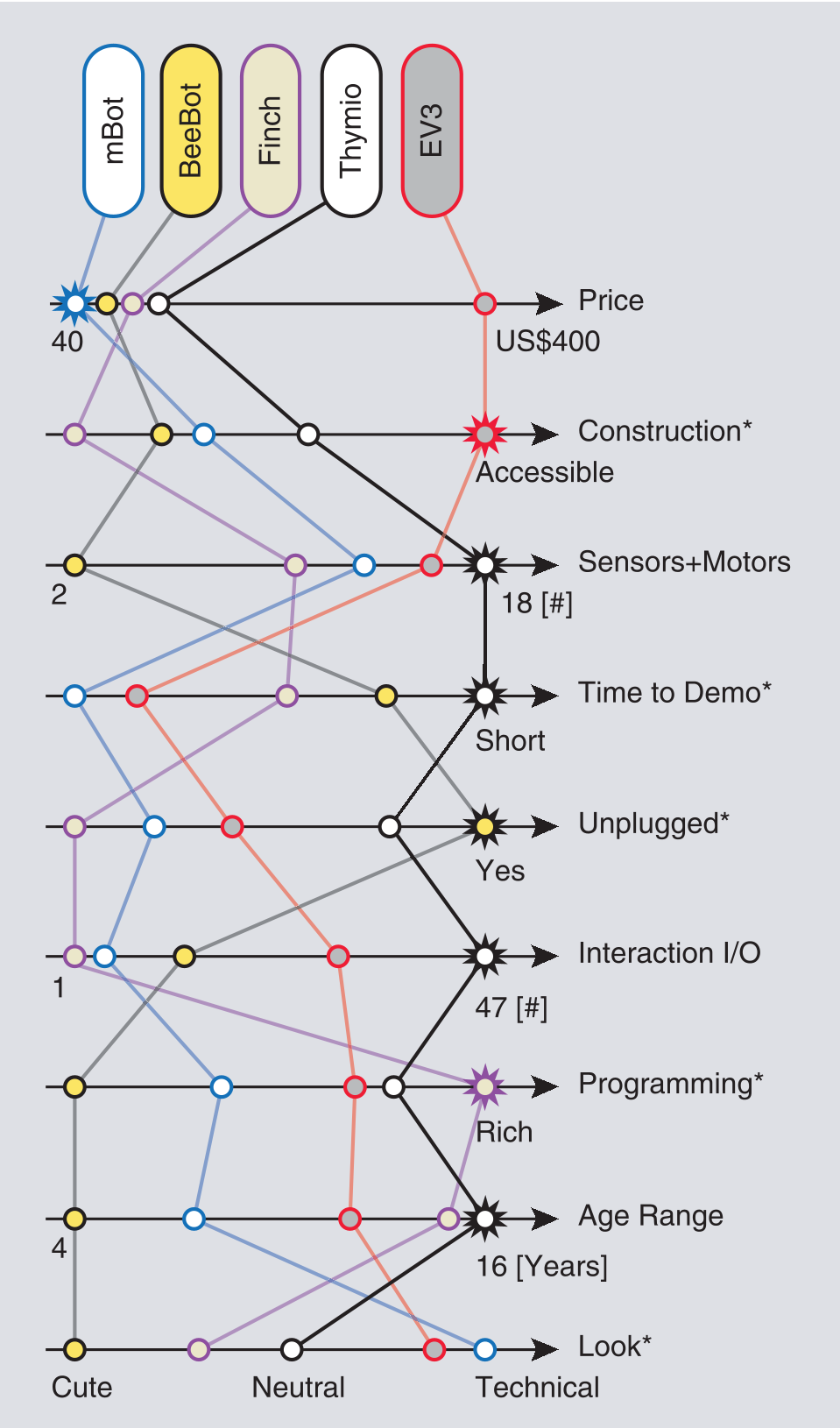 Figure 1: A comparison of popular educational robots. Note how Thymio balances interactivity and ease of use compared to the construction-heavy LEGO EV3.
Key Insights: It’s Not About the Coding
One of the most profound findings in the paper is the shift in perception that occurs after training.
- The Technical Myth: Teachers who had never used a robot believed they needed advanced computer science skills. However, those with experience reported that such skills were not necessary.
- Transversal Skills > Coding: Teachers don't primary use robots to teach "how to code." Instead, they use them as "carriers of knowledge" to foster collaboration (90%) and reflective processes (93%).
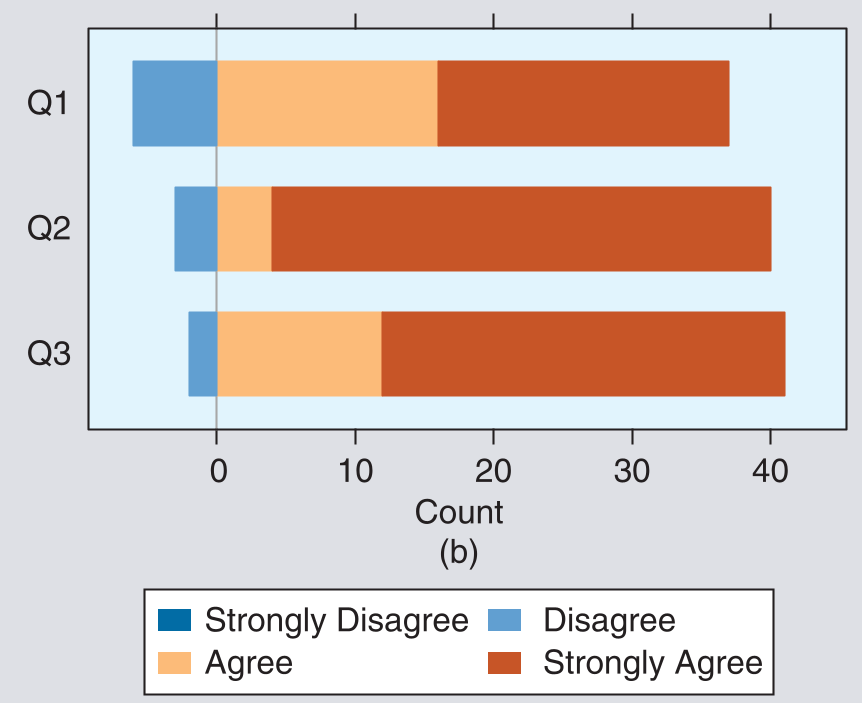 Figure 2: Survey data shows that teachers are more confident in their students' ability to handle robots than in their own professional mastery.
The Reality Check
Interestingly, the study found that perceived utility actually decreased slightly after teachers used the robot in class. This isn't a failure of the robot, but a "reality check." Once the "honeymoon phase" of a new gadget ends, teachers realize that managing a classroom of 20+ students with hardware, batteries, and software requires significant logistical effort and pedagogical "scaffolding" (ready-to-use lesson plans).
Deep Insight & Conclusion
The study concludes that the "Acceptability" of robots is tied to Intrinsic Motivation. Teachers use robots because they personally want to learn something new (stimulation) and be more efficient educators (accomplishment).
The Takeaway for Tech Developers: If you want to put a robot in every classroom, stop focusing on "more sensors" or "better AI." Instead, focus on:
- Documentation: Provide "ready-to-use" materials that fit into a 45-minute lesson.
- Curriculum Mapping: Explicitly show how using the robot covers mandatory math or language standards.
- Teacher Confidence: Focus training on the "orchestration" of the class, not the programming of the hardware.
As the authors argue, the teacher is the "key actor." Until we solve the usability hurdles for the educator, the most advanced robot will remain just an expensive toy in the school cupboard.