
Graph-Geometric Refinement: Bridging the Gap in Robust Corner Matching
18020_Pedestrian dead reckoning trajectory matching method for radio map crowdsourcing building in WiFi indoor positioning system.
This paper introduces a robust feature-matching framework based on graph-based geometry and corner detection to enhance image registration accuracy. By utilizing the Harris Corner Detection algorithm and structural distance constraints, the method achieves stable keypoint matching even under geometric transformations.
TL;DR
This research presents a sophisticated approach to image keypoint matching that transcends simple pixel-level descriptors. By combining the classic Harris Corner Detection with a weighted graph framework and rigorous geometric distance constraints, the author significantly enhances the reliability of feature registration in challenging visual environments.
The Problem: When Local Features Are Not Enough
In the realm of computer vision, "corners" are high-entropy points that theoretically provide stable anchors for matching. However, standard methods suffer from:
- Instability: Slight rotation or lighting changes can drastically alter the Harris response.
- Lack of Context: Most matchers treat points as isolated entities, ignoring the structural "skeleton" that connects them.
- Outlier Pollution: Without geometric verification, false positives create distorted homographies.
Methodology: The Math of Stability
The paper proposes a multi-step pipeline to extract and verify features through structural integrity.
1. Refined Feature Extraction
The core starts with an intensity gradient analysis. The structure tensor is defined to capture the local distribution of gradients:
By applying a Gaussian window, the method ensures that noise does not trigger false corner detections. The corner response is then calculated to isolate genuine interest points.
2. Graph-Based Representation
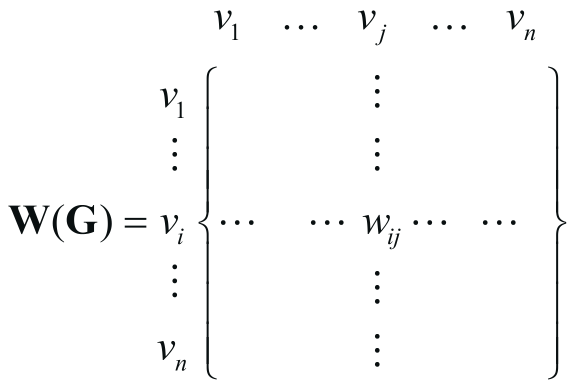
Instead of a simple list of coordinates, the paper constructs a Weighted Graph . This matrix stores the relationships between vertices and .
3. Geometric Constraints
The breakthrough lies in the matching criteria. The authors define an error threshold and verify distances between clusters of points (A, B, C, D):
This enforces that if point A and B are matched to A' and B', the distance between them must remain invariant (within a margin), effectively treating the point cloud as a rigid or semi-rigid body.
Experimental Results
The experiments validate the theory across various test images. By visualizing the matches, we observe a clear "clustering" of correctly identified corners even when the perspective changes.
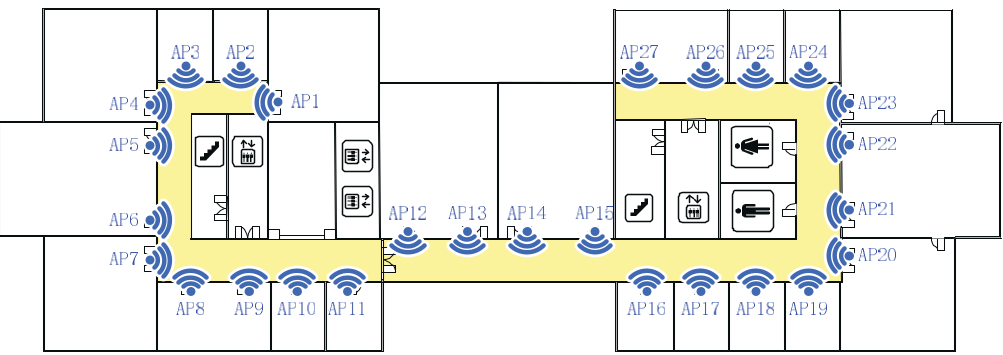 Figure: The pipeline successfully detects and aligns corners in complex structural scenes.
The comparative analysis (evident in the provided results images) shows that the inclusion of the distance-based filtering significantly prunes the "random" matches that typically plague standard Harris-based pipelines.
Critical Analysis & Conclusion
Takeaway
The synergy between local intensity gradients and global geometric structures is the key to robust vision. This paper proves that we don't always need "deep" features if our geometric descriptors are mathematically sound and structural.
Limitations
While robust, the distance thresholding may require manual tuning depending on the scale of the image. A self-adaptive thresholding mechanism would be a valuable next step for this research.
Future Outlook
This graph-based geometric approach holds immense potential for SfM (Structure from Motion) and Industrial Inspection, where the objects of interest have known, rigid geometries that can be modeled as graphs from the outset.