
Social Network vs. Collaborative Filtering: Deciphering the Future of Personalization
Peer-Based Recommendations in Online B2C E-Commerce: Comparing Collaborative Personalization and Social Network-Based Personalization
This study compares Collaborative Personalization (CP) and Social Network-Based Personalization (SNBP) in an e-commerce context. Using social influence and homophily theories, it demonstrates that SNBP is more versatile across product categories, while CP is highly effective but restricted to specific item categories.
TL;DR
In the battle for recommendation accuracy, is your behavioral history more telling than your friend group? This study reveals that Social Network-Based Personalization (SNBP) matches the accuracy of Collaborative Personalization (CP) within specific categories and significantly exceeds it when recommending items across different categories. Effectively, social ties provide a more "broad-based" signature of preference than narrow purchase histories.
The "Category Trap" in Recommendation Systems
Modern e-commerce giants like Amazon have perfected the "People who bought X also bought Y" model. This is Collaborative Personalization. While highly effective, it suffers from a fundamental logical flaw: a shared taste in science fiction books does not necessarily imply a shared taste in digital cameras.
The authors argue that traditional CP is inherently category-specific. In contrast, Social Network-Based Personalization leverages the "homophily principle"—the idea that "birds of a feather flock together." Because friends influence each other's general tastes and lifestyles, their preferences serve as a versatile proxy for recommendations across diverse product domains.
Methodology: A Social Network Experiment
The researchers mapped a real-world social network of 29 individuals to test these theories. By identifying "strong ties" (frequent interactions) and "behavioral twins" (similar ratings), they generated tailored recommendations for movies, music, books, and restaurants.
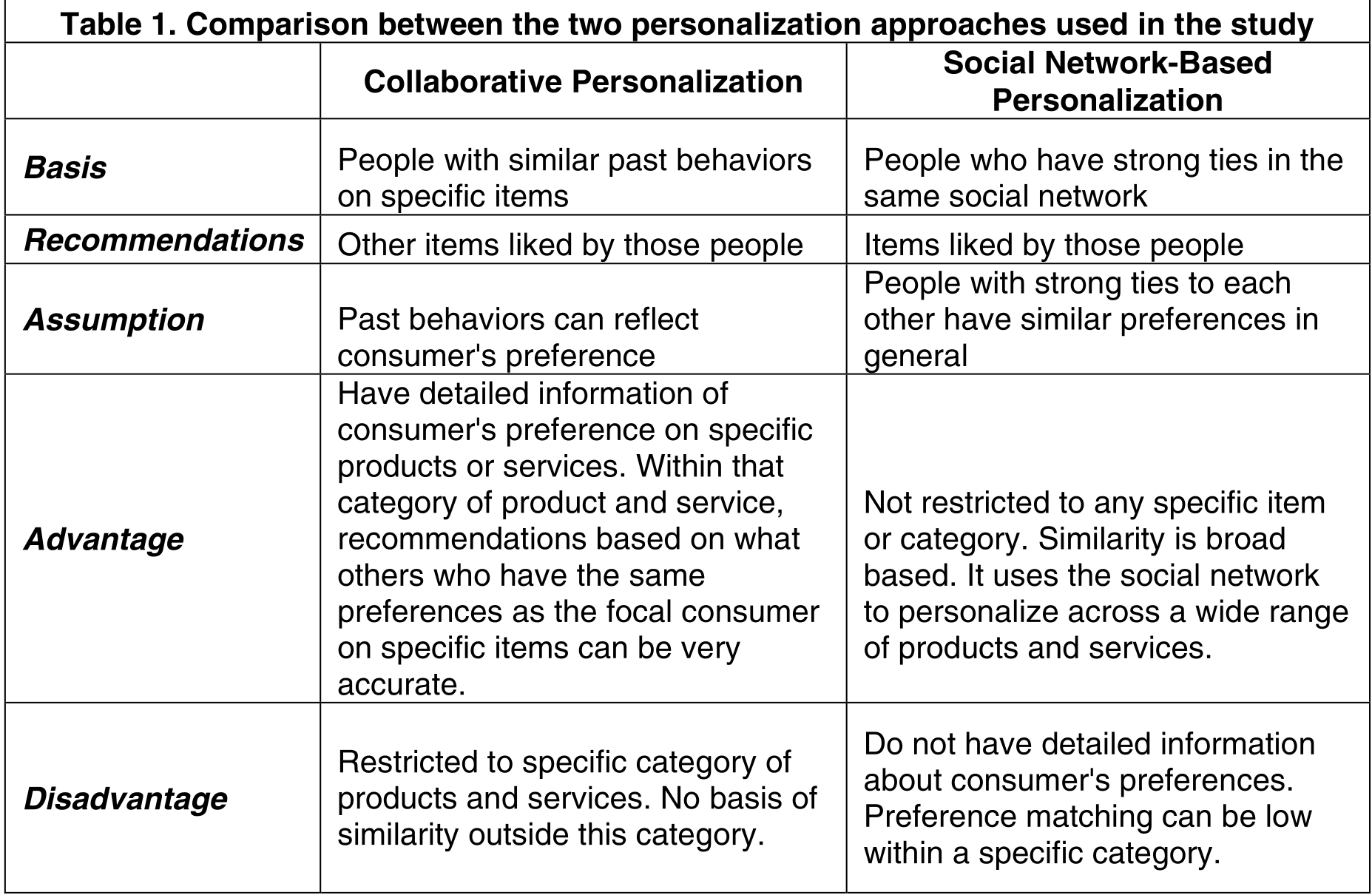 Table 1: The conceptual differences between CP and SNBP, highlighting the category restriction of collaborative methods.
The Two-Fold Test:
- Within-Category: If we both like the same books, can you recommend a book for me?
- Outside-Category: If we both like the same books, can you recommend a restaurant for me?
Key Findings: The Versatility of Social Ties
The experiment yielded two critical insights that challenge traditional e-commerce strategies:
1. The Cross-Category Edge
When the recommendation engine stepped outside the "source category," the accuracy of Collaborative Personalization plummeted relative to Social Network-Based methods. Social influence provides a holistic view of a consumer's identity that transcends specific product silos.
2. Parity Within Categories
Surprisingly, CP did not significantly outperform SNBP even within the same category. This suggests that belonging to the same social circle is just as strong a predictor of specific taste as having an identical rating history.
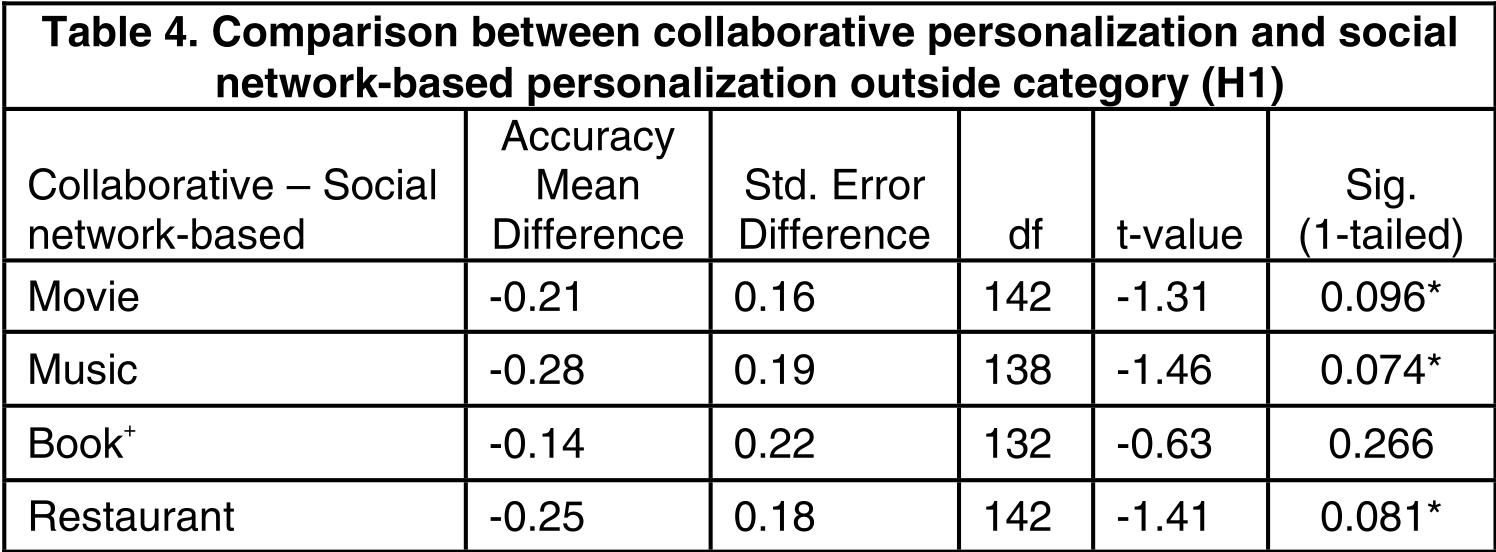 Table 4: Statistical proof that SNBP provides higher accuracy outside the primary category.
Critical Analysis & Professional Insight
From a technical perspective, this paper highlights the Inductive Bias inherent in many recommendation algorithms. CP assumes preference is a local phenomenon (item-to-item), whereas SNBP treats preference as a global social phenomenon.
Limitations to consider:
- Tie Strength: The study focused on the "strongest ties." In massive networks like Facebook, identifying which ties are truly influential remains a computational challenge.
- Product Type: The study used "experience products" (music, movies). The results might differ for "search products" (e.g., a specific brand of motor oil) where functional utility overrides social influence.
Conclusion: Beyond the Algorithm
For practitioners, the takeaway is clear: Social data is the ultimate cross-selling tool. While collaborative filtering is excellent for "more of the same," social network-based personalization is the key to unlocking diverse revenue streams across disparate product categories. As e-vendors continue to integrate with social platforms, the ability to map "social homophily" onto product catalogs will become a defining SOTA capability.