
Beyond the Hype: Why Bridging Social Capital is the Secret Sauce of SNS Retention
The role of perceived social capital and flow experience in building users’ continuance intention to social networking sites in China
This study investigates the drivers of Social Networking Site (SNS) continuance intention among Chinese users by integrating Perceived Social Capital and Flow Experience into the Expectation–Confirmation Model (ECM). Utilizing Partial Least Squares (PLS) analysis on 283 active users, it identifies Bridging Social Capital as a critical predictor of long-term engagement.
TL;DR
Why do we stay on social media after the "fun" wears off? This study reveals that in the Chinese SNS market, it’s not about the games or even your best friends—it’s about Bridging Social Capital. While "Flow" (being in the zone) makes us happy, only the acquisition of new perspectives and weak-tie connections keeps us clicking "Login" month after month.
The "Post-Honeymoon" Crisis of Social Media
The "honeymoon phase" of Social Networking Sites (SNS) in China—driven by social games and the novelty of digital connection—peaked around 2010. Since then, platforms have faced a brutal reality: users leave when the novelty dies.
The authors argue that the industry's obsession with "entertainment as a tipping point" is a mistake. To understand why users stay, we must look at the Expectation-Confirmation Model (ECM), but with a twist. We need to distinguish between the type of social value users get and the immersion they feel.
Methodology: Deconstructing Social ROI
The researchers proposed a model that breaks down the user experience into three distinct psychological pillars:
- Bridging Social Capital: Weak ties that provide new information and broader worldviews.
- Bonding Social Capital: Strong ties with family and close friends providing emotional support.
- Flow Experience: That "lost in the screen" feeling where time disappears.
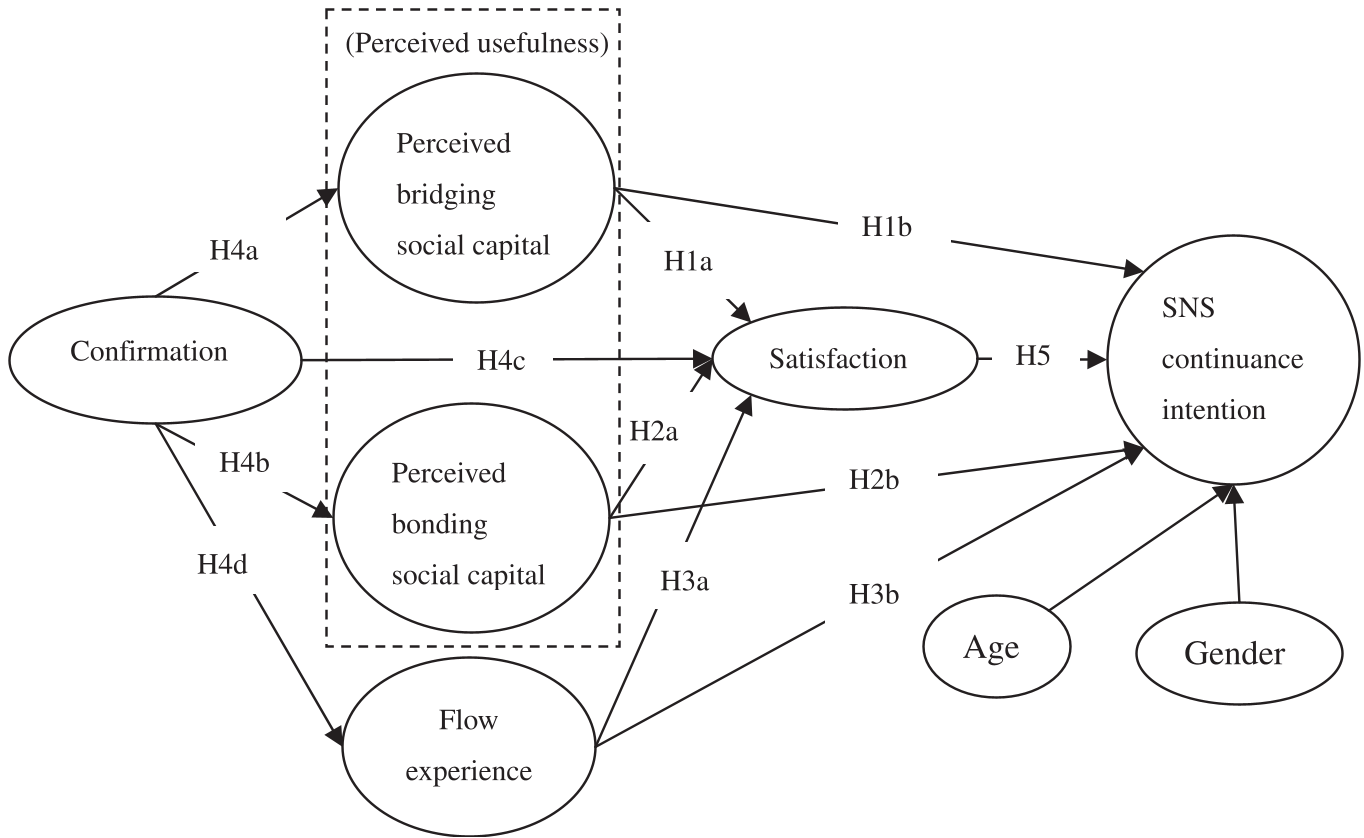
Using Partial Least Squares (PLS) to analyze survey data from 283 users, the study tested how these pillars influenced Satisfaction and Continuance Intention.
Counter-Intuitive Results: The Weakness of Strong Ties
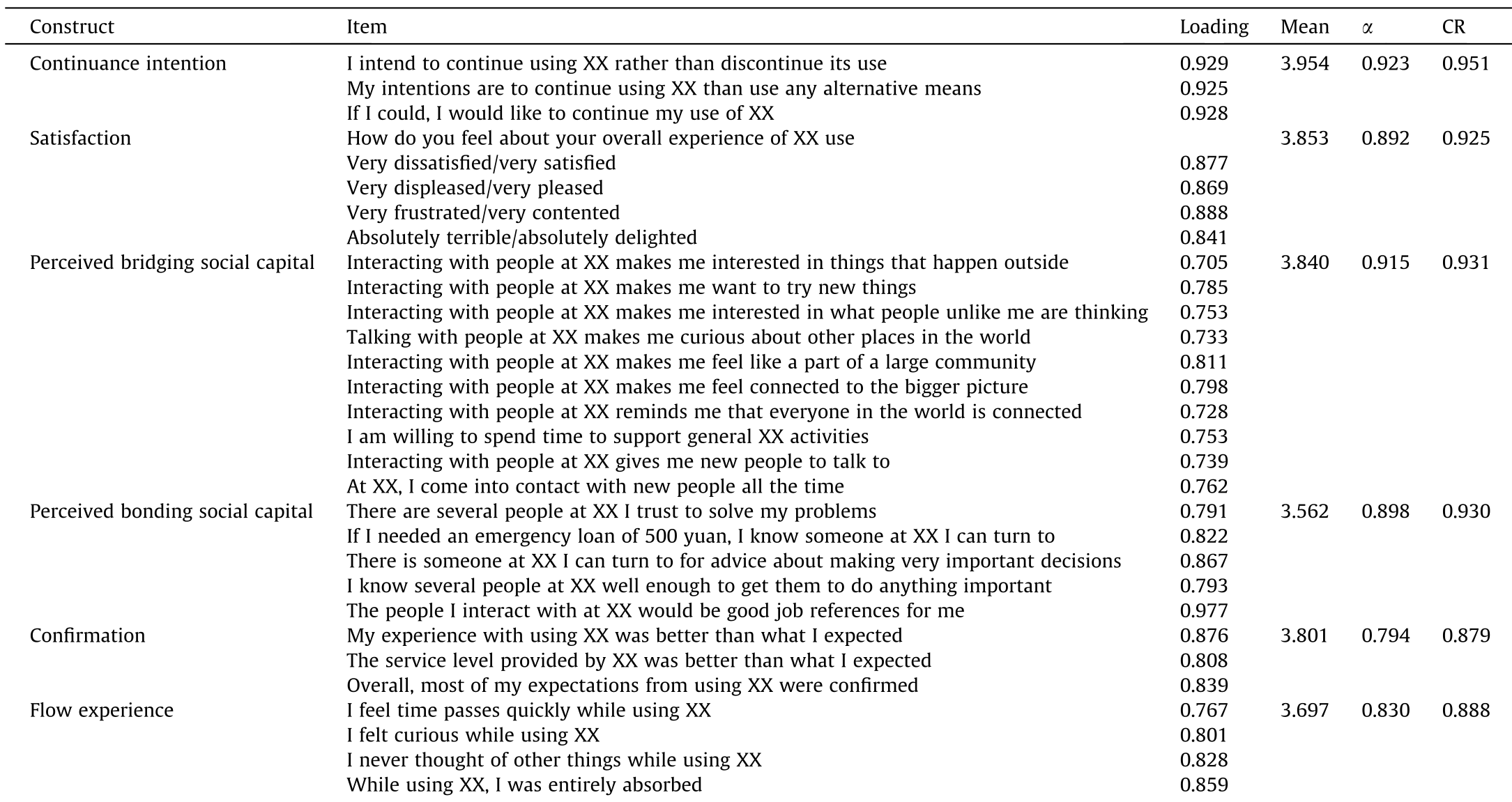
The results, as shown in the table below, offer a startling insight into digital sociology:
1. The Bridging Power
Bridging social capital (β = 0.328) was a massive predictor of continuing to use the site. SNSs are uniquely efficient at maintaining "cheap" weak ties. Users feel they are part of a "larger community," which provides a utility they cannot easily replicate elsewhere.
2. The Bonding Paradox
Surprisingly, Perceived Bonding Social Capital had no significant effect on satisfaction or continuance. Why? Because you already have strong ties (family/best friends) through phone calls, face-to-face meetings, or IM. Using an SNS to talk to your mom doesn't add "new" value, so it doesn't drive the desire to keep using the platform.
3. The Flow Trap
Flow experience (β = 0.230) makes users satisfied, but it doesn't stop them from leaving. In the long run, "having a good time" is a commodity. If a new, more "fun" app (like a microblog or a game) comes along, users will migrate.
Critical Insight: Social Capital as Infrastructure
The study highlights a critical gender dynamic: Females showed a higher intention to continue using SNSs (β = 0.084). This suggests that platforms might need differentiated marketing strategies, focusing on the social expansion needs of different demographics.
Conclusion & Future Outlook
This paper serves as a wake-up call for platform architects.
- For Product Managers: Stop building "addictive" features (Flow) at the expense of "connective" features (Bridging). If your platform doesn't help me discover new people or ideas, I will eventually leave.
- The Limitation: The study focuses on China's unique collectivist culture. Whether these findings hold in more individualistic cultures—where bonding might be harder to maintain offline—remains a vital area for future research.
In the end, SNSs are not just toys; they are social utilities. Their survival depends on their ability to make the world feel a little bit bigger, rather than just keeping us occupied.