
From Local Motion to Collective Feeling: Real-Time Performance in Crowd Emotion Recognition
Perception of Emotions from Crowd Dynamics
This paper presents a bio-inspired framework for crowd emotion perception, comparing three probabilistic methods based on Dynamic Bayesian Networks (DBN). The core approach, an Event-Based DBN (E-DBN), successfully classifies positive and negative crowd emotions in real-time by analyzing motion dynamics and zone transitions within a surveillance area.
TL;DR
Researchers have developed a bio-inspired probabilistic framework that detects the "mood" of a crowd solely through their movement patterns. By shifting from facial recognition to spatial dynamics (zone transitions) using Event-Based Dynamic Bayesian Networks (E-DBN), the system achieves a significant performance leap (79% accuracy) in online emotion estimation, providing a vital tool for preventing public safety disasters.
The "Collective Mind": Why Individual Features Fail
In surveillance, we often think of emotion detection as a high-fidelity task—spotting a frown or a panicked shout. However, in a dense crowd, camera resolution and occlusions make these micro-features useless.
The authors argue that a crowd acts as a "collective mind" (citing Gustave Le Bon). Emotions like panic or satisfaction aren't just internal states; they manifest as evolving dynamic patterns of interaction with the environment. Prior work struggled with two main issues:
- Computational Complexity: Processing facial AUs (Action Units) for 100+ people in real-time is unfeasible.
- Temporal Lag: Many models can only identify an "event" after it has finished, which is too late for preventive crowd control.
Methodology: The Architectureof Crowd Behavior
The paper compares three evolutionary stages of their research. The most advanced method (Algorithm 3) uses a two-tiered information layer:
- Low-Level: A Kalman filter tracks individuals.
- High-Level: An E-DBN analyzes transitions between "zones" and the time spent in each.
The "Positive" emotion is defined by efficient, motivated movement toward a destination, whereas "Negative" emotions are characterized by chaotic or stagnant patterns arising from interaction friction or obstacles.
Core Mathematical Insight: The Log-Likelihood Ratio
To decide if a crowd is feeling "positive" or "negative" at any given second, the system maintains a running Log-Likelihood Ratio (): If is positive, the trajectory aligns with motivated, healthy movement; if negative, it flags a potential issue.
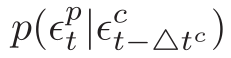 Above: The core CPD (Conditional Probability Density) equations used to model how current events depend on historical context and environment interactions.
Experiments: Simulating the Stress of the Crowd
Since real-world stampedes are dangerous to replicate, the authors used Realistic Behavioral Agent Simulation (RBAS) to generate 3,000 minutes of training data in an office scenario.
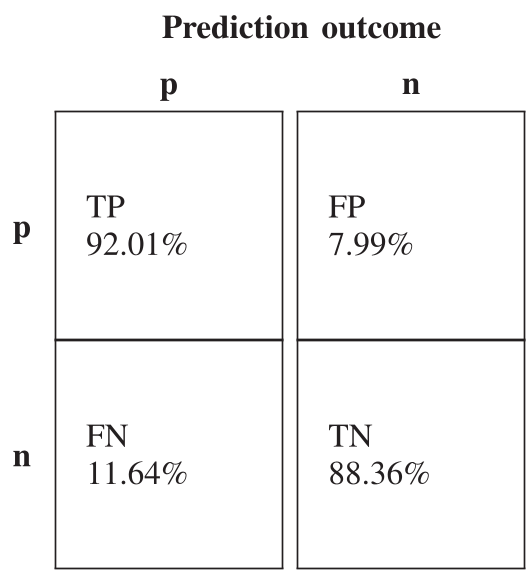 Fig 1: The simulated office environment used to calibrate positive (reaching destination) vs. negative (congestion/delay) emotional trajectories.
Key Results: The Power of Online Estimation
The breakthrough was not just in final accuracy, but in continuous accuracy. Table IV reveals the "Time Percentage" of correct recognition:
- Algorithm 1: 56% (Bio-inspired but lacked temporal precision)
- Algorithm 2: 64% (Improved clustering but time-independent)
- Algorithm 3 (E-DBN): 79% (Dynamic, zone-based online estimation)
| Metric | Algorithm 1 | Algorithm 2 | Algorithm 3 |
|---|---|---|---|
| Correct Recognition Over Time | 56% | 64% | 79% |
Critical Insight & Future Outlook
The genius of this work lies in its simplicity of input and complexity of logic. By treating a crowd like a fluid moving through a partitioned vessel (zones), the authors bypassed the need for high-end GPUs to process faces.
Limitations: The model currently relies on a binary (Positive/Negative) classification. Future iterations must address the nuances of "Active Neutral" or "Excited but Non-Threatening" crowds to avoid false alarms in celebratory settings.
The Takeaway? As we move toward smarter cities, the ability to "feel" the crowd's pulse through simple trajectory dynamics will be the difference between a successful public event and a tragedy.