
Digital Democracy vs. Reality: Why Having the Tools Isn’t Enough
1823_The perception of e-democracy and e-participation at the individual level a Croatian example.
This study investigates the perception and usage frequency of e-democracy and e-participation tools among individuals in north-east Croatia. Using a representative survey (N=427) and factor analysis, the authors established a validated measurement instrument to evaluate the digital interaction between citizens and public authorities.
TL;DR
Despite the proliferation of social media and government portals, technology has not yet transformed the average citizen into an active political actor in all regions. This Croatian study reveals that while people support the idea of digital transparency (e-democracy), they almost never engage in actual digital interaction (e-participation).
The "Participation Gap" in Post-Transition Societies
Modern ICT and the Internet were promised as the ultimate democratizers, capable of breaking down barriers between the "state" and the "individual." However, in many developing democracies, this potential remains unfulfilled.
The authors highlight a troubling trend in Croatia: a rapid slide in global e-Participation rankings. This research asks the critical "Why?" Is it a lack of computers, or a lack of interest? The answer is complex, rooted in a mixture of socio-economic distrust and a lack of digital literacy.
Methodology: Measuring Digital Citizenship
To move beyond anecdotal evidence, the researchers developed a rigorous survey instrument. Through factor analysis, they identified two distinct dimensions of electronic citizenship:
- E-democracy (The Philosophical Expectation): Attitudes toward e-voting, videoconferencing parliament sessions, and digital transparency.
- E-participation (The Practical Action): The actual frequency of emailing officials or joining in online public debates.
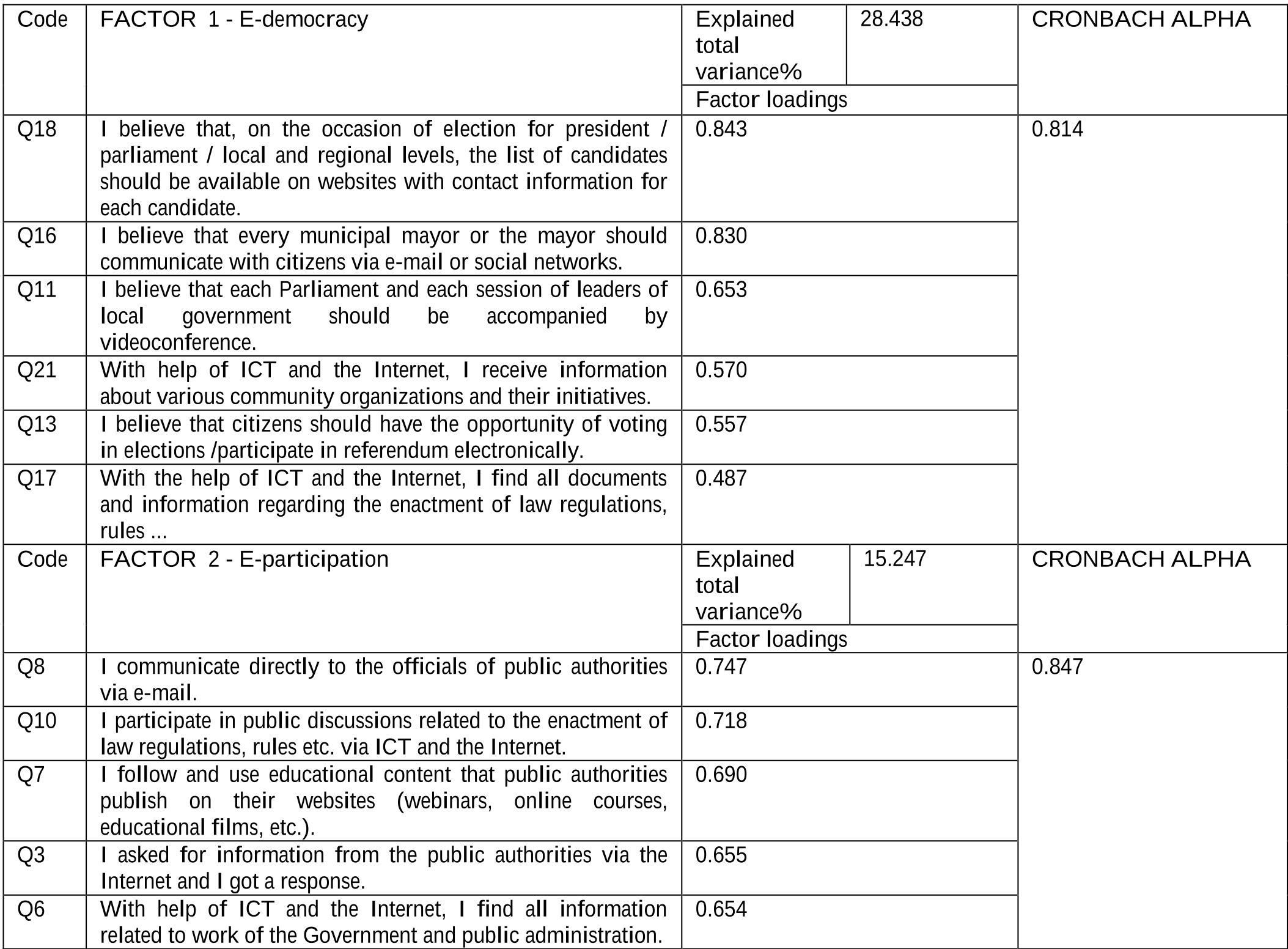 The study found that these two factors explain nearly 44% of the variance in the data, providing a robust framework for future civic research.
A SOTA Reality Check: High Support, Low Usage
The most striking finding of the study is the massive delta between perception and behavior.
- Transparency is Wanted: Over 70% of respondents believe candidate lists and legislative documents should be online.
- Interaction is Ignored: Only 3.74% frequently use online educational materials from the government, and less than 1% feel they have successfully proposed measures that were adopted.
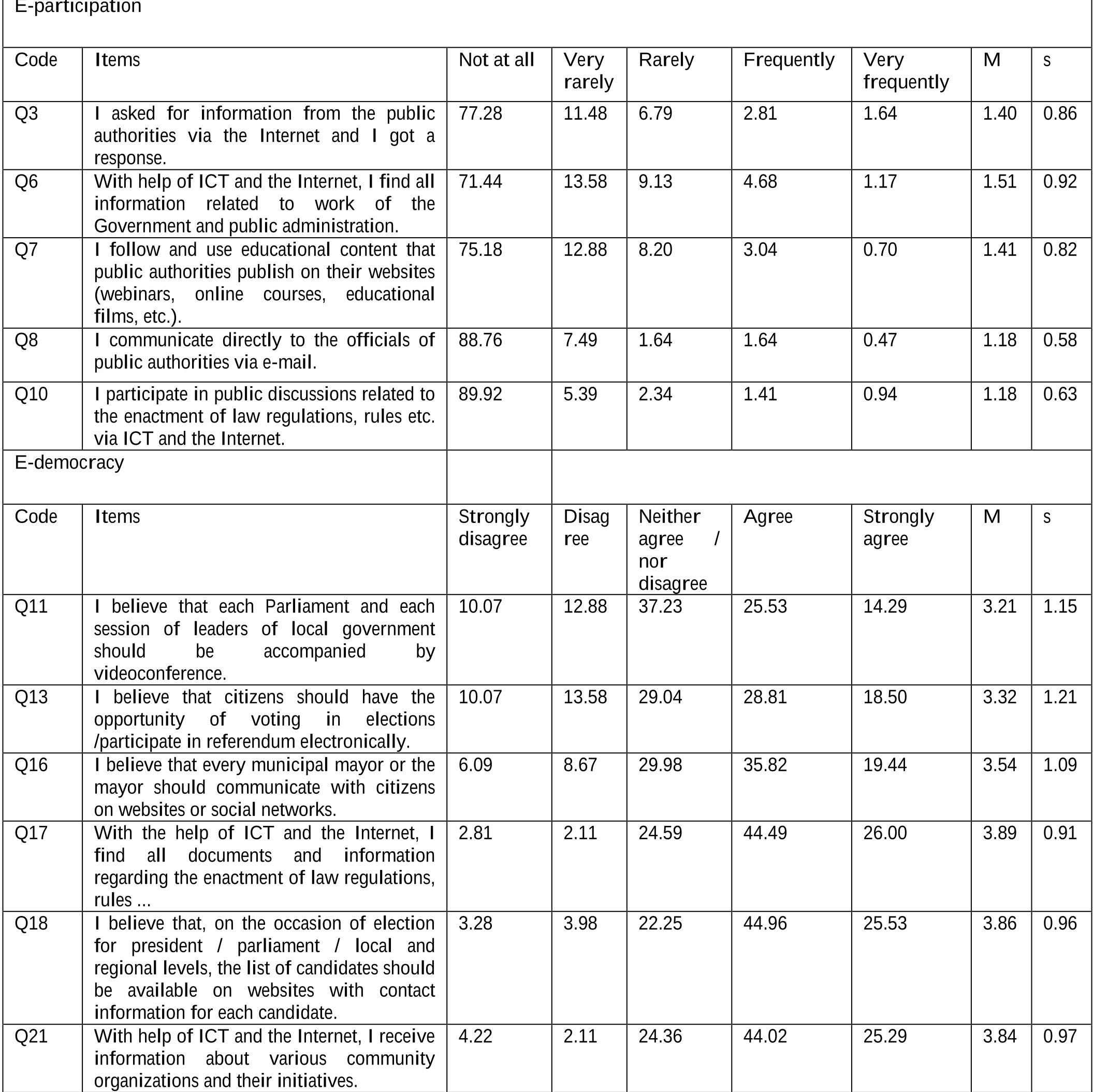 Table 5 shows a "Floor Effect" in participation scores (Means ~1.18-1.51 on a 5-point scale), while democracy attitudes are much closer to the neutral or positive mark (Means ~3.21-3.89).
The authors suggest that this low participation is a symptom of a "distrustful socio-economic situation." Citizens feel that the government is merely checking boxes to satisfy EU regulations rather than truly listening to the "voice-of-the-citizen."
Critical Analysis & Conclusion
This paper serves as a vital reminder for e-government strategists: Technology is a necessary but insufficient condition for democracy.
Takeaways for the Future:
- Beyond Infrastructure: Simply providing a website is not enough. Governments must actively motivate and teach citizens how to use these tools (curing the "Information Gap").
- Closing the Loop: Participation fails when it is one-way. If citizens email an official and never get a response, the motivation for future e-participation vanishes.
- Vulnerable Groups: The study identifies retirees and the unemployed as groups most at risk of digital exclusion. Future e-government policy must be inclusive by design, not by accident.
Ultimately, e-democracy is as much about political culture as it is about digital platforms. Until the "will of the citizen" meets a "responsive government," the internet will remain a digital archive rather than a digital forum.