
From Pixels to Yield: A Graph-Based Multi-Sensor Approach to Agricultural Robotics
Perception scheme for fruits detection in trees for autonomous agricultural robot applications
This paper presents a robust perception scheme for fruit detection and yield mapping in autonomous agriculture using a multi-modal sensor rig. By fusing RGB and Time-of-Flight (ToF) data into a graph-based representation, the system achieves an object detection accuracy of 75% to 100% across indoor and outdoor environments.
TL;DR
Researchers at Callaghan Innovation have developed an intelligent perception system that allows autonomous robots to "see" and "map" fruits on trees without falling into the trap of double-counting. By combining RGB color vision with Time-of-Flight (ToF) depth sensing and organizing the data in a graph-based model, the system achieves high accuracy in both controlled indoor and unpredictable outdoor environments (75%-100% detection rate).
Background & Motivation: The Challenge of the Orchard
Precision agriculture demands accurate yield estimation (Y.E.) and mapping (Y.M.) to optimize resources. However, the orchard is a nightmare for standard Computer Vision (CV). Why?
- Occlusions: Leaves and branches hide fruits.
- Recounting: As a robot moves, it may see the same fruit from different angles and count it multiple times.
- Lighting: Sun saturation often blinds traditional RGB-D cameras (like the first-gen Kinect).
Current SOTA methods often rely on static image analysis. This paper shifts the paradigm to Dynamic Monitoring, where the robot processes a continuous stream of data while in motion.
Methodology: Fusing Color and Depth
Key to this system is the hardware rig: a PMD CamCube 3.0 (ToF) and a Basler ACE RGB camera. The ToF camera solves the outdoor depth problem where infrared-based sensors fail, while the RGB camera provides the high-resolution texture needed for classification.
The Perception Pipeline
The authors propose a sophisticated pipeline to transform raw pixels into a reliable harvest map:
- Preprocessing: Histogram equalization is used to combat the extreme lighting of outdoor scenes, preventing color "washout" (Fig. 8).
- Multi-Detector Fusion: Instead of relying on one algorithm, the system runs three: Blob Detection, Hough Transform, and Contours Detection (Fig. 7). Only features validated across these methods are promoted.
- Graph Representation: This is the "brain" of the system. Every fruit is a node. By using Point Matching (ICP) and tracking, the system recognizes if a "new" fruit is actually a node that already exists in the graph, preventing the dreaded recount error.
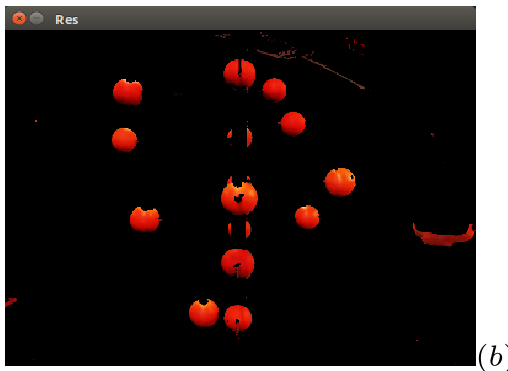 Fig 4. Experiments: (a) indoors using a robotic arm; (b) outdoors with manual movement.
Detailed Feature Extraction
The system relies on color-band filtering (specifically yellow-to-orange for tangerines) in the HSV space, which is more robust to lighting changes than standard RGB.
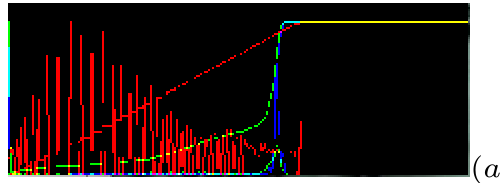 Fig 12. Feature detection: (a) without equalization; (b) with equalization. The difference in detection stability is stark.
Experimental Performance
The system was tested in both indoor mock-ups and outdoor environments.
- Indoor Accuracy: Nearly perfect (90-100% graph construction), where conditions are stable.
- Outdoor Accuracy: 75-90%. While lower due to background noise and variable distances, the graph converges to a high degree of accuracy after 3-5 revolutions around the target tree.
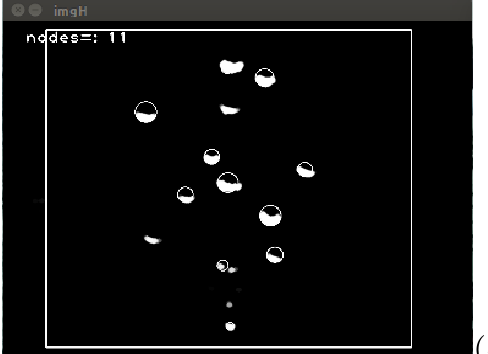 Fig 14. Final Characterization: (a) raw contours; (b) the resulting characterized graph mapping the fruit positions.
Critical Insights & Future Outlook
The use of a SuperGraph to manage data per tree or tree-row allows for a hierarchical view of the orchard—from individual fruit ripeness to overall yield statistics. However, the system currently requires manual tuning of denoising and segmentation parameters depending on the background.
The Future: The authors suggest that Reinforcement Learning (RL) could be the next step to automate parameter tuning, allowing the robot to self-adjust as it moves from the shadows of one tree-row into the bright sunlight of another. This work provides a solid foundation for truly autonomous agricultural agents that can monitor, map, and eventually harvest with surgical precision.