
Beyond Social Ties: Discovering the Rhythms of Emotional Communities
Periodicity Detection of Emotional Communities in Microblogging
The paper introduces a computational framework for detecting Periodic Emotional Communities (ECs) in microblogging platforms like Twitter. It utilizes a dual-level cyberspace to quantify emotional content and identifies groups of users who exhibit synchronized emotional behaviors at regular time intervals, achieving significant performance in identifying recurring patterns of Anger and Joy.
TL;DR
Researchers have developed a method to find "Emotional Communities" on Twitter—groups of people who don't necessarily follow each other but express similar emotions at regular, periodic intervals. By analyzing 2012 U.S. election tweets, they discovered that Anger and Joy follow distinct temporal pulses, providing a new way to predict collective social behavior.
Background: Why Emotions Matter Over Time
Most social media analysis tells us what happened or who is connected. But emotions are the invisible engine of social interaction. While a single angry tweet is a data point, a group of users consistently becoming angry every Tuesday during a political debate is a pattern. Prior work often treated these as sporadic episodes; this paper argues that the regularity (periodicity) of these emotions is the key to understanding social collectives.
The "Cyberspace" Methodology
The authors don't just count keywords; they map users into a multi-dimensional "Cyberspace."
- Content-Space: Uses Ekman’s 7 basic emotions (Joy, Fear, Anger, etc.). Each user is a point in a 7D space based on the frequency of affective words from WordNet-Affect.
- Feature-Space (The Secret Sauce): They introduce Emotional Discrepancy (ED). This measures the difference in "slopes" of emotional change between two users. If two users' emotional intensity rises and falls in tandem, their discrepancy is zero—they are emotionally synchronized.
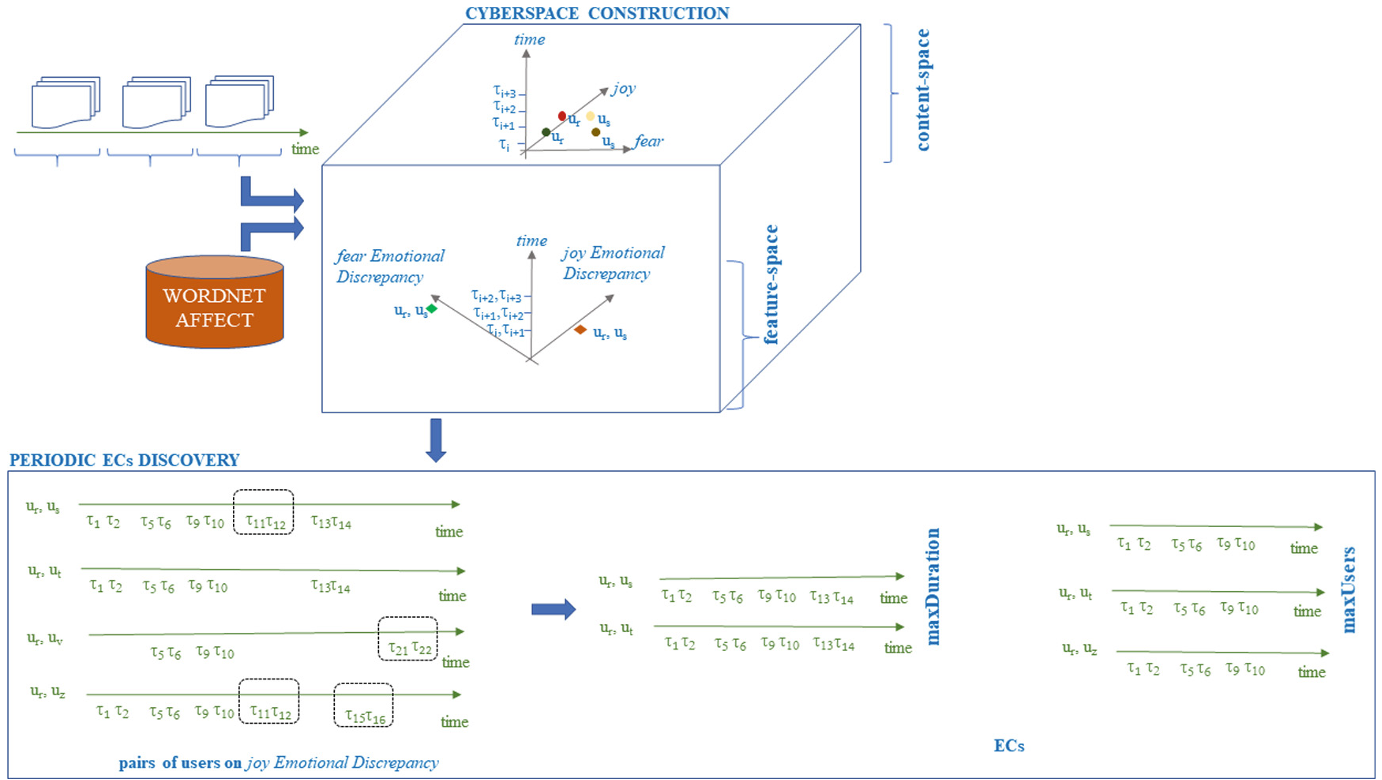 Figure 1: The dual-module computational solution: Cyberspace Construction and Periodic EC Discovery.
Finding the Pulse: Periodic Discovery
The system looks for -separated intervals. Instead of looking for perfect cycles, it allows for "asynchronous periodicity"—regular enough to be a pattern, but flexible enough to account for the "noise" of real human life. It groups users around a "reference individual" to form a community that beats with the same emotional heart.
Experimental Insights: Anger vs. Joy
Using a dataset from the 2012 Obama-Romney election, the researchers found fascinating temporal trends:
- Anger is Short-Lived but Sharp: Periodic communities based on Anger were most visible at short time granularities (60-120 minutes). This suggests that political anger flashes frequently and subsides quickly.
- Joy is a Marathon: Periodic Joy was better captured over longer intervals (480-960 minutes), indicating a more sustained, homogeneous collective sentiment.
- The Silhouette Success: The method (PEREC) significantly outperformed standard clustering (Swarm) and baseline models (ECbas), proving that tracking changes in emotion is better than tracking raw levels.
 Table 1: Silhouette Index comparisons across different time granularities showing Joy and Anger as dominant periodic emotions.
Critical Analysis & Conclusion
This work shifts the focus from Social Graphs to Emotional Cycles. While powerful, the method currently relies on lexicon-based (WordNet-Affect) detection, which might struggle with sarcasm or evolving slang.
Future Outlook: The ability to identify these "rhythmic" communities could revolutionize Cyber-bullying detection (catching recurring harassment cycles) and Social Media Marketing (timing campaigns to hit during the "Joy" phase of a specific audience sector).
The takeaway is clear: To understand a community, don't just look at who they know—look at when and how they feel together.