
From Ghost Work to Avatar Work: Humanizing the Crowd Through Digital Identity
Permission to make digital or hard copies of part or all of this work for personal or classroom use is granted without fee provided that copies are not made or distributed for profit or commercial advantage and that copies bear this notice and the full citation on the first page. Copyrights for third-party components of this work must be honored. For all other uses, contact the owner/author(s)
This study investigates the integration of customizable worker avatars within microtask crowdsourcing platforms to enhance worker satisfaction and engagement. By comparing conventional web interfaces with novel conversational ("Chat") interfaces, the authors demonstrate that avatar appearance and characterization customization significantly reduce perceived cognitive workload and increase worker retention, particularly in complex tasks.
TL;DR
Crowd work is often criticized for being "monotonous" and "invisible." This research explores a psychological intervention: giving workers customizable avatars. Results show that combining avatars with conversational interfaces (chatbots) significantly reduces cognitive workload and boosts worker retention, especially in difficult tasks. Interestingly, the more effort a worker puts into their digital "self," the higher their final work accuracy.
The "Invisible Labor" Problem
The AI revolution is built on the backs of millions of crowd workers performing "ghost work"—labeling images, transcribing text, and cleaning data. However, the interfaces they use are often sterile and dehumanizing, leading to extreme boredom, high dropout rates, and "spammer" behavior.
The authors argue that the missing ingredient is Worker Satisfaction. By looking at Game Design (player avatars) and HCI (conversational interfaces), they ask: can we make a worker feel more "present" and "successful" by giving them a digital face?
The Methodology: Identity and Characterization
The study centers on two psychological phenomena:
- Similarity Identification: Scaling the avatar to look like the "actual self" (skin tone, mood, gender).
- Wishful Identification: Allowing workers to choose an "ideal self" characterization—such as being a "Diligent," "Competent," or "Balanced" worker.
The researchers developed a portable HTML/JS framework named TickTalkTurk to embed these avatars and a chatbot named "Andrea" into standard crowdsourcing workflows.
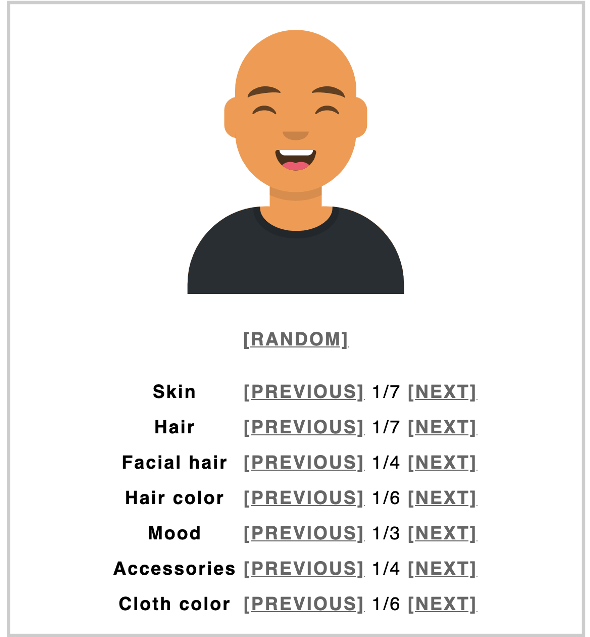 Figure 1: Workers choose their "ideal" characterization, setting a psychological benchmark for their performance.
Experimental Insights: Chat vs. Web
The study involved 360 workers across six conditions. The contrast between a traditional "Web" form and a "Chat" interface was stark.
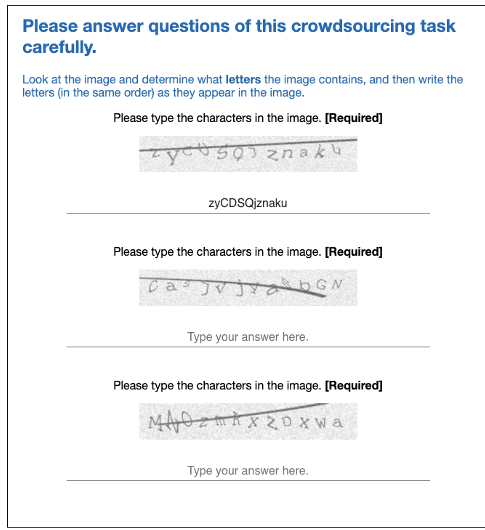 Figure 2: The evolution of the interface—from a list of questions (a) to a conversational partner with a customized avatar (f).
Key Findings:
- Cognitive Load Reduction: In challenging "Information Finding" tasks, workers using avatars in a chat interface reported significantly lower "NASA-TLX" scores (a measure of mental exhaustion).
- The Customization Correlation: A fascinating discovery was that "Long Customizers" (workers who spent >42 seconds on their avatar) achieved 83% accuracy, compared to just 77% for those who rushed through the process. Investment in identity correlates with investment in quality.
- Retention: Conversational interfaces proved far better at keeping workers engaged for optional tasks, effectively doubling down on the "human-like" feel of the work.
Experimental Results: Perceived Workload
The NASA-TLX scores below highlight that while simple tasks (Image Transcription) see marginal gains, complex tasks (Information Finding) benefit immensely from the increased sense of "Performance" and decreased "Effort" provided by the avatar-agent combo.
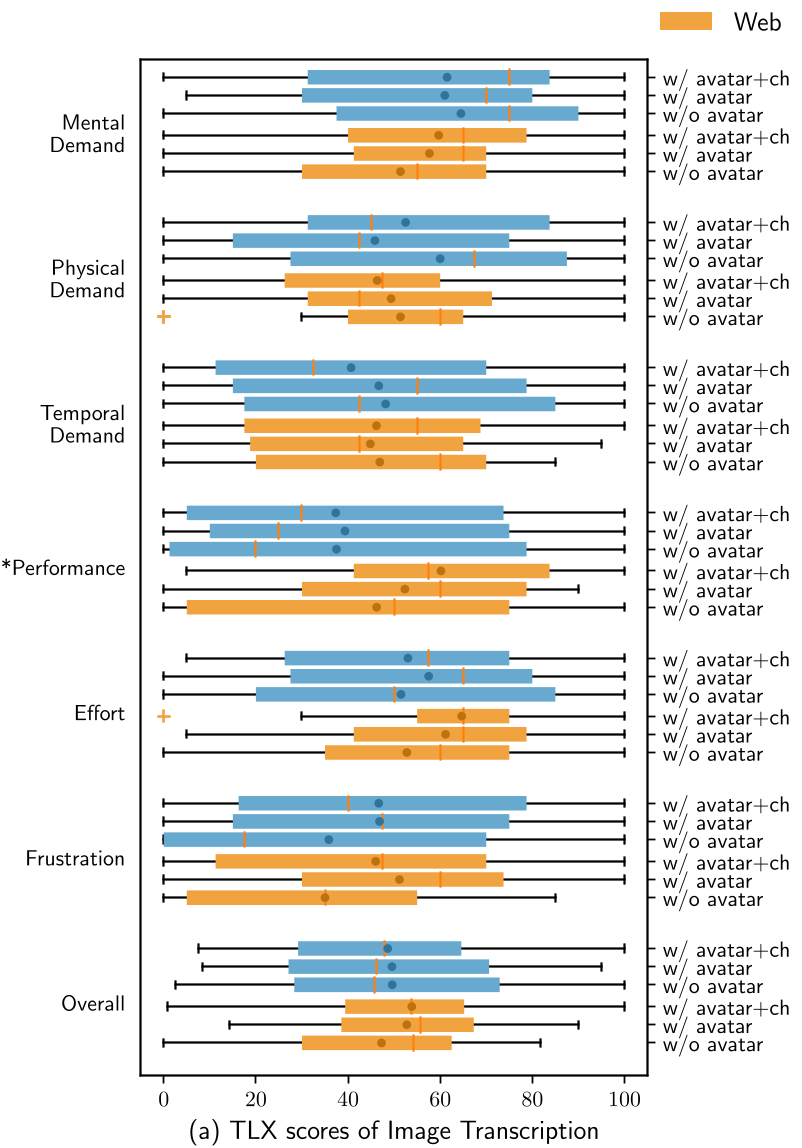 Figure 3: Reductions in perceived effort and increases in performance sense are statistically significant for the Chat + Avatar conditions.
Critical Analysis & Conclusion
This paper offers a refreshing pivot from the "algorithm-first" approach to crowdsourcing. However, it does acknowledge several limitations:
- Monetary Bias: In paid marketplaces, money is still the king of motivation. Avatars improve the experience, but they don't replace the need for fair pay.
- Task Sensitivity: For brain-dead easy tasks (boring CAPTCHAs), an avatar won't save the worker from boredom. The "Avatar Effect" is most potent when the task itself offers a learning opportunity or requires cognitive grit.
Final Takeaway
For platforms like Amazon Mechanical Turk or Prolific, the message is clear: Humanize the worker. By providing a digital identity and a conversational partner, we can reduce the emotional toll of gig work and build a more sustainable, high-quality data ecosystem for AI.