
PersonaIA: Redefining Implicit Authentication with Adaptive Behavior Selection
PersonaIA: A Lightweight Implicit Authentication System Based on Customized User Behavior Selection
PersonaIA is a lightweight implicit authentication (IA) system that utilizes customized user behavior selection. By employing Partially Labeled Dirichlet Allocation (PLDA) for server-side feature extraction and a novel client-side "Wind Vane Module," it achieves seamless user verification with 93.3% precision and 98.6% accuracy.
TL;DR
PersonaIA is a next-generation security framework that verifies smartphone users silently in the background based on "soft biometrics" like location, app usage, and motion. By offloading heavy computation to a server and utilizing a genius adaptive sampling algorithm called the Wind Vane Module, it achieves 98.6% accuracy while slashing battery consumption by over 50% compared to traditional methods.
The Problem: The "Annoyance" of Security
Statistically, over half of smartphone users find entering PINs or scanning faces "annoying," leading many to disable security altogether. While Implicit Authentication (IA)—using background sensors to identify users—is the dream solution, it faces two massive hurdles:
- Behavioral Dynamics: Human behavior isn't static. You walk differently when you are tired; you stay in different places when on vacation. Most systems mistake this for an "attacker."
- Resource Exhaustion: Running heavy AI on a phone kills the battery.
The authors of PersonaIA solve this by treating our lives like a book, where activities are "words" and our unique identity is the "thematic structure."
Methodology: The W-Layer and Wind Vane Module
The system architecture of PersonaIA is split into a robust server-side "brain" and a nimble client-side "sensor."
1. The Server-Side: Topic Modeling (PLDA)
Using Partially Labeled Dirichlet Allocation (PLDA), the server analyzes raw sensor tokens (e.g., loc69x for location, l98 for light). It identifies which "topics" (behaviors) are most unique to a specific user. This creates a "behavioral fingerprint" that is transferred back to the phone.
2. The Client-Side: The Wind Vane Module (WVM)
This is the core innovation. Like a mechanical wind vane detecting wind direction, the WVM detects the "direction" of behavioral change.
- If the "wind" (JS Divergence) points toward an adversary: The sampling rate increases to catch the intruder faster.
- If the "wind" points toward a legitimate deviation: The system recognizes it as a temporary change (e.g., traveling) and avoids locking the user out.
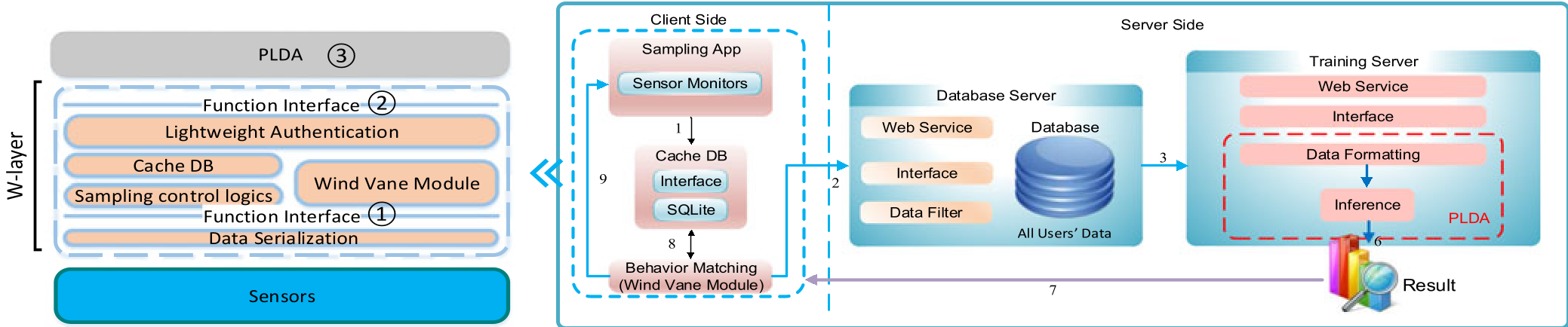 Figure 1: The dual-architecture separating heavy training (Server) from adaptive matching (Client).
Experimental Proof: High Accuracy, Low Impact
The researchers tested PersonaIA against the MIT "Friends and Family" dataset. The results prove that the system is not just a theoretical exercise:
- Precision/Accuracy: 93.3% and 98.6% respectively.
- Energy Efficiency: The WVM approach consumed only 14.5% of the battery, whereas a "Basic" IA module consumed 34.1%.
- CPU Performance: Even on older hardware like the Nexus S, CPU utilization remained around 12%, lower than common apps like Gmail or Facebook.
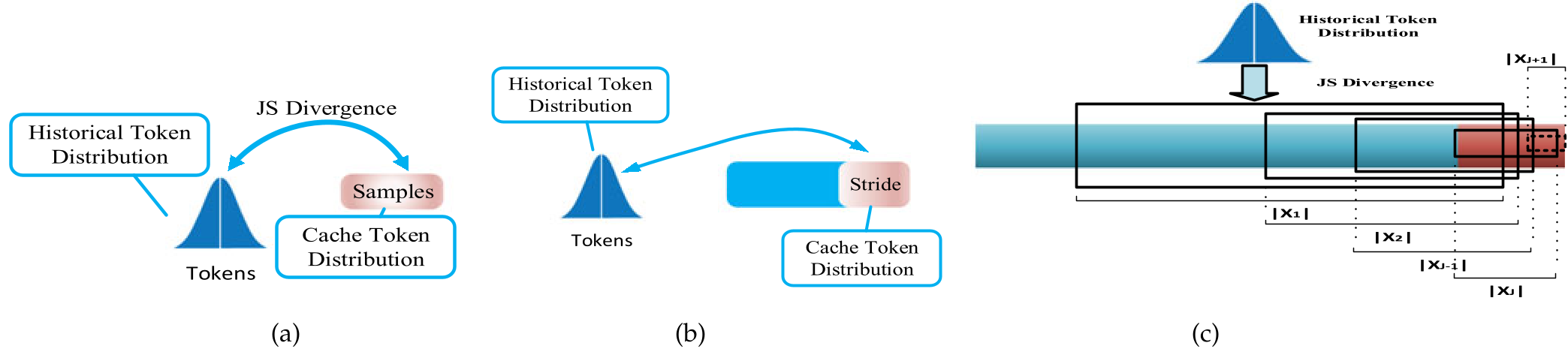 Figure 2: Comparison between Basic, Stride, and Dynamic Stride modules in capturing behavioral patterns.
Critical Insight: Why This Matters
The brilliance of PersonaIA lies in its adaptive stride size. Instead of looking at a fixed window of time (which might be too short to see a patterns or too long and include old noise), the system dynamically scales its observation window.
However, the "Group 6" experiment revealed a vital limitation: if two people have almost identical lifestyles (same home, same office) and don't use their phones actively, the system struggles to differentiate them based on location/motion alone. This suggests that future work must integrate secondary "micro-behaviors" like typing rhythm or scroll speed for high-similarity scenarios.
Conclusion
PersonaIA proves that we don't need to choose between security and battery life. By using distribution-based matching (Jensen-Shannon Divergence) instead of brute-force deep learning on the edge, the authors have paved a practical path for seamless, invisible security.
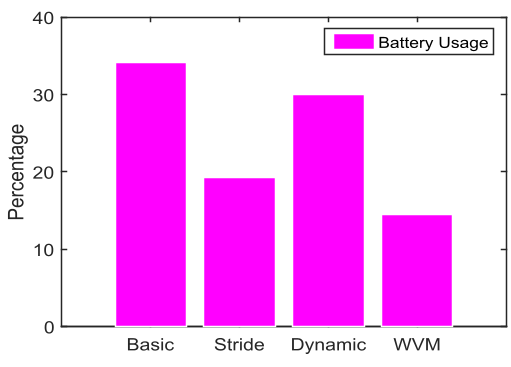 Figure 3: Accuracy vs. Battery Usage across different authentication modules.