
Lifestyle Waves: How Personal Electronics Re-Engineer Human Existence
Personal and Home Electronics and Our Changing Lifestyles
This paper examines the evolution of personal and home electronics through the lens of sociocultural "lifestyle waves." It proposes a predictive framework based on three core shifts: time and place independence, interactivity, and the fusion of physical and information worlds, aimed at forecasting technology's role a century into the future.
TL;DR
Technology is not just a collection of faster chips; it is a series of "lifestyle waves" that reshape how we perceive time, space, and intimacy. This paper explores the trajectory from the light bulb to the 22nd century, predicting a future where electronics are no longer "gadgets" but organic extensions of our biology, powered by digitized energy and cloud-based intelligence.
Background: The Lessons of 1901
Predicting the future is notoriously difficult, yet the 1901 Hochi Newspaper achieved a surprising success rate, accurately foreseeing mobile phones ("wireless telegrams") and high-speed rail. The authors of this paper argue that these successes weren't luck—they were reflections of fundamental human desires for freedom and connection. By identifying these underlying "waves," we can look 100 years ahead with academic rigor rather than mere speculation.
The Three Waves of Change
The authors categorize the impact of technology into three distinct phases:
- Time and Place Independence: Liberation from the "here and now." Just as the washing machine freed users from manual labor, the smartphone freed information from the desktop.
- Interactivity: The shift from one-way consumption (TV) to two-way social ecosystems (SNS). This wave is now moving into energy, where appliances "talk" to the grid to optimize consumption.
- Integration of Physical and Information Worlds: The bridge between "bits" and "atoms." Examples include using a phone as a wallet (RFID) or cars that automatically adjust to physical terrain using digital maps.
Methodology: The Logic of Downsizing
A core pillar of the authors' insight is the relentless trend of Hardware Miniaturization. By analyzing decades of data, they demonstrate a consistent "downsizing rate":
- Telephones: 1/20 volume reduction over 64 years.
- Portable Cameras: A staggering 1/1000 volume reduction over 94 years.
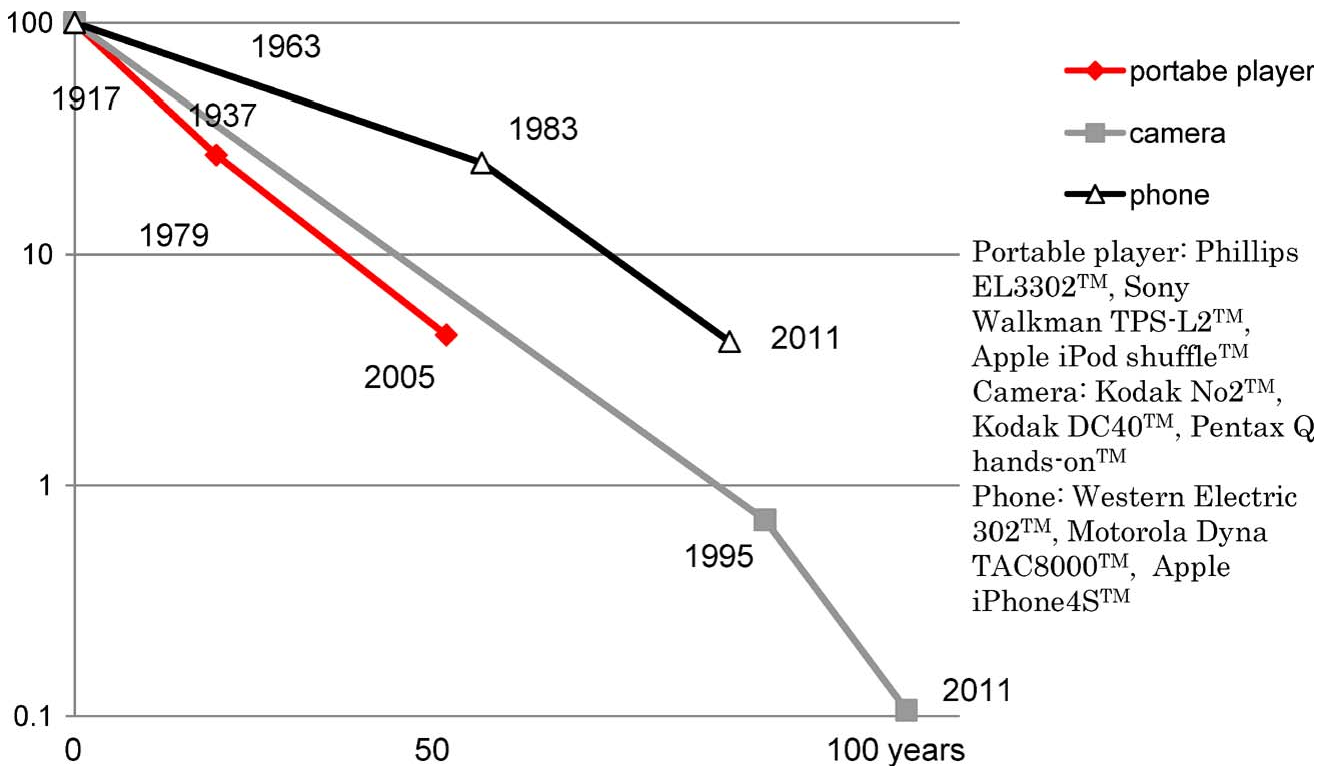 Fig 1: Quantitative analysis of downsizing rates across different product categories.
However, the authors introduce a critical "Human Element" constraint: if devices become too small, they become unusable by human fingers. This leads to the "Motivation" for the next leap: User Interface Evolution. When touch becomes impossible due to scale, voice and gesture recognition (processed in the Cloud) become the primary interaction methods.
Future Projections: From Gadgets to Organics
Perhaps the most provocative part of the paper is the shift toward Biomedical Integration.
1. The Adhesive-Bandage Sensor
The authors predict the end of "clunky" medical devices. Instead, a sensor no larger than a bandage will monitor ECG, blood flow, and even "emotional distress" via skin conductance, transmitting data to healthcare providers via an oscillation-powered battery.
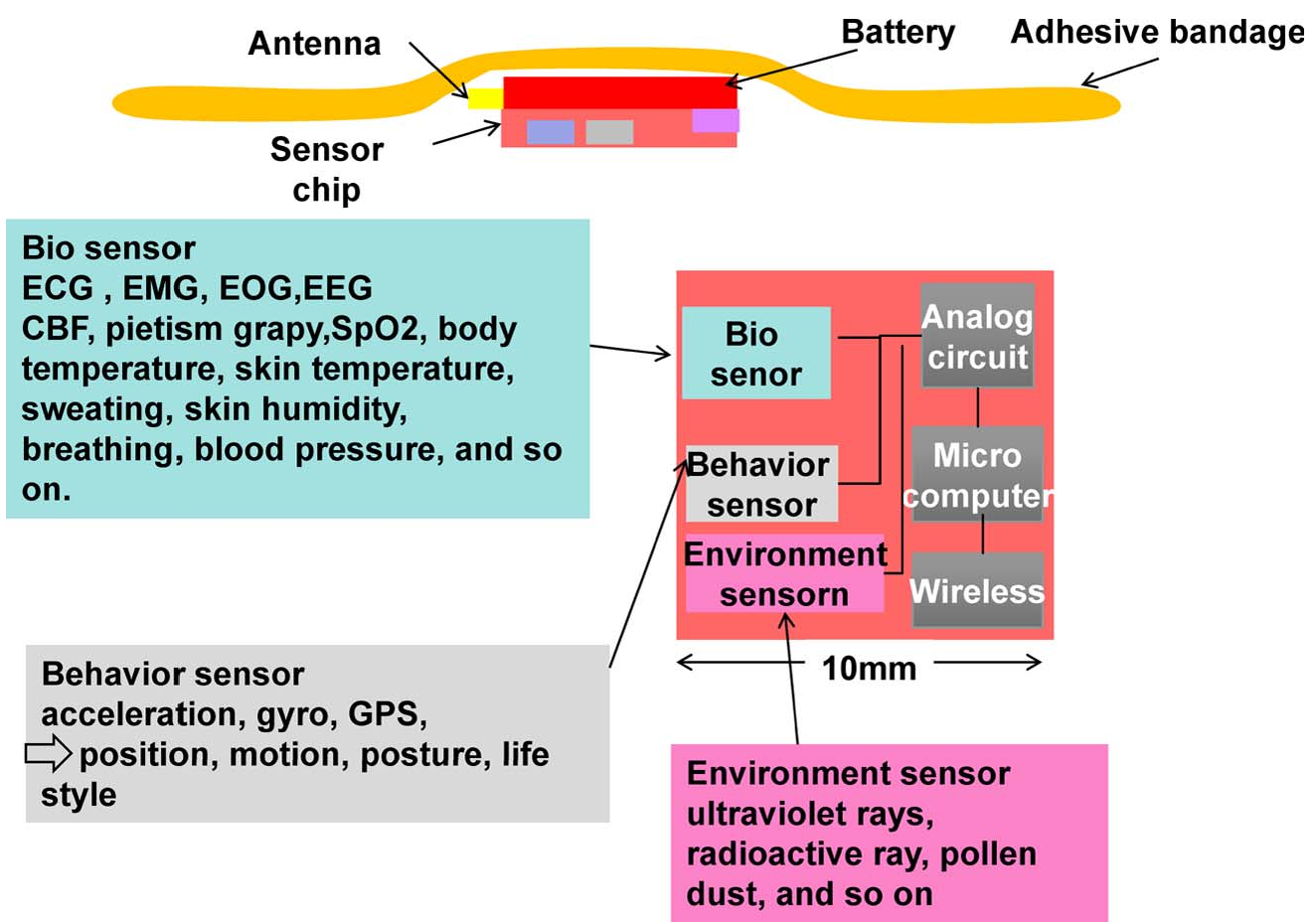 Fig 2: Architecture of the proposed adhesive-bandage-type sensor.
2. Intimate Communication (Elfoid)
Current smartphones are "inorganic." The authors cite "Elfoid"—a humanoid-shaped communication device—as a precursor to a future where we communicate "presence" (breath, temperature, and touch) rather than just voice and text.
Energy Interactivity: The Silent Revolution
The paper highlights an often-overlooked trend: Energy Performance. While audio/video products consume more power as screens grow, appliances like air conditioners have seen a 40% efficiency boost.
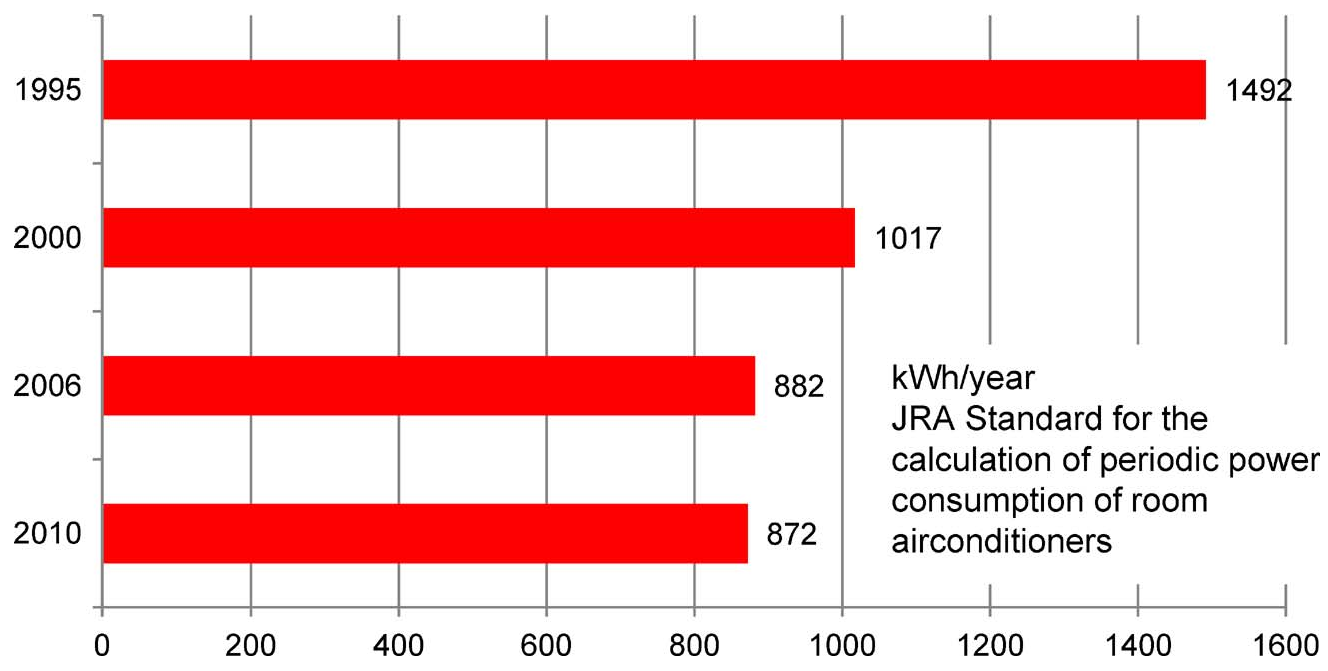 Fig 3: Efficiency gains in air conditioning as a benchmark for home appliance evolution.
In the future, the authors envision "Digitized Energy." Power will be transmitted like data packets via a smart grid, and a robotic vacuum might share its battery power wirelessly with a television during a blackout.
Critical Analysis & Conclusion
The paper’s strength lies in its refusal to see devices in isolation. It views the "Smart Home" not as a collection of smart objects, but as a converged ecosystem.
Takeaway: In the 22nd century, the categories of "Home Appliance," "AV Product," and "Gadget" will likely disappear. They will merge into a singular, invisible infrastructure that supports human health, social presence, and environmental sustainability. The only limit is no longer the hardware, but our ability to design interfaces that feel "natural" to the human experience.