
SimOrg: Decoding Organizational Dynamics through Personality-Based Agents
A personality-based model of agents for representing individuals in working organizations
This paper introduces a novel agent architecture for the SimOrg project, leveraging Theodore Millon's psychological theory to represent individual personalities within human organizations. By integrating twelve bipolar attributes into the decision-making process, the model successfully maps individual behaviors to collective organizational patterns, demonstrating a 10% productivity improvement over standard BDI agents.
TL;DR
Researchers have moved beyond the "one-size-fits-all" agent by creating SimOrg, a simulation framework where agents possess distinct human personalities guided by Theodore Millon’s psychological theory. By quantifying traits like introversion, innovation, and submissiveness, these agents provide a more realistic look at how individual quirks lead to organizational success or "communication rot," outperforming standard models by 10% in productivity accuracy.
Background: Moving Beyond the Rational Agent
In the world of Multi-Agent Systems (MAS), we often default to the BDI (Belief-Desire-Intention) model. While logically sound, BDI agents are often too "perfect" or uniform. They don't get shy, they don't ignore emails because they are overwhelmed, and they don't innovate out of a desire for preservation.
The authors argue that human organizations are inherently messy. To simulate them, we need more than just logic; we need Inductive Bias derived from psychological reality. They chose Millon's theory because it provides a quantified bridge between evolutionary biology and observable behavior.
Methodology: The Architecture of Personality
The core innovation lies in the Personality Base shown in the architecture below. This isn't just a label; it is a set of 12 bipolar attributes (e.g., Openness vs. Preservation, Systematization vs. Innovation) that act as weights for the agent's internal rules.
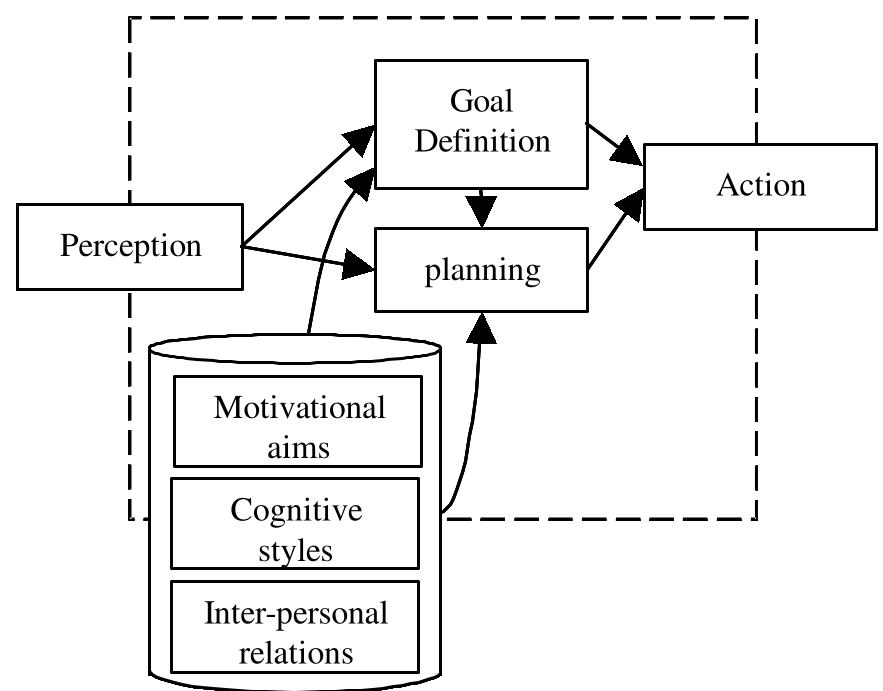
How Personality Influences Logic:
- Goal Definition: A "preserving" agent might prioritize tasks that minimize risk over high-reward "innovative" tasks.
- Planning: An "introverted" agent might choose a plan that involves lone coding over a plan requiring a negotiation meeting.
- Action Execution: Even if a rule has a low probability of activation, it can still be chosen, simulating the unpredictable nature of human "out-of-character" moments.
Experimental Results: The Software Team Scenario
The researchers tested SimOrg in a simulated software development company using Agile methodologies. This is a brilliant choice because Agile relies heavily on informal communication—exactly where personality matters most.
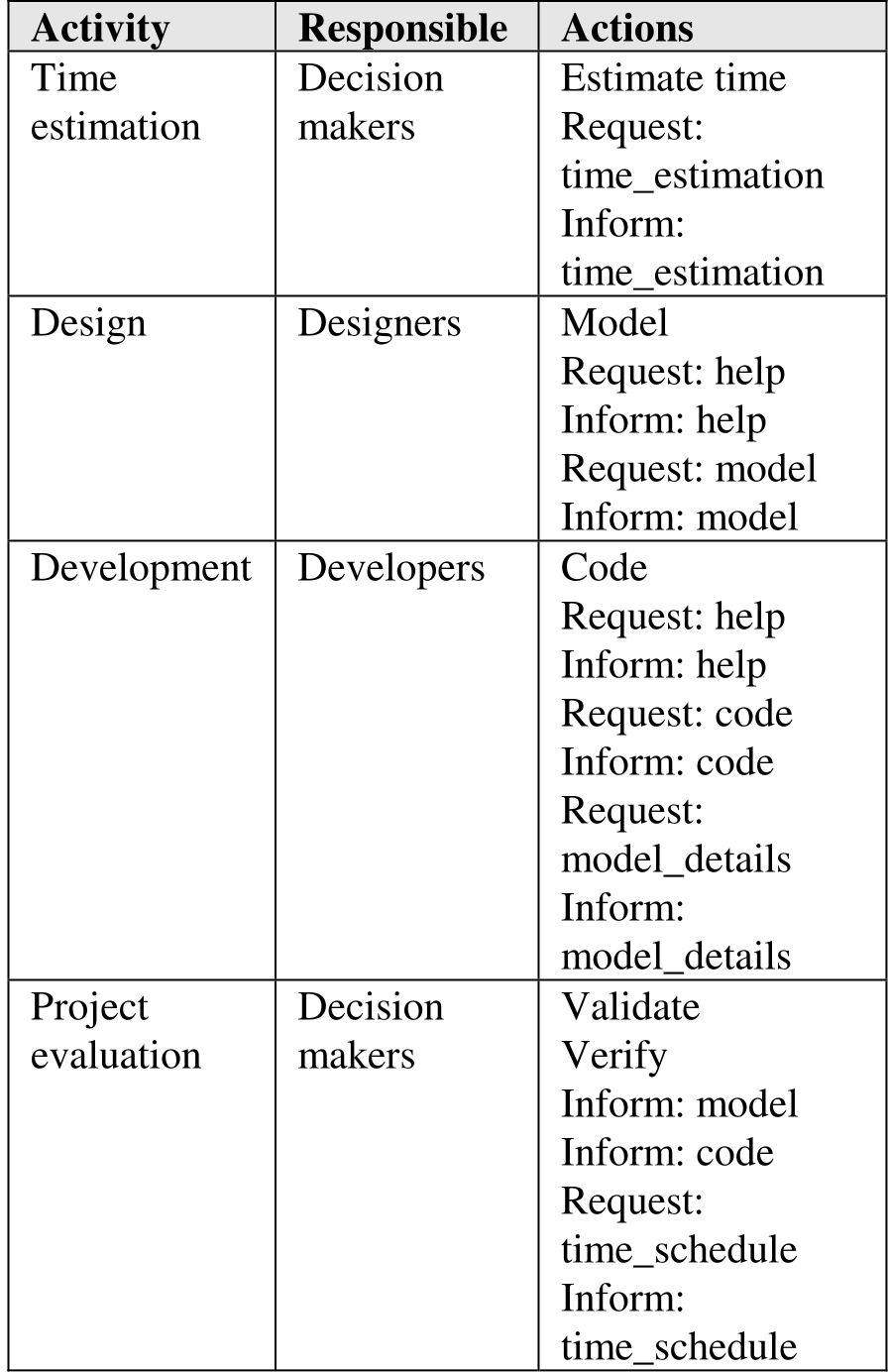
Key Findings:
- Productivity Boost: By matching agent personalities to roles (e.g., matching a "communicative" agent to a Manager role), project execution time aligned 10% closer to real-world estimates than baseline BDI agents.
- Communication Failure: The system successfully modeled "Communication Failure" (not just missing data, but poor quality/low importance messages). For instance, an introspective manager agent failed to trigger necessary message exchanges, reflecting a common organizational bottleneck.
The Web-Based Training Tool
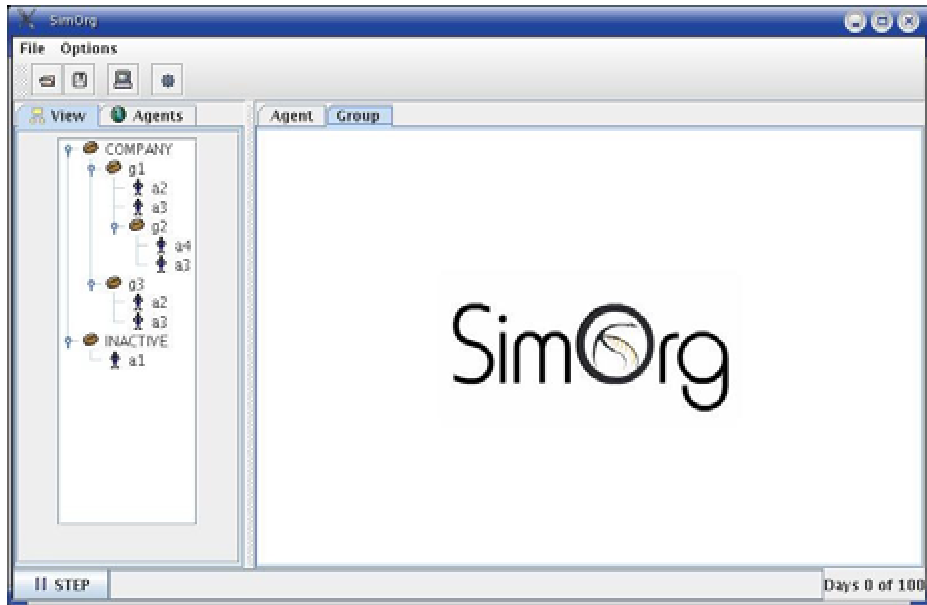
The authors didn't just stop at a paper; they built a tool for Staff Training. The simulation allows HR experts to:
- Visualize organizational trees and group dynamics.
- Run "What If" scenarios (e.g., "What happens if we put two highly independent people in a strictly submissive hierarchy?").
- Use results for "Debriefing" sessions to show employees how their traits affect the team.
Critical Insight & Future Outlook
The most profound takeaway here is the transition from Macro-modeling (treating the organization as a single block) to Micro-modeling (letting the organization's behavior emerge from individual interactions).
While the current model is a prototype, its reliance on XML for scenario description and Java for execution makes it extensible. The next frontier for this research would be integrating LLMs to provide the natural language component for the "Communication Quality" parameter, allowing for a truly immersive and qualitative organizational simulation.
Conclusion
SimOrg proves that personality is not just "fluff" in a technical system—it is a critical variable. By quantifying the intangible aspects of human behavior, we can build organizations that are not just efficient on paper, but resilient in practice.