
Personality-Based Recommenders: Decoding the Psychology of Vehicle Sales
A Personality-Based Recommender System for Semantic Searches in Vehicles Sales Portals
The paper introduces a personality-based recommender system designed for semantic car searches on sales portals. It combines a hybrid recommendation engine (content-based and collaborative filtering) with a k-Nearest Neighbors (k-NN) classifier, integrating the Five Factor Model (Big Five) and anthropomorphic car front perceptions to refine user profiles.
TL;DR
Researchers have developed a recommender system that doesn't just look at your budget—it looks at who you are. By combining the Big Five personality dimensions (OCEAN) with the visual morphology of car fronts, this hybrid system successfully increased user satisfaction from 63% to nearly 89% in the Brazilian automotive market.
Background: Why Keywords Aren't Enough
When 90% of car buyers search online, they encounter a "sea of similarity." Traditional portals use rigid filters: Price < $50,000, Sedan, Automatic. However, car buying is an emotional and psychological process. Conventional systems suffer from Over-specialization (showing you the same three cars) and the Cold Start problem (knowing nothing about a new user).
The authors' core Insight is that humans perceive car fronts similarly to human faces—attributing traits like "power," "aggression," or "sociability" to the shape of headlights and grilles. By tapping into these subconscious preferences, they can move from basic keyword matching to true Semantic Search.
Methodology: The Psychology-AI Pipeline
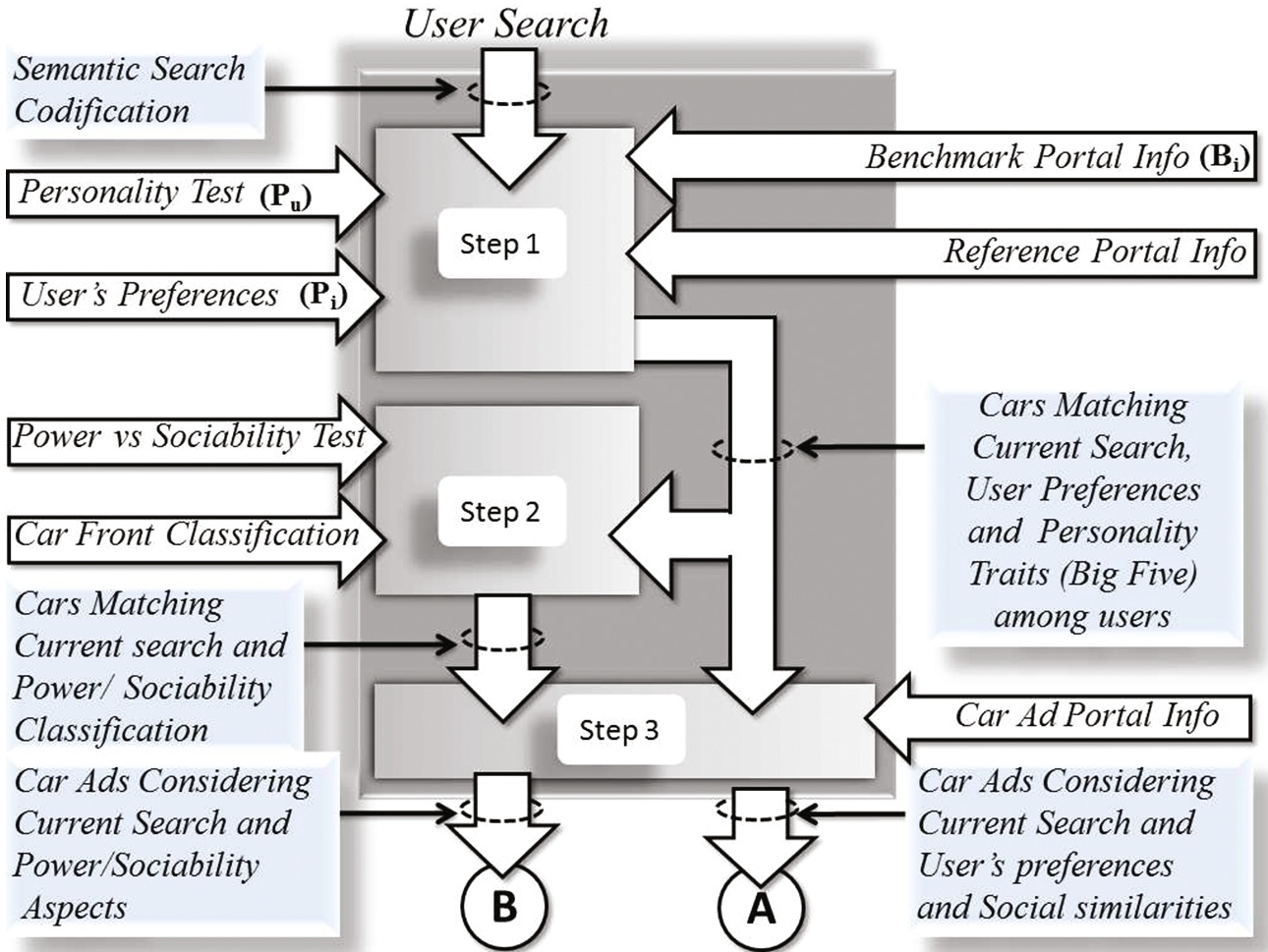
The system architecture transforms a typical hybrid recommender into a psychological classifier.
1. The Big Five Integration
Users are mapped into a 5-dimensional vector space based on the Five Factor Model (OCEAN):
- Openness
- Conscientiousness
- Extraversion
- Agreeableness
- Neuroticism
Using the k-Nearest Neighbors (k-NN) algorithm, the system finds the "neighborhood" of similar users by calculating the Euclidean Distance between their personality vectors.
2. The Interest Correlation Formula
To determine if a vehicle is a "best buy" for user , the system uses a weighted interest degree formula:
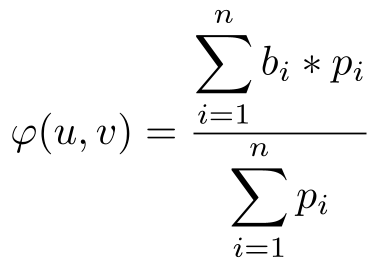
Where:
- = Benchmark evaluation (fuel, price, etc.)
- = User-assigned weight for that attribute.
3. Visual Perception Diversity
The system maps car fronts into four categories (Narrow/Short, Wide/Short, etc.). If a user shows "sympathy" for a specific visual archetype, the system injects these cars into the results—even if they weren't in the original search category—to provide Diversity.
Experimental Results: Better than the Baseline
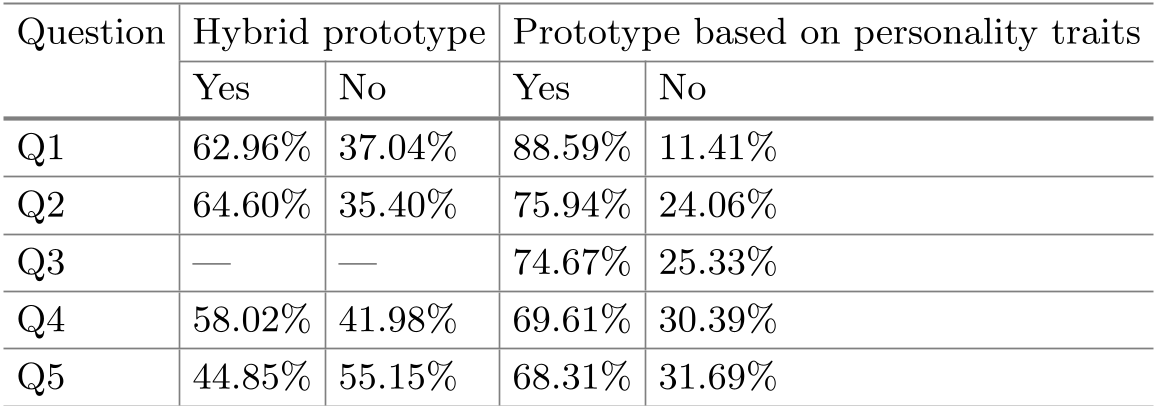
The researchers tested their prototype against a traditional hybrid system using 243 participants. The results validated that personality matters:
- User Satisfaction (Q1): Suggestions rose from 62.96% (Hybrid) to 88.59% (Personality-based).
- Platform Loyalty (Q5): 68.3% of users stated they would use the system again, compared to only 44.8% for the non-personality version.
- Semantic Diversity: Nearly 75% of users found the "highlighted" ads—which were outside their explicit search criteria but matched their personality—to be useful.
Critical Analysis & Conclusion
The Takeaway
This work demonstrates that "Semantic Search" is not just about understanding words, but understanding the user's persona. By utilizing the k-NN algorithm on psychological traits, the system bridges the gap between raw data (benchmarks) and human desire.
Limitations & Future Work
The study relies on an expert's manual mapping of car fronts to personality types. Future iterations should use Computer Vision (CNNs) to automatically extract these morphological features. Additionally, cultural differences in personality expression (e.g., what "power" looks like in a car in Brazil vs. Japan) remain a challenge for global scalability.
By moving beyond the spreadsheet and into the human mind, this research paves the way for a more "empathetic" generation of e-commerce engines.