
Personality Matters: Why "Too Many Cooks" Destroys Crowd Productivity
Personality Matters: Balancing for Personality Types Leads to Better Outcomes for Crowd Teams
This study investigates the impact of personality composition on the performance of virtual crowd teams using the DISC personality model. By forming "Balanced" teams (complementary roles) and "Imbalanced" teams (surplus of leader types), the authors demonstrate that personality matching is a scalable strategy to achieve SOTA creative outcomes in transient crowdsourcing environments.
TL;DR
In the world of online crowdsourcing, simply hiring the "best" individual workers isn't enough to guarantee a great team result. This study proves that personality compatibility—specifically balancing leadership roles using the DISC framework—significantly boosts creative output and worker satisfaction. While the crowd is naturally "leader-heavy," creating teams with a surplus of dominant types leads to conflict and stagnation.
The Leadership Surplus: A Hidden Risk in Crowdsourcing
In traditional offices, HR departments spend months vetting "culture fit." In the anonymous, transient world of crowdsourcing, we usually assume workers are interchangeable units of labor. However, as we move toward "Flash Teams" for complex tasks like advertising or software dev, interpersonal dynamics become the bottleneck.
The authors discovered a startling reality: the crowd is not normally distributed. About 56% of workers identify as "Leader Types" (D or I in the DISC model). When you form teams randomly, you are statistically likely to create a "ship with too many captains," leading to what researchers call a "maturation ceiling" where ideas never evolve because everyone is busy fighting for dominance.
Methodology: Engineering Harmony
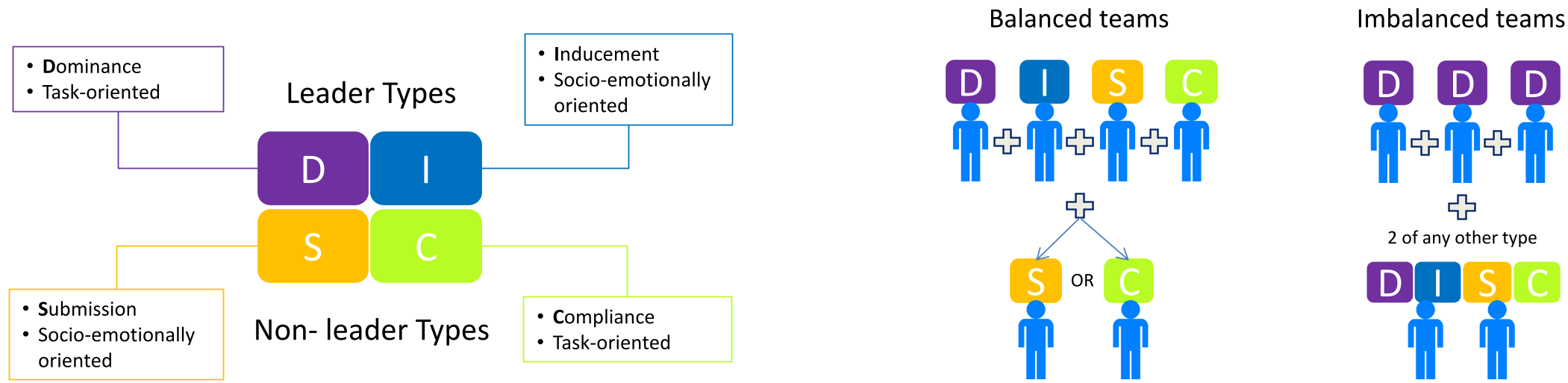
The researchers used the DISC model, which categorizes behavior into four roles:
- D (Dominance): Task-oriented leaders.
- I (Inducement): Socio-emotionally oriented leaders.
- S (Submission): Supportive, team-oriented members.
- C (Compliance): Detail-oriented, task-focused members.
They created two experimental conditions:
- Balanced Teams: One D-type, one I-type, and a mix of S/C types.
- Imbalanced Teams: A surplus of D-type leaders (leading to power struggles).
Results: Performance and Perception
The results were binary and striking. Balanced teams didn't just work better; they were happier.
1. Superior Creative Output
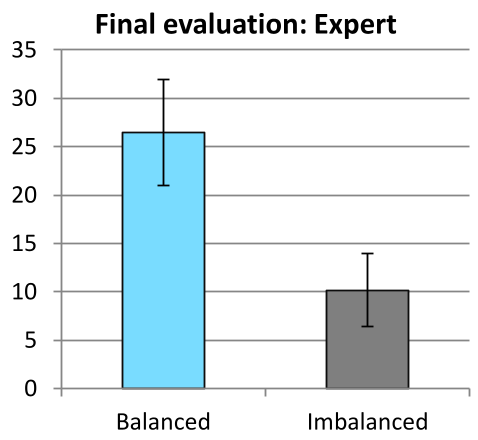
Experts and crowd judges rated the advertisements from balanced teams significantly higher across all axes: Originality, Market Value, and Simplicity. Balanced teams moved past stereotypes to create detailed, nuanced campaigns.
2. The "Storming" Trap
Using sentiment analysis, the researchers found that imbalanced teams got stuck in the "Storming" phase of team development. Their logs were filled with ironic, tense, or "shouting" (all-caps) comments. Balanced teams, conversely, reached the "Adjourning" phase, often expressing a desire to work together again.
Deep Insight: The Maturation Ceiling
Why did imbalanced teams fail? The qualitative data shows that in leader-heavy teams, members spent their energy maintaining their own ideas rather than building on others. They highlighted the negative aspects of peers' work to safeguard their own "alpha" status. In balanced teams, the single leader acted as a facilitator, synthesizing diverse inputs into a matured, high-quality final product.
Critical Analysis & Conclusion
This paper provides a blueprint for the future of "Platform Cooperativism" and Gig Economy management.
- Takeaway: Soft skills and personality types are not "fluff"—they are quantifiable metrics that predict the success of complex virtual collaboration.
- Limitations: The study utilized a specific creative task (advertising). For routine, strictly algorithmic tasks, personality may be a negligible factor.
- Future Outlook: As we begin to use AI agents to supplement human teams, we must consider the "personality" assigned to those agents. An AI that is too "Dominant" may suppress the creativity of human collaborators in much the same way the imbalanced teams did in this study.
By implementing a simple 20-minute personality test, platforms can transform "crowd chaos" into structured, high-performing teams.