
The Mind Behind the Code: Decoding Personality in Global Software Teams
Personality profiles of global software developers
This study investigates the personality profiles of global software development (GSD) practitioners by applying psycholinguistic analysis to the IBM Rational Jazz repository. Using Social Network Analysis (SNA) and the LIWC tool, the authors mapped communication patterns to the BIG Five personality model, identifying distinct behavioral signatures for "Top Members" versus general contributors.
TL;DR
What makes a "Top Member" in a global software team? By mining the IBM Rational Jazz repository, researchers discovered that core developers in commercial distributed teams are not just technical experts—they are individuals highly Open to Experience. Unlike previous studies on Open Source projects, this research shows that commercial GSD success relies on a complex balance of extroversion and agreeableness to bridge the gap of physical distance.
Background: Beyond Technical Skills
In the world of Global Software Development (GSD), the "human factor" is often the difference between a project's success and its collapse. When teams are spread across the USA, Canada, and Europe, traditional management fails. This study moves beyond simple productivity metrics to look at the Psycholinguistic DNA of developers. Are some personality types naturally "wired" to lead distributed teams?
Methodology: Mining the Jazz Ecosystem
The researchers analyzed 146 distinct members across ten project teams. The workflow was rigorous:
- SNA Filtering: Used Social Network Analysis to identify "Top Members" based on communication density.
- Psycholinguistic Analysis: Used the LIWC (Linguistic Inquiry and Word Count) tool to analyze 5,563 messages.
- Big Five Mapping: Translated linguistic cues (like the frequency of "I" vs. "We" or the use of complex words) into the Big Five traits: Extroversion, Openness, Agreeableness, Conscientiousness, and Neuroticism.
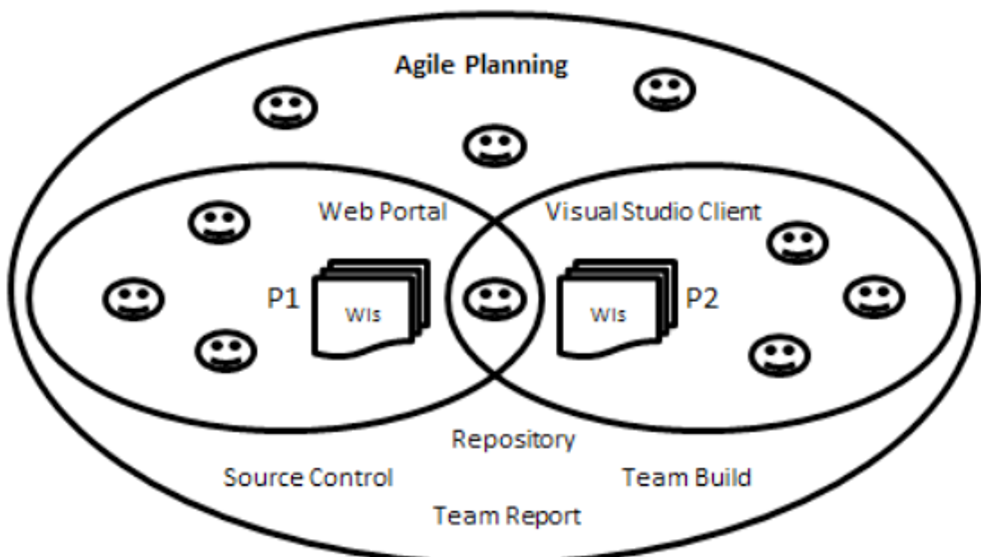 Figure 1: Conceptual arrangement of project teams and contributors within the Jazz repository.
Key Insights: The Anatomy of a Top Developer
The findings challenge some long-held stereotypes about "loner" programmers:
- The Power of Openness: Top Members scored significantly higher in Openness to Experience. This trait—linked to being insightful and receptive to new ideas—is critical for navigating the unpredictable nature of global collaboration.
- The Extroverted UI Expert: Developers working on "User Experience" (UX) tasks were the most extroverted. This makes intuitive sense: UX requires constant feedback loops and "driving" interaction across the wider team.
- The Neurotic Coder?: Interestingly, those involved in heavy coding tasks showed higher levels of Neuroticism and Conscientiousness. The authors suggest this reflects the intense rigor and high-stakes nature of solving complex computational problems.
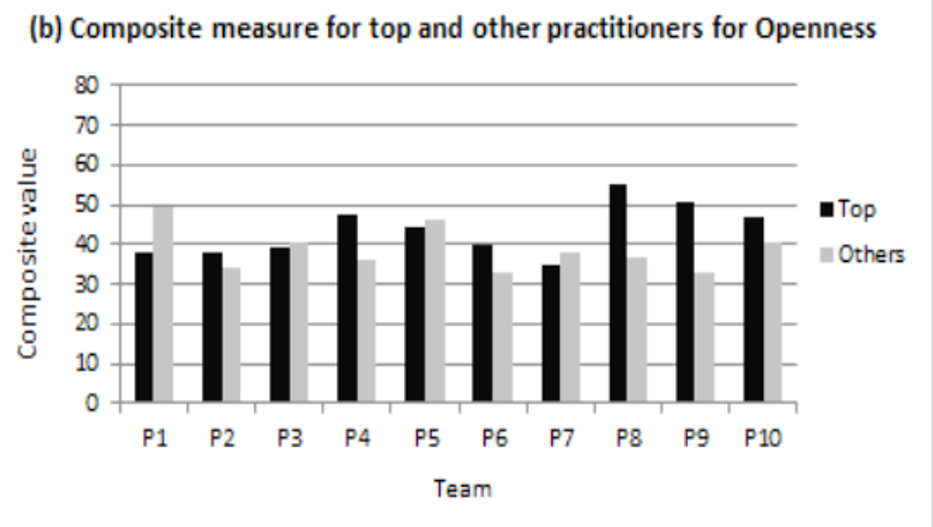 Figure 2: Statistical comparison showing how personality profiles inversely balance between Top Members and Others within teams.
Critical Analysis: Commercial vs. Open Source
One of the most striking aspects of this paper is how its results diverge from studies of Open Source Software (OSS) like the Apache project. While OSS "top committers" were found to be less extroverted in prior work, IBM’s top commercial developers are the opposite.
Why the difference? The researchers posit that commercial organizations like IBM use formal screening and human resource strategies that favor "all-rounders"—people with strong interpersonal and management skills. In GSD, being a "lone wolf" is a liability; being an "Open" and "Agreeable" collaborator is the real SOTA.
Summary & Future Outlook
This work confirms that personality diversity isn't just a "nice-to-have"—it’s a functional requirement for self-organizing teams.
- For Managers: Use personality heterogeneity as a tool. When team morale is low, lean on your "Agreeable" members. When deadlines loom, the "Conscientious" (and even the "Neurotic") members provide the necessary urgency.
- Future Scope: The next frontier is understanding how these traits evolve over a developer's lifecycle and whether AI-driven project management tools can automatically "balance" a team's personality profile to prevent conflict before it starts.
Final Takeaway
In the distributed era, code is written by fingers, but communication is driven by personality. The most successful global developers are those who remain Open to the chaos of a distributed world.