
Personality Recognition: Why Moving Beyond Labels to Distributions is the Future
Personality Recognition on Social Media With Label Distribution Learning
This paper introduces Label Distribution Learning (LDL) to the task of Big Five personality recognition on social media (Sina Weibo). By modeling personality as a distribution of traits rather than independent classes, the proposed LD-SVR method achieves a new SOTA in predictive accuracy and computational efficiency.
TL;DR
Researchers have successfully applied Label Distribution Learning (LDL) to recognize Big Five personality traits from Sina Weibo data. By treating personality as a distribution of five traits rather than isolated categories, the LD-SVR model achieved superior accuracy (MAE 4.26) and faster performance than traditional regression and classification baselines.
Background: The Nuance of Human Character
Personality isn't a binary state. You aren't simply "Extroverted" or "Not Extroverted." Psychology represents personality through the Big Five model: Openness, Conscientiousness, Extraversion, Agreeableness, and Neuroticism (OCEAN).
The technical problem? Historically, AI researchers treated these traits either as binary classification (oversimplified) or independent regression tasks (ignoring that traits like Neuroticism and Conscientiousness are often strongly correlated).
The Core Insight: Label Distribution Learning (LDL)
The authors argue that an individual's personality is a "mixture" where different traits account for different proportions of their behavioral description.
The Methodology
- Feature Extraction: 113 features were pulled from 994 users, including static profile data (gender, location) and linguistic cues (TextMind analysis of microblogs).
- Transformation: Instead of predicting a raw score for "Extraversion," the system normalizes all scores into a distribution where .
- The LD-SVR Model: This is the "heavy lifter." Unlike standard SVR, LD-SVR fits a sigmoid function to each component of the distribution simultaneously, allowing it to capture the multivariate nature of personality in a high-dimensional feature space.
 Table 1: Statistics of user personality scores show a normal distribution, fitting the LDL requirement.
Experimental Battleground: LDL vs. Baselines
The researchers pitted 8 LDL algorithms (like PT-Bayes, AA-kNN, SA-IIS) against 9 conventional baselines (Random Forest, SVR, MLP).
1. Accuracy (MAE)
The LD-SVR method consistently outperformed all others.
- Best LDL (LD-SVR): 4.26 MAE
- Best Baseline (Random Forest): 4.438 MAE
- Standard SVR: 4.450 MAE
The improvement is statistically significant because LD-SVR explicitly models the correlations between traits (e.g., the negative correlation between Neuroticism and Agreableness).
2. Efficiency
In production environments, speed matters. LD-SVR was nearly 18x faster to train than Random Forest because it handles all five traits in a single joint execution rather than building five separate models.
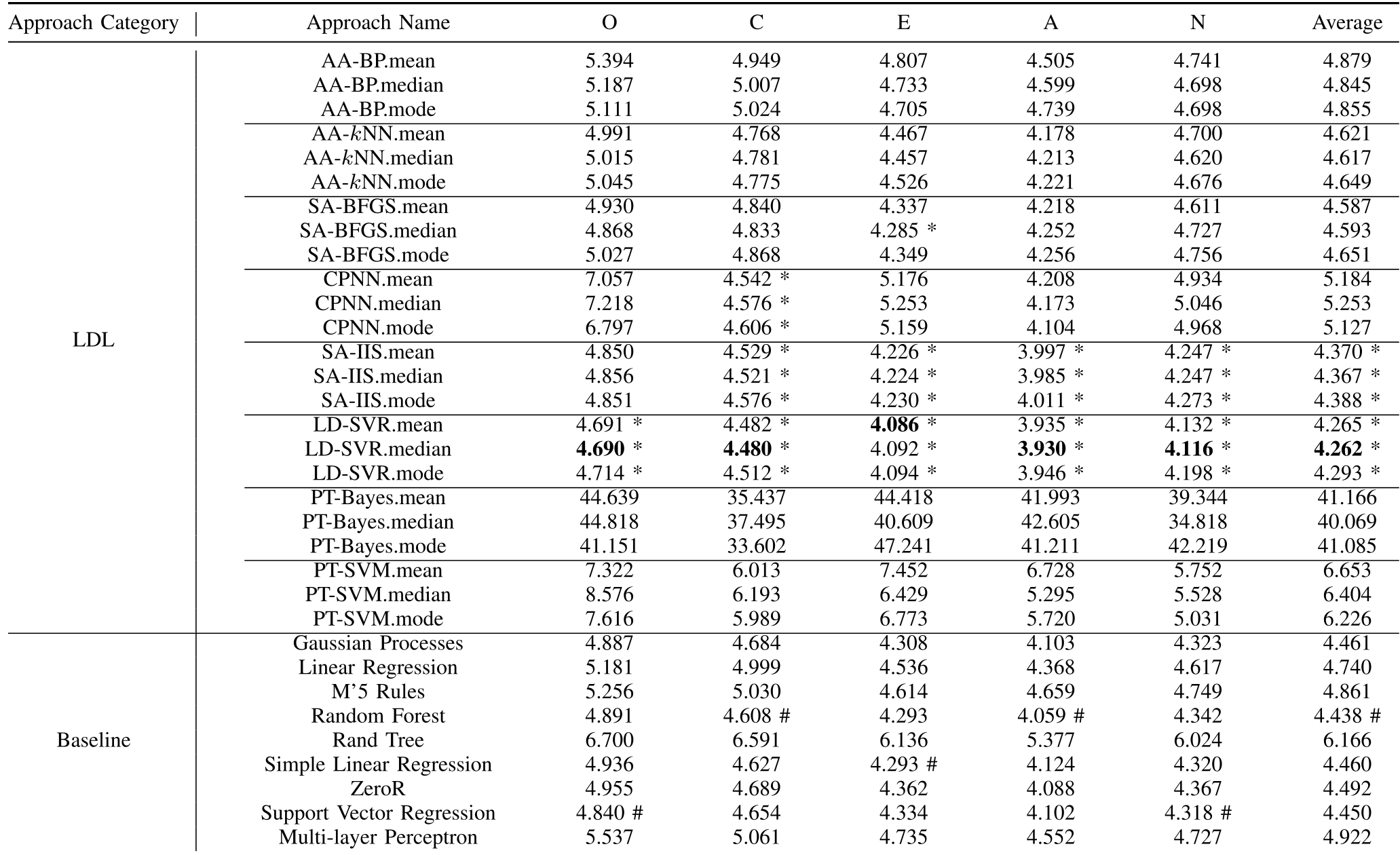 Table 3: Comparative MAE across various algorithms—LD-SVR leads the pack.
Why It Works: The "Why" Behind the "How"
Why does LDL beat traditional SLL (Single Label Learning)?
- Structural Information: LDL preserves the relative "importance" of labels. In a traditional model, a score of 35/50 is just a number. In LDL, it's a piece of a distribution that relates to how "Neurotic" that same person is.
- Kernel Trick: LD-SVR utilizes kernel methods to map social media features into a space where personality "clusters" are more linearly separable.
Critical Analysis & Conclusion
Takeaway
The shift from "Classifying a person" to "Learning the distribution of a person" is a major step forward for Computational Psychometrics. It acknowledges that human nature is a gradient, not a box.
Limitations & Future Work
The dataset (994 users) is relatively small for deep learning standards. While the authors suggest using Deep Learning in the future, the current 113 handcrafted features (linguistic + profile) are "shallow." The next frontier will be applying Label Distribution Learning to Deep Neural Architectures (like CNNs or Transformers) to extract features directly from text without relying on manual dictionaries like TextMind.
Final Thought
If you are building recommendation engines or sentiment analysis tools, stop treating your labels as mutually exclusive. The "description degree" approach of LDL is likely the key to your next performance breakthrough.