
PersonalitySensing: Deciphering the Digital Self via Multi-View Deep Learning
PersonalitySensing: A Multi-View Multi-Task Learning Approach for Personality Detection based on Smartphone Usage
The paper introduces PersonalitySensing, a deep learning framework for inferring Big Five personality traits using a "snapshot" of smartphone usage data. It employs a Multi-View Multi-Task (MVMT) learning approach, leveraging call logs, SMS metadata, and App usage statistics to achieve SOTA performance in fine-grained personality score regression.
TL;DR
Researchers have developed a way to predict your Big Five personality traits (Openness, Conscientiousness, Extraversion, Agreeableness, and Neuroticism) by looking at just 7 days of your smartphone metadata. Using a sophisticated architecture called MVMT (Multi-View Multi-Task) learning, the system can estimate personality scores more accurately than traditional machine learning models, moving away from slow, manual questionnaires toward "instant" psychological profiling.
The "Long-Term Monitoring" Bottleneck
In the realm of mobile sensing, the status quo has been "more is better." Previous studies often tracked users for months to find patterns. This creates two problems:
- Efficiency: Processing months of GPS, accelerometer, and log data is computationally heavy.
- Granularity: Most existing tools just tell you if you are "High" or "Low" in a trait (binary classification). In psychology, however, your specific score on a scale of 1 to 5 matters much more for clinical or commercial utility.
The Insight: Your Phone as a 7-Day Mirror
The authors hypothesized that a "Snapshot"—a short, one-week window of calls, SMS, and App usage—contains enough social and behavioral "noise" to be decoded into personality signals. They focus on metadata (frequency, duration, diversity) rather than content, preserving a layer of privacy.
Methodology: The MVMT Architecture
The core of PersonalitySensing is its ability to handle "Multi-source" data and "Multi-task" goals.
1. Multi-View Feature Fusion
The model treats Call logs, SMS logs, and App usage as distinct "views." Because an Extravert might have high call frequency but low App diversity, an Attention Layer learns to weigh these views differently for each individual.
2. Multi-Task Regression
Instead of training five separate models, the authors used a Cross-Stitch Network and Mixture-of-Experts (MoE). This allows the model to learn shared representations—for instance, realizing that "Social Chat" usage might correlate with both Extraversion and Agreeableness—while still maintaining specific "experts" for each trait.
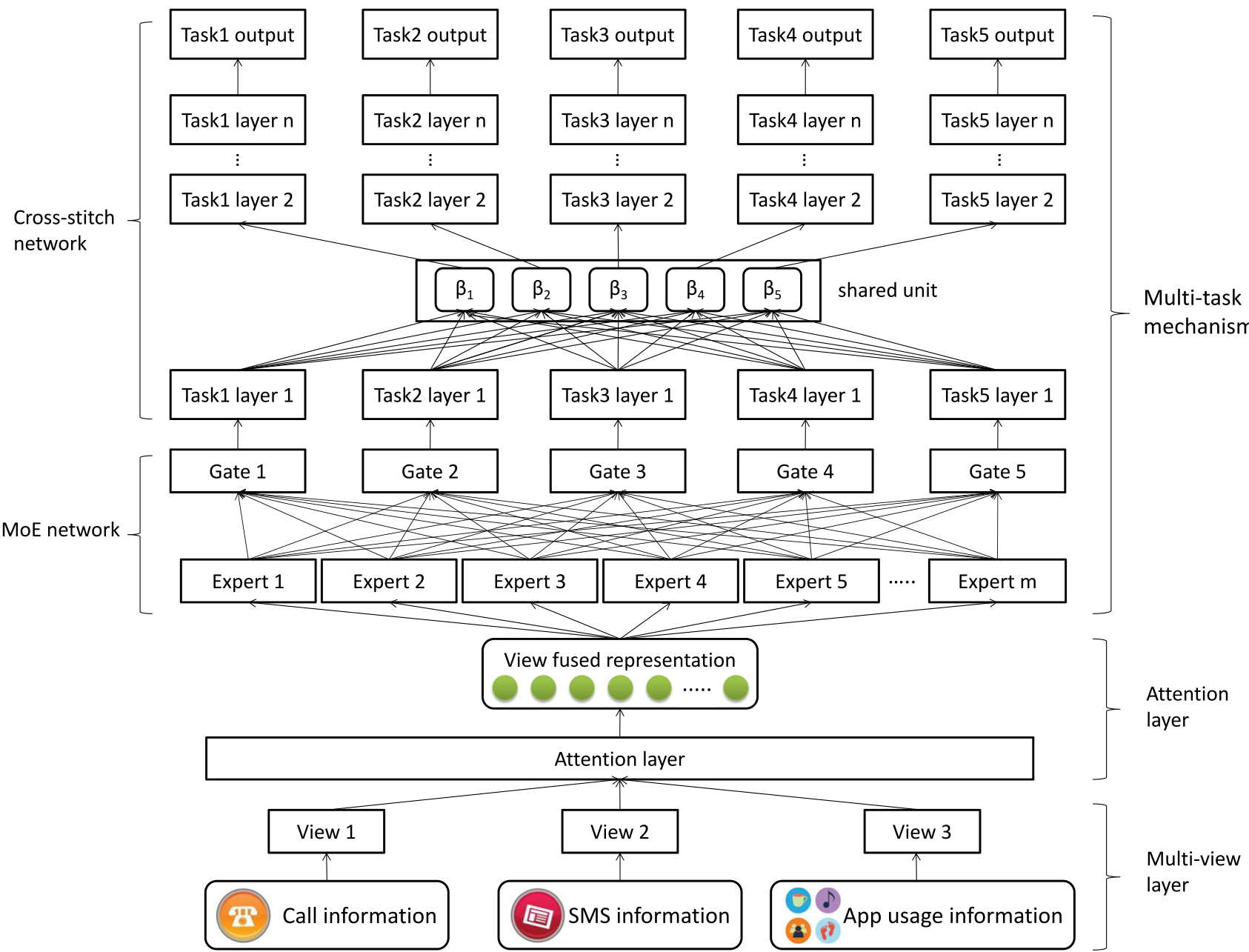 Figure 1: The MVMT framework featuring Multi-view, Attention, and MoE layers.
Experiments & Proven Performance
The team collected data from 164 volunteers and compared their MVMT model against Support Vector Regression (SVR) and standard Multi-Layer Perceptrons (MLP).
- Neuroticism Accuracy: The model achieved an MAE of 0.256, a 6.2% improvement over the best baseline.
- Consistency: Across all "Big Five" traits, the MVMT model consistently showed a tighter distribution of errors, with most predictions falling within a trivial 0.5 margin of the ground truth.
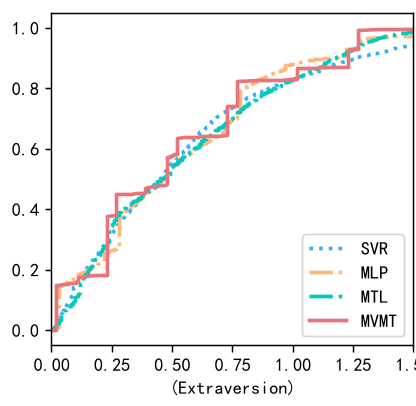 Figure 2: Empirical results showing MVMT (solid red line) outperforming baselines in error reduction.
Critical Insight & Future Outlook
The success of this snapshot approach suggests that behavioral "thin slices" are highly predictive. By focusing on App categories (e.g., "Life Tools" vs "Finance") and communication entropy, the model captures the essence of a user's lifestyle.
Limitations: The study was conducted primarily on university students/faculty, which might bias the "App usage" patterns. Future work will need to test if these 7-day signals remain stable across different age groups and cultural backgrounds.
Conclusion
PersonalitySensing represents a shift toward instantaneous digital psychometrics. Whether it’s for matching players in a game, personalizing ads, or providing mental health interventions, the ability to sense personality from a mere week of digital footprints opens a new chapter in human-centered computing.