
MBTI & Software Teams: Why "High-Performance" Personalities Can Still Lead to Project Failure
A follow up study of the effect of personality on the performance of software engineering teams
This paper presents an ethnographic study examining the impact of personality types, measured by the Myers-Briggs Type Indicator (MBTI), on the performance of student software engineering teams. By observing year-long industrial projects, it identifies how specific personality dynamics and communication failures—categorized as "disruptions" or "lack of debate"—directly correlate with software quality and project success.
TL;DR
This study moves beyond the surface-level "who is on the team" to look at "how they interact." Using ethnographic observations of software engineering (SE) teams, researchers John Karn and Tony Cowling discovered that while diversity in personality (heterogeneity) is a strength, it becomes a liability when team members fall into "unfamiliar roles" or create siloed sub-groups. In a stark contrast to previous findings, they show that active interpersonal disruptions are often the final nail in the coffin for failing software projects.
Background: The Human Factor in Code
In the world of Software Engineering, we often obsess over tech stacks and methodologies (Agile, Scrum, Waterfall). However, SE is fundamentally a human endeavor. This paper, a follow-up to a 2003-2004 study, investigates the "black box" of team dynamics using the Myers-Briggs Type Indicator (MBTI) and ethnography.
Problem & Motivation: The "Lack of Debate" Trap
The authors' previous research yielded a counter-intuitive insight: teams that seemed peaceful but lacked debate (everyone just agreeing) actually produced worse results than those with minor friction. The motivation for this follow-up was to see if this "Groupthink" or "Lack of Debate" was consistently the primary killer of software quality, or if active "Disruptions" (clashes/fragmentation) were the true enemy.
Methodology: Observing the "Maxi Project"
The researchers didn't just hand out surveys. They sat at the back of the room for a year, observing three "Maxi" student teams working for real industrial clients.
- Personality Profiling: Used MBTI to map preferences (Introversion vs. Extraversion, etc.).
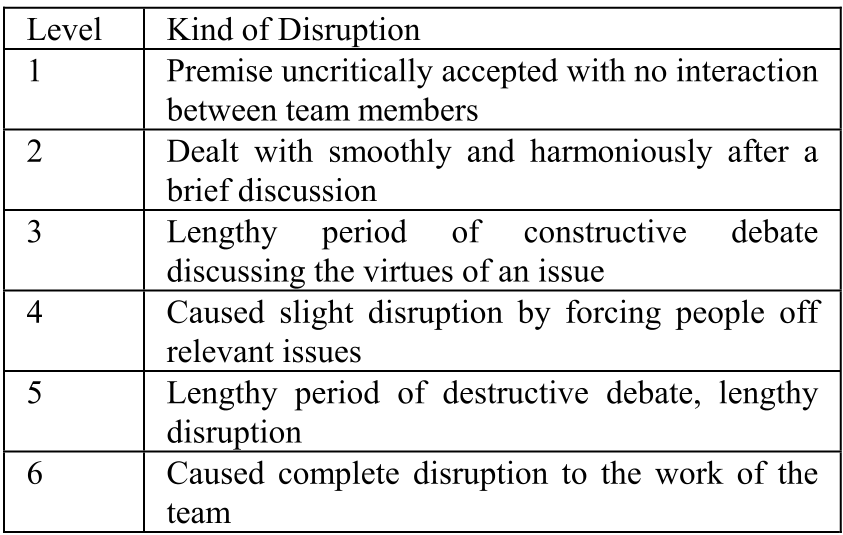
- The Disruption Scale: Developed a 1-6 scale where 1 means "Premise uncritically accepted" (Low debate) and 6 means "Complete disruption."
- Impact Mapping: They tracked how these behaviors forced management to intervene or caused project failures.
Case Study Analysis: Gold, Failure, and Fragmentation
1. The Ideal: Team 1
Team 1 was a masterclass in heterogeneity. Despite variations in ethnicity and personality (INFP, ENTJ, INTJ, etc.), they maintained high communication and zero disruptions.
- Why it worked: An INFP (Sensitive listener) and an ENTJ (Decisive organizer) complemented each other perfectly, ensuring every technical voice (INTJ) was heard without conflict.
- Result: The highest marks in the project's history.
2. The "Single Point of Failure": Team 2
Team 2 relied almost exclusively on one member (an INTP).
- The Trap: While the INTP was brilliant, their personality type is not naturally inclined to lead or manage. Being forced into a "spokesman" role caused stress, burnout, and physical illness.
- Result: No working system at the end of the project and incomplete documentation.
3. The Fractured Team: Team 3
Team 3 split along ethnic and gender lines. Two members formed a "sub-group," leaving others frozen out.
- The Insight: This team suffered from both personality clashes and cultural siloes, leading to abusive language and a chaotic hand-off during the second half of the project.
Deep Insights: Why Does This Matter?
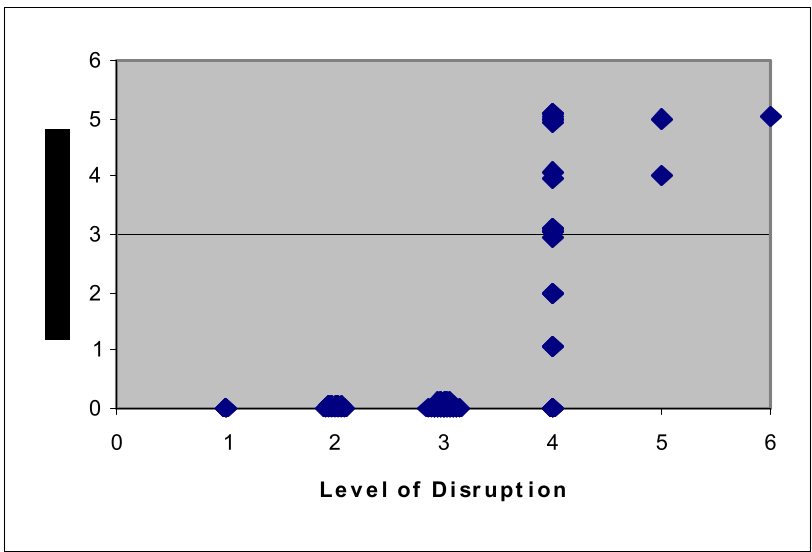
The core finding of this 2004-2005 study shifted the narrative: Actual disruptions were more damaging than a lack of debate.
- Unfamiliar Roles: When a person's natural MBTI type (e.g., an Introverted Thinking Perceiving type) is forced into a leadership role due to a vacuum, the project risks total collapse.
- Sub-group Dynamics: Fragmenting along ethnic or gender lines isn't just a social issue—it is a technical risk. It prevents the "fit" of individual code contributions.
- The Synchrony Theory: The authors propose that successful projects don't just need individual contributions; they need pieces that fit together. Anything (be it a clash or a lack of talk) that prevents mutual understanding prevents this fit.
Conclusion & Future Outlook
Software quality is as much about personality synchronization as it is about code synchronization. The study concludes that:
- Heterogeneity is key: Teams need a variety of "mental processes."
- Organization matters: Relying on one "superstar" (especially if it's against their personality type) is a recipe for failure.
- Future Research: Needs to look deeper into how specific factors like gender and ethnicity intersect with personality to resolve (or escalate) conflict.
Takeaway for Leads: Don't just hire for skill. Look at the MBTI mix of your team and ensure that the "Deciders" and the "Listeners" are in balance. If you see a "one-man band," your project is already in danger.