
C-RHPO: Bridging Uncertainty and Context in Cloud Service Review Ranking
Personalized Cloud Service Review Ranking Approach Based on Probabilistic Ontology
This paper introduces C-RHPO (Context-aware Review Helpfulness Probabilistic Ontology), a personalized framework for ranking cloud service reviews from heterogeneous social media platforms. By combining probabilistic ontology with contextual similarity, it achieves a 10% improvement in Precision and F1-measure over non-contextual baselines.
TL;DR
Choosing a cloud provider is a high-stakes decision often guided by peer reviews. However, find the "right" review is difficult due to noisy data and differing user needs. This paper presents C-RHPO, a system that uses Probabilistic Ontology to handle the "fuzziness" of helpfulness and Context Matching to ensure a CTO's review is shown to another CTO, rather than a hobbyist. The result? A 10% boost in ranking precision.
Deep Dive: Why "Helpfulness" is a Hard Problem
In most e-commerce settings, "Helpfullness" is a simple counter. In the complex world of Cloud Computing (IaaS/PaaS/SaaS), a review's value is subjective.
- Heterogeneity: A "review" on Facebook might be a "comment" on LinkedIn.
- Uncertainty: A review might have great technical detail (helpful) but be 3 years out of date (unhelpful). How do we weigh these conflicting signals?
- Context Dependency: A Software Engineer cares about API latency; a Financial Manager cares about compliance. A "helpful" review for one is useless to the other.
Methodology: The Fusion of Logic and Probability
The authors move beyond static ontologies by implementing C-RHPO. The core innovation is the use of Multi-Entity Bayesian Networks (MEBN). This allows the system to reason under uncertainty—calculating the probability that a review is helpful based on fragments of evidence.
The Architecture
The model identifies four key feature pillars: Readability, Meta-data, Semantic Richness, and the newly introduced Reviewer Expertise (Role, Industry, Skills).
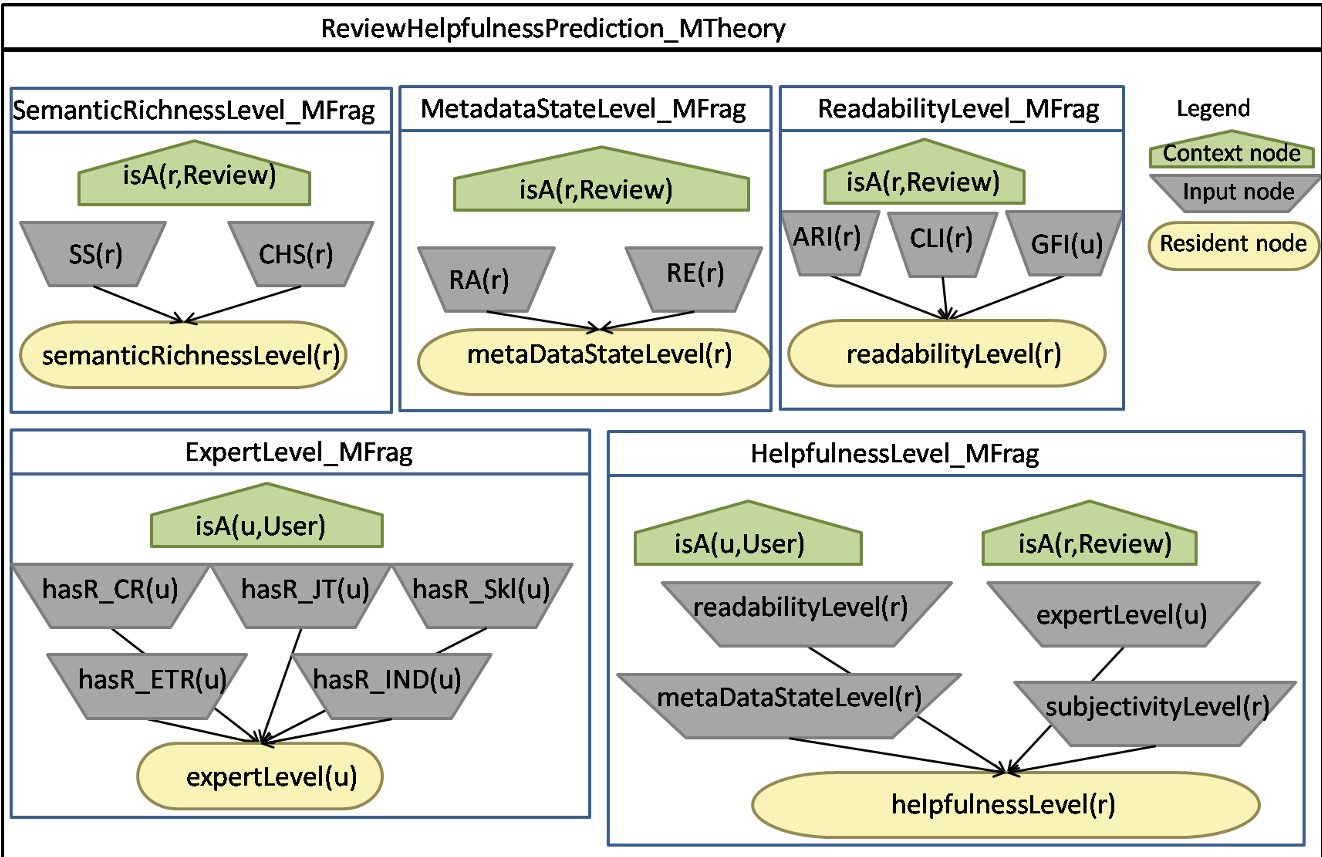 Figure 1: The MTheory structure used to generate Situation-Specific Bayesian Networks (SSBNs).
Personalization through Context Similarity
The ranking isn't just a global score. The system calculates a similarity score between the Reviewer's Context and the End-user's Context: This formula prioritizes reviews where the use-case (e.g., Video Gaming vs. Healthcare) and requirements align with the person searching.
Experimental Insights: What Makes a Review Helpful?
The study utilized a balanced dataset of 10,000 cloud service reviews. Key findings from the ablation study include:
- Review Age (82.1% Accuracy): In the fast-moving cloud market, old reviews are often considered "unhelpful" because services change rapidly.
- Semantic Richness (~80% Accuracy): Subjective sentiment and specific functional/non-functional characteristics are high-quality signals.
- The Context Win: As shown in the performance comparison, adding the "Context" layer provides a significant delta in effectiveness.
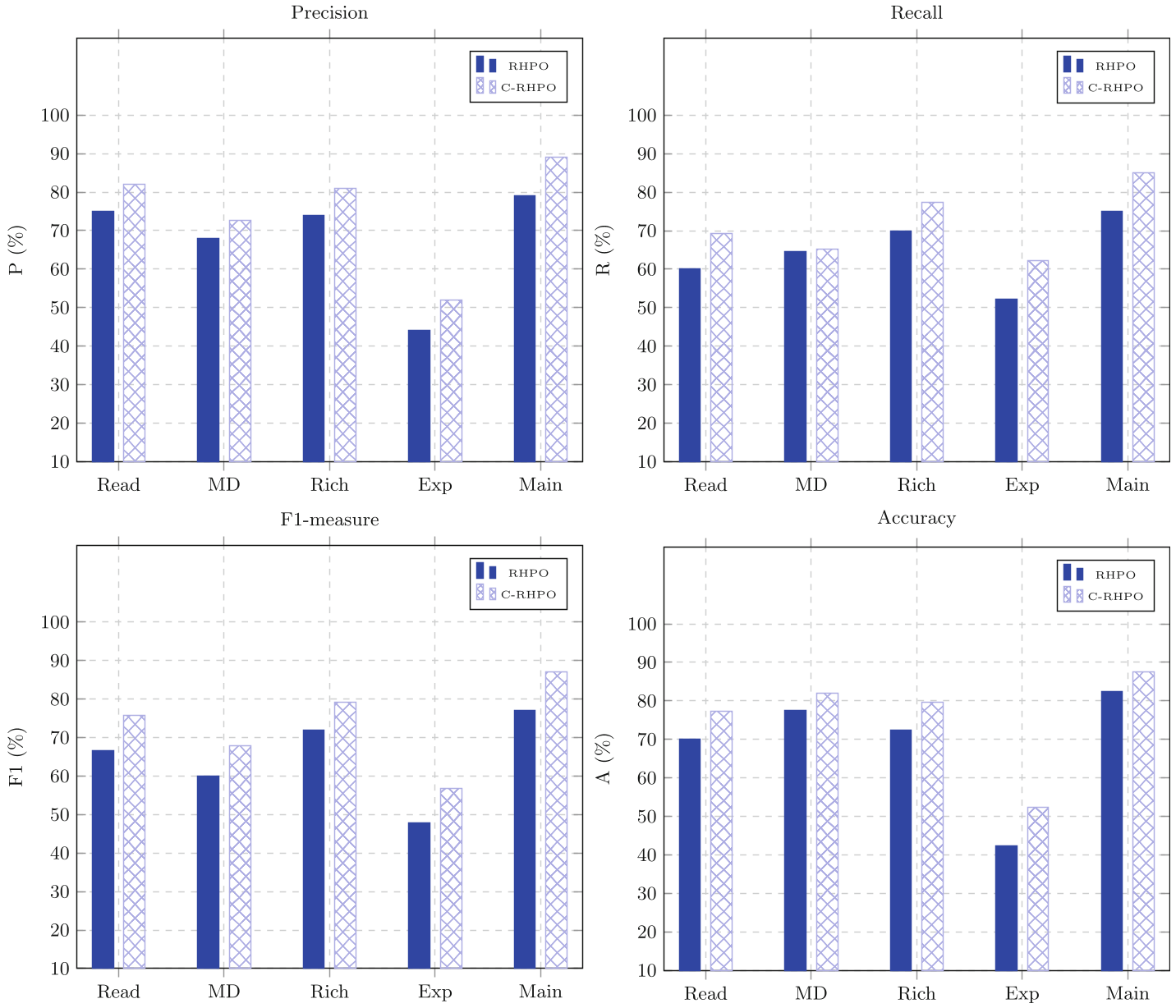 Figure 2: C-RHPO (Context-aware) vs. RHPO (General) performance metrics.
Critical Analysis & Conclusion
This work successfully addresses the "Blind Spot" in current review systems by treating helpfulness as a dynamic relationship between the writer and the reader, rather than a static property of the text.
Limitations: The reliance on "Cloud Experts" for initial annotation and weight assignment () introduces human bias. Scaling this to millions of reviews would require more automated weight-tuning (perhaps via Reinforcement Learning).
Future Outlook: The methodology could be highly effective for other professional B2B marketplaces (e.g., specialized medical equipment or legal software) where the "Expertise" of the reviewer is the primary trust signal.