
PFM: Balancing Social Visibility and Location Privacy via Relationship Strength
Publish me and protect me: Personalized and flexible location privacy protection in mobile social networks
The paper introduces PFM (Personalized and Flexible Model), a location privacy framework for Mobile Social Networks (MSN). It utilizes an entropic TF-IDF measure to quantify bi-directional relationship strength and employs a bivariate Cauchy probability distribution to generate personalized cloaking regions.
TL;DR
In the world of Mobile Social Networks (MSN), sharing your location is a double-edged sword. While you want your family to know exactly where you are, you might want an acquaintance to only see a vague city-level area. This paper proposes PFM, a model that automatically adjusts the precision of your shared location based on the bi-directional strength of your social ties using an entropic TF-IDF metric and Cauchy distribution-based cloaking.
Problem & Motivation
Most location privacy research operates on the "Untrusted Server" assumption, where users use a third-party anonymizer to hide from the service provider. However, the authors identify a growing threat: malicious friends.
In platforms like Twitter or Facebook, users often post check-ins. Current privacy controls are usually binary (either "share" or "don't share"). This lacks the nuance of real-world human relationships, where disclosure is a spectrum. The challenge is to provide fine-grained personalization (different friends see different precision) and flexibility (balancing system-wide utility vs. individual privacy) without ruining the user experience.
Methodology: The Core
PFM operates in two distinct phases: measuring how close you are to a friend, and then blurring your location accordingly.
1. Bi-directional Entropic TF-IDF
The authors argue that social strength isn't just about how much you interact with someone, but how they interact back.
- Interaction Gross (IG): They weight different interactions (reply, like, share, visit). Rare interactions are weighted higher using an entropy-based approach—following the intuition that "a rare thing is valued."
- The Formula: The relationship strength () uses a TF-IDF logic. If Alice interacts with Tom frequently but Tom rarely responds, Alice’s preference to disclose to Tom is high, but the "bond" is asymmetric.
2. Probability Distribution Based Cloaking
Instead of just drawing a random circle, PFM uses the Bivariate Cauchy Distribution.
- Why Cauchy? Unlike a Uniform distribution (where every point in a circle is equally likely), Cauchy is "bell-shaped" but has "heavy tails."
- Utility vs. Privacy: The center of the distribution ensures the reported location is close to the real one (Utility), but the heavy tails allow for occasional sparse data points that confuse attackers (Privacy).
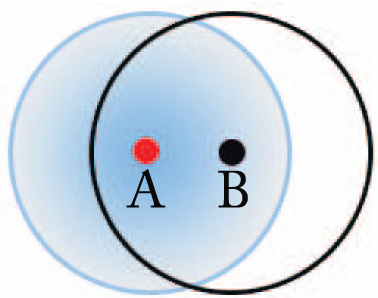 Fig 1: Illustration of the Area-Based Location Privacy Protection (ALPP) used in PFM.
Experiments & Results
The authors validated PFM using the GeoText dataset (microblog users in the US).
SOTA Comparison
Comparing PFM (Cauchy-based) against a standard Uniform Distribution:
- Utility: PFM maintained high spatial utility even as privacy levels changed. The bell shape ensures the "cloaked" center doesn't drift too far from the truth for close friends.
- Privacy: PFM showed a direct correlation between weak relationships and higher data dispersion, providing much stronger protection than non-personalized models for distant acquaintances.
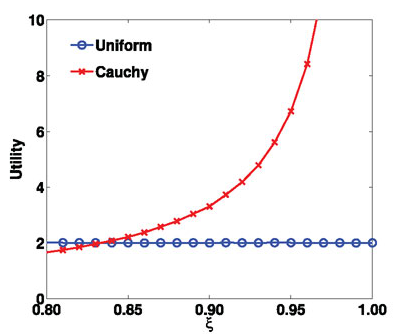 Fig 2: Comparison of Utility (a) and Privacy (b) across different privacy levels ().
Critical Analysis & Conclusion
Takeaway
PFM moves away from the "all-or-nothing" approach to social privacy. By mathematically tying relationship strength (how much we talk) to spatial resolution (how much we see), it automates a task that is currently too tedious for users to manage manually.
Limitations & Future Work
The model currently relies on interaction frequency as a proxy for trust. However, frequency doesn't always equal intimacy (e.g., a high-frequency work tie vs. a low-frequency but high-trust family tie). The authors suggest that future work should incorporate semantic analysis—understanding the content of the messages to better gauge the nature of the relationship.
Ultimately, PFM demonstrates that "Location Privacy" is not just a geometric problem, but a social one.