
UGIU: Bridging the Semantic Gap in Personalized Geo-Tagging
5691_Personalized Geo-Specific Tag Recommendation for Photos on Social Websites.
This paper introduces a personalized geo-specific tag recommendation framework for social photos. It utilizes a novel subspace learning method to jointly uncover user-preferred and geo-location-specific tags, achieving state-of-the-art performance on a large-scale Flickr dataset.
TL;DR
The paper presents a comprehensive framework for recommending photo tags by learning two distinct types of preferences: User Preference and Geo-location Preference. By discovering a latent unified subspace where visual features and textual tags are comparable, and introducing an "intermediate space" to soften the transition from pixels to semantics, the authors achieve a significant boost in recommendation accuracy on massive real-world datasets.
The Problem: One Tag Does Not Fit All
In the era of social photo sharing, tagging is essential for search and organization. However, legacy systems suffer from two main flaws:
- Ignoring the User: Two people might photograph the same "Eiffel Tower" but one tags it as "Architecture" while the other tags it as "Holiday 2026."
- Ignoring the Location: Visually similar photos (e.g., two white towers) require geographic context to distinguish between a lighthouse in Maine and a monument in Paris.
The "Semantic Gap" makes this harder—visual features (colors, textures) are mathematically distant from the abstract concepts represented by tags.
Methodology: The Progressive Subspace Learning
The core innovation is the Progressive Learning Strategy. Instead of forcing a direct mapping from visual features to a unified space, the authors introduce a middle step.
1. The Intermediate Space
They map visual features into an intermediate space () that is constrained to have a consistent local structure with the textual space (). This acts as a "buffer" to align low-level data with semantic structures.
2. The Unified Space
Finally, both the intermediate visual representations and the textual features are mapped into a Unified Subspace. In this space, an untagged photo can be compared directly to potential tags using simple nearest-neighbor searches.
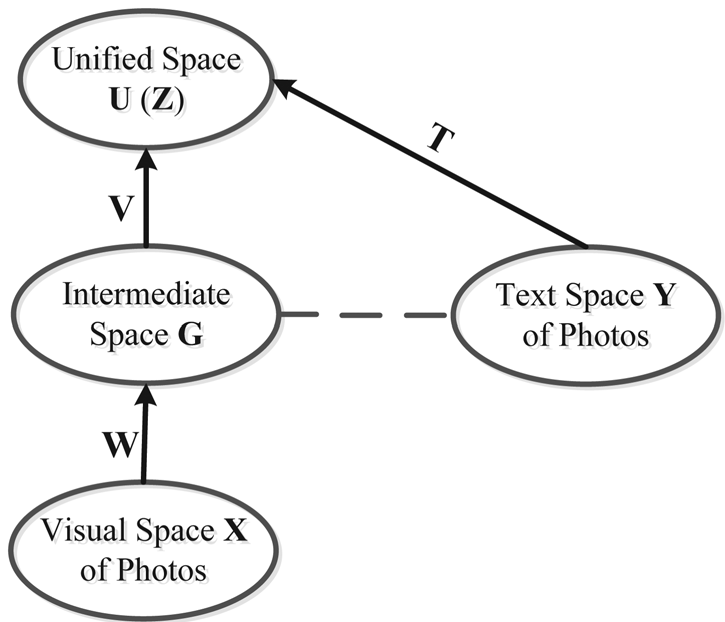 Fig 1: The progressive mapping from visual/textual domains into a unified subspace via an intermediate bridge.
3. Optimization
The model uses an iterative optimization algorithm (Algorithm 1) that minimizes a joint loss function. It includes:
- Least Square Loss: To ensure visual and textual representations meet in the unified space.
- Laplacian Regularization: To preserve the "geometric" manifold of the data (similar images should stay close).
- -norm: To handle noisy features by encouraging joint sparsity.
Experiments and Results
The researchers used a massive dataset from Flickr (2.7M photos, 559 active users).
SOTA Comparison
The proposed UGIU (User-Geo-Intermediate-Unified) method was compared against traditional -NN (Visual), User-only history (PP), and complex Tensor Factorization.
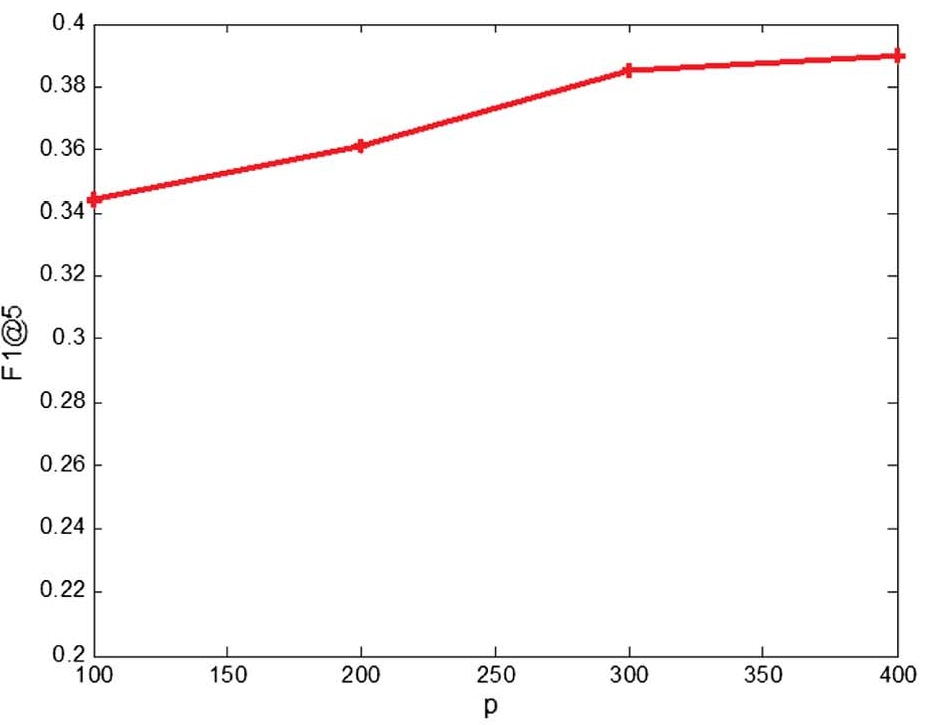 Fig 2: Precision and Recall curves showing UGIU's dominance over baseline models.
Key Findings:
- The Intermediate Space Matters: Removing the intermediate space (the UGU variant) led to a noticeable drop in performance, proving that bridging the semantic gap in stages is superior to a direct leap.
- Geo-Context is King: Combining geo-location preferences with user history (UGIU) outperformed models that only looked at the user's past behavior.
Critical Insight: Why it Works
The beauty of this work lies in how it handles the heterogeneity of social data. By treating a user's tagging history as a unique "vocabulary" and a location's history as a "contextual filter," the model creates a personalized lens for every photo. The use of -norm regularization is particularly clever, as social media visual data is notoriously noisy; it allows the model to ignore irrelevant visual "bits" that don't contribute to semantic tagging.
Conclusion
This paper provides a robust blueprint for multi-modal recommendation systems. While the focus is on photo tagging, the methodology—using intermediate subspaces to bridge heterogeneous domains—is highly applicable to other fields like cross-modal retrieval, personalized news feeds, and even autonomous systems interpreting visual scenes with sensor metadata.
Future Outlook: Integrating deep learning (CNNs/Transformers) for the initial feature extraction instead of the SIFT/BoVW used here could likely push these results even further into the SOTA territory.