
PMFTM: Scaling Trust-Aware Recommendations via Personalized Multi-Faceted Modeling
Personalized Multi-Faceted Trust Modeling in Social Networks
The paper introduces Personalized Multi-Faceted Trust Modeling (PMFTM), a framework that predicts trust links in social networks using a diverse set of indicators and clustering-based personalization. By integrating these predicted links into the TrustMF recommender system, it significantly enhances item recommendation accuracy on the Yelp dataset.
TL;DR
In the era of information overload, we don't just need recommendations; we need recommendations from people we actually trust. This paper introduces Personalized Multi-Faceted Trust Modeling (PMFTM), a method that moves beyond simple "friend" lists to predict hidden trust relationships. By clustering users and learning specialized trust classifiers for each group, the authors achieved an MSE reduction from 1.352 to 1.267 on Yelp business recommendations.
Context & Positioning
Most social recommenders suffer from a "cold start" or "sparsity" problem: users don't have enough explicit friends to inform the system. This work is a bridge between social network analysis and collaborative filtering. It positions itself as an evolution of multi-faceted trust—moving from static feature weighting to a dynamic, personalized approach where the definition of "trustworthiness" varies across different user clusters.
The Core Challenge: Why is Trust Hard to Model?
Traditional models treat trust as a monolithic binary link. However, trust on a platform like Yelp is multi-dimensional:
- Inconsistency: A user might trust one person for restaurant advice but not for car mechanics.
- Feature Diversity: Trust is signaled by many factors—"Elite" status, frequency of reviews, fan counts, or similarity in rating patterns.
- Personalization Bias: Some users weigh "expertise" (Competence) higher, while others value "similarity" (Benevolence).
Methodology: The PMFTM Pipeline
The authors propose a robust three-step pipeline to solve these issues:
1. Clustering (The Personalization Engine)
Instead of one model for everyone, users are grouped based on:
- PCC (Pearson Correlation Coefficient): Identifying users with similar "tastes" or rating behaviors.
- Social Circles: Identifying users with overlapping Jaccard similarity in their friend groups.
2. Multi-Faceted Link Prediction
For each cluster, a Logistic Regression classifier is trained. It utilizes indicators like:
- Benevolence: High rating correlation between pairs.
- Elite Status: Longevity and recognition by the platform.
- Opinion Leadership: The "fan" count of a trustee.
 Figure 1: Conceptual overview of trust indicators in social networks.
3. TrustMF Integration
The predicted trust links are fed into TrustMF, a matrix factorization model. It maps users and items into a latent space where user preferences are constrained by the preferences of their (predicted) trusted peers.
Experimental Results: Proving Personalization
The team tested several variations on a sampled Yelp dataset of 10,000 users.
- Baseline: Using only "Real Friends" provided in the dataset.
- MFTM: Predicting trust links using a global classifier.
- PMFTM: Using the personalized cluster-based predictors.
Performance Gains
The personalized models (PMFTM) consistently outperformed the baseline. The PCCCluster_PCCPredict yielded the highest accuracy.
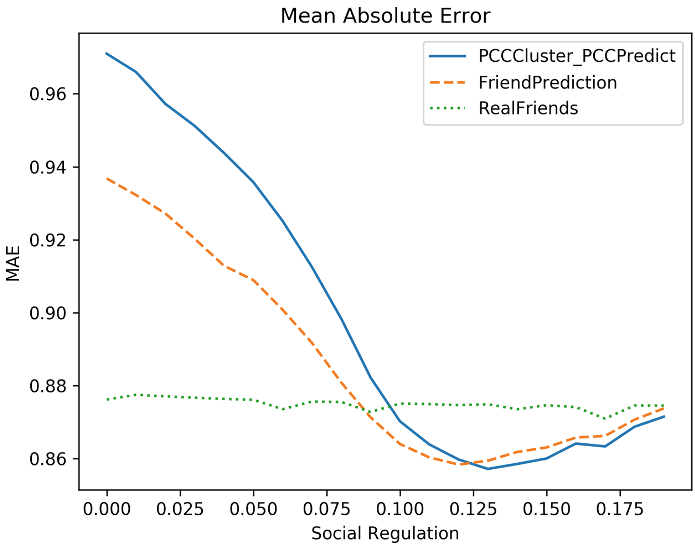 Figure 2: MSE Comparison. Note how the error decreases as the system incorporates sophisticated trust predictions.
| Experiment | MAE | MSE |
|---|---|---|
| RealFriends (Baseline) | 0.871 | 1.352 |
| PCCCluster_PCCPredict (PMFTM) | 0.857 | 1.267 |
Critical Insights & Conclusion
Why it Works
The "magic" lies in the clustering. By grouping users who share similar rating behaviors, the classifier can learn that for this specific group, "Status" (Elite) might be a better predictor of trust than "Social Overlap" (Jaccard). This Inductive Bias tailored to the cluster is much more powerful than a "one-size-fits-all" global weight.
Limitations
- Computational Complexity: Training separate classifiers for many clusters can be resource-intensive as the network scales.
- Stationarity: The model assumes trust is static, whereas user behavior and platform status (like "Elite") change over time.
Moving Forward
This research opens doors for Moderation and Misinformation Detection. If we can accurately model who a user is likely to trust, we can also identify when that trust is being exploited by malicious actors or bot accounts. Future iterations could involve Graph Neural Networks to automatically learn these multi-faceted embeddings without manual feature engineering.